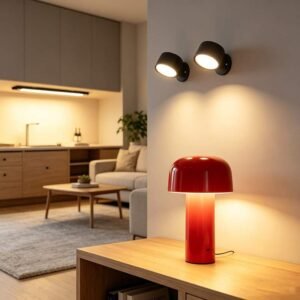


A good desk lamp does more than simply brighten your workspace. It helps you read comfortably, reduces eye strain caused by poor lighting conditions, and makes it easier to focus on detailed tasks. However, choosing the right brightness is not always straightforward. A desk lamp that works well for reading may not provide enough illumination for drawing, studying, or working with small objects.
So, how bright should a desk lamp be? The answer depends on how you use your desk, the size of your workspace, the surrounding room lighting, and your personal preferences.
Whether you are choosing a traditional task light or a modern LED desk lamp, understanding lumens, lux, color temperature, and brightness adjustment will help you find a suitable option. This guide explains how bright your desk lamp should be for different activities and what to consider before purchasing one.
How Many Lumens Should a Desk Lamp Have?
Lumens (lm) measure the total amount of visible light produced by a light source. In simple terms, a higher lumen value generally means a brighter lamp.
For everyday desk use, a lamp producing approximately 400–800 lumens is a useful starting point. However, the ideal output depends on the task and how the light is distributed across the desk.
Here is a general reference:
Desk lamp brightness | Suitable applications |
200–400 lumens | Ambient lighting, occasional reading, small desk areas |
400–600 lumens | General reading, writing, and everyday computer work |
600–800 lumens | Studying, office work, and more detailed tasks |
800–1,000+ lumens | Drawing, crafting, and precision activities |
If you’re interested in learning more about lumen brightness, you can also check out our previous article, “How Bright Is Different Lumens?”
These are practical product-selection ranges rather than strict lighting standards. A lamp with a high lumen output does not automatically provide comfortable illumination. Beam angle, distance from the desk, diffuser design, and surrounding light all affect the result.
For example, a 600-lumen lamp with a well-designed shade may distribute light more evenly than a 600-lumen lamp with a narrow beam.
Understand the Difference Between Lumens and Lux
When comparing desk lamps, you may encounter two lighting measurements: lumens and lux. They describe different things.
- Lumens (lm):The total visible light emitted by the light source.
- Lux (lx):The amount of light falling on a particular surface. One lux equals one lumen per square meter.
For desk lighting, lux is particularly useful because it describes how bright the actual working surface is.
A lamp may produce 800 lumens, but if it is positioned too far from the desk or directs most of its light away from the working area, the desktop may still appear relatively dim.
As a general reference, around 300–500 lux is commonly suitable for many reading and writing activities. More visually demanding tasks may benefit from approximately 500–750 lux or higher, depending on the work and applicable lighting recommendations.
The key is to create sufficient illumination on the working surface without producing uncomfortable glare or strong reflections.
How Bright Should a Desk Lamp Be for Different Activities?
Different desk activities have different lighting requirements. Instead of choosing the brightest lamp available, consider the type of work you perform most often.
Reading and Writing
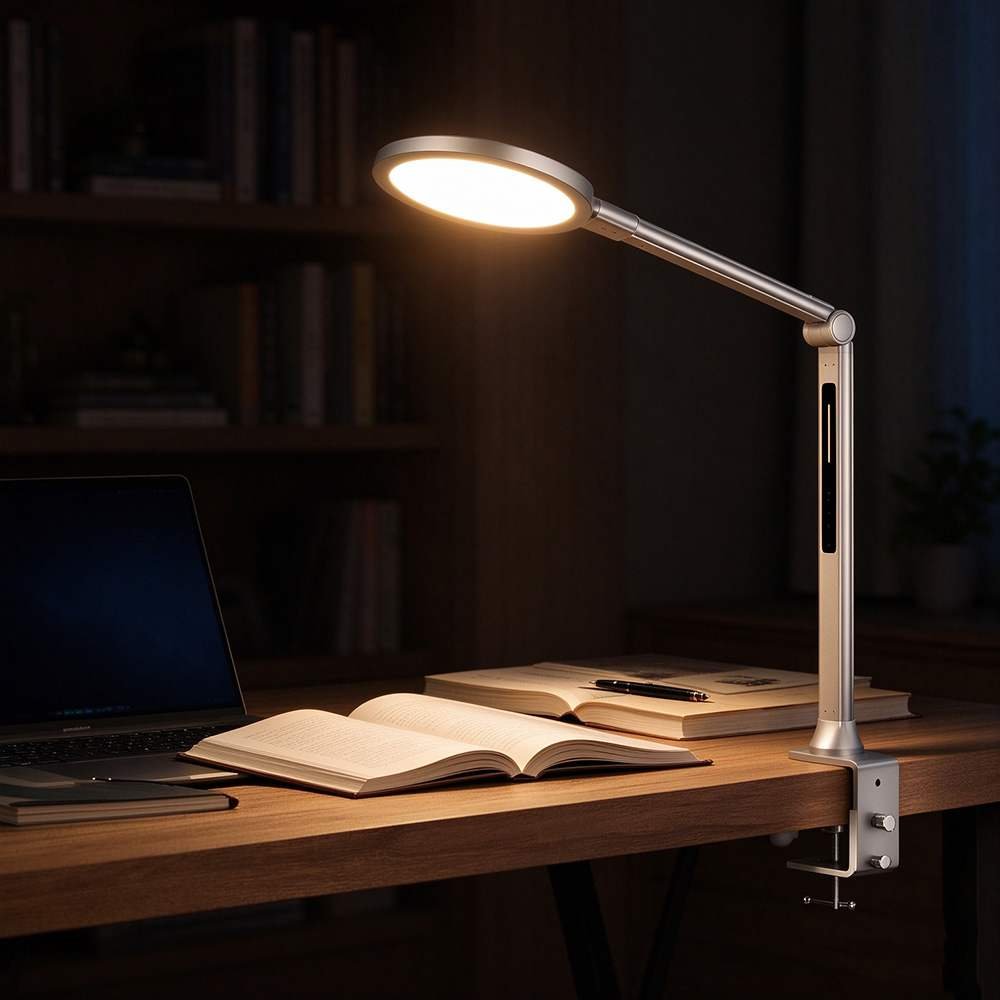
For reading books, taking notes, and handwriting, a desk lamp providing approximately 400–600 lumens is often sufficient for a typical home workspace.
The light should cover the reading or writing area evenly. Avoid positioning the lamp so that your hand casts a large shadow over the page.
If you read for extended periods, a lamp with adjustable brightness is particularly useful. You can increase the output when the room is bright or lower it when the surrounding environment is darker.
Studying and Office Work
Students and office workers often switch between reading printed documents, writing notes, and using computers.
A desk lamp with approximately 500–800 lumens offers flexibility for these activities. Adjustable brightness allows you to adapt the lighting to different tasks throughout the day.
When working with a computer, avoid placing the lamp where it creates reflections on the screen. The goal is to illuminate documents and the surrounding desk without making the monitor uncomfortable to view.
Drawing, Painting, and Crafting
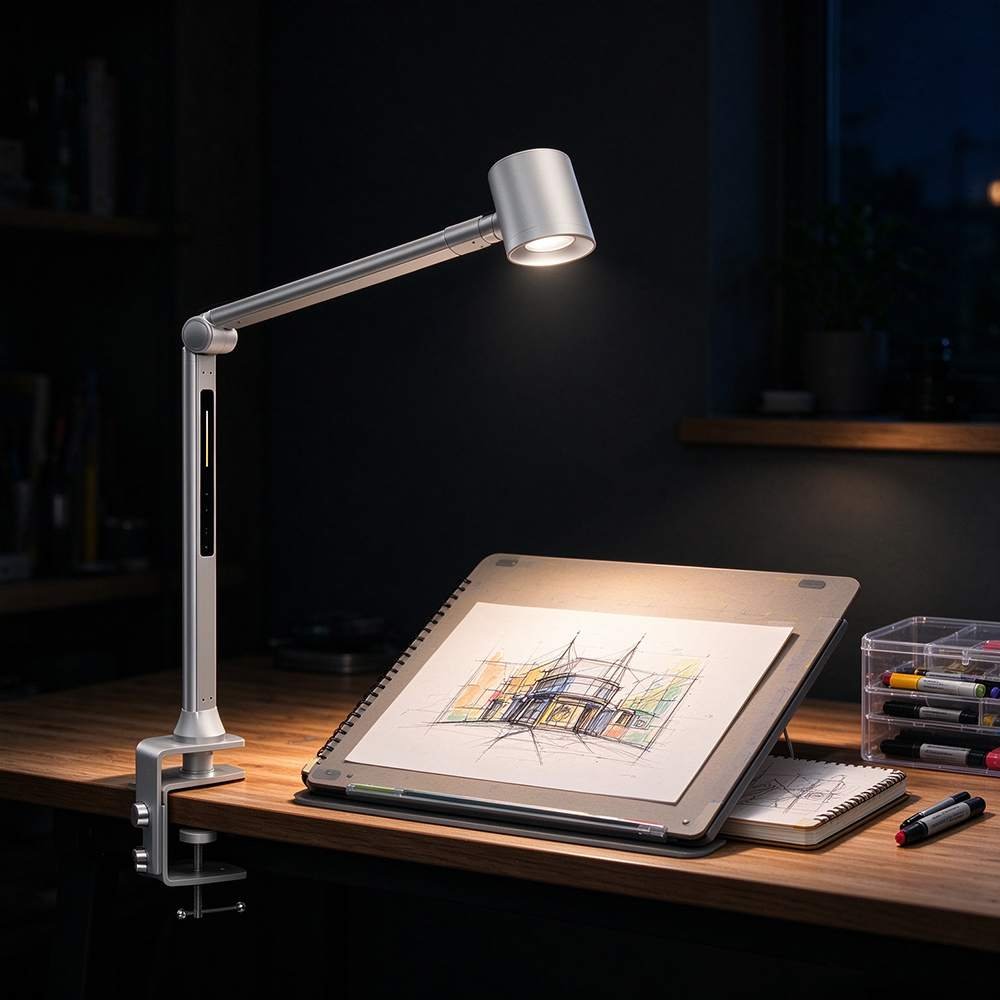
Detailed activities such as drawing, painting, sewing, and model-making often require more focused illumination.
A lamp producing approximately 600–1,000 lumens or more may be useful, especially when working with small details or materials with similar colors.
However, brightness is only one consideration. Good color rendering is also important because it helps you distinguish colors more accurately.
For these tasks, consider an LED desk lamp with adjustable brightness, a flexible arm, and a high color rendering index (CRI).
Computer Work
If your main activity involves using a laptop or desktop computer, you may not need an extremely bright desk lamp.
A moderate output of around 300–600 lumens can provide supplementary illumination for the keyboard, documents, and surrounding workspace. The exact requirement depends on the room’s general lighting.
More importantly, position the lamp to avoid reflections on the monitor. A light source that shines directly onto the screen can make viewing uncomfortable even if its brightness is otherwise appropriate.
What Other Factors Affect Desk Lamp Brightness?
Lumens are important, but several other factors influence how bright and comfortable a desk lamp feels.
Color Temperature
Color temperature is measured in kelvins (K) and describes whether the light appears warm, neutral, or cool.
Color temperature | Appearance | Suitable use |
2700K–3000K | Warm white | Relaxed reading and evening use |
3500K–4000K | Neutral white | General office work and studying |
5000K–6500K | Cool white/daylight-like | Detailed tasks and users who prefer cooler light |
For most home and office desks, 3500K–4000K is a versatile choice. Warm white can create a comfortable atmosphere, while cooler light may be preferred for detailed work.
A tunable-white desk lamp is worth considering if you want to adjust the color temperature according to the activity or time of day.
Color Rendering Index (CRI)
CRI measures how accurately a light source reveals colors compared with a reference light source.
For everyday desk use, a CRI of 80 or above is a reasonable starting point. If you frequently work with artwork, fabrics, photographs, or colored materials, consider a lamp with a CRI of 90 or higher.
A higher CRI can help colors appear more natural, which is particularly useful for creative tasks.
Beam Angle and Light Distribution
A desk lamp should illuminate the working area rather than concentrate all its light in one small spot.
A narrow beam may create a bright center with darker edges. A wider, well-diffused beam can provide more uniform illumination across the desktop.
Look for a lamp with a suitable shade or diffuser, especially if you work at a large desk.
Adjustable Brightness
Dimmable lighting gives you more control over your workspace. You can use stronger illumination for reading or detailed work and reduce the brightness when using a computer or working in a dimly lit room.
This flexibility is particularly valuable when the desk is used for different activities throughout the day.
How to Choose the Right Desk Lamp
Brightness should not be the only factor when purchasing a desk lamp. The lamp’s structure, adjustment range, light quality, and control method also affect everyday usability.
If you are comparing different styles and features, read our previous guide, How to Choose The Right Desk Lamp. It provides additional advice on selecting a desk lamp based on your workspace, design preferences, and lighting needs.
Here are several important points to consider:
Choose an appropriate brightness range. Rather than focusing on one fixed lumen value, consider a dimmable lamp that can accommodate different tasks.
Check the lamp’s adjustability. A flexible arm or adjustable head makes it easier to direct light toward books, documents, or other working areas.
Consider the power source. Wired desk lamps are convenient for permanent workstations, while rechargeable models offer greater flexibility when moving the lamp between locations.
Look for comfortable lighting. A diffuser, flicker-free operation, and suitable glare control can improve the overall experience. Check the manufacturer’s specifications rather than assuming every LED product provides these features.
Consider energy efficiency. LED desk lamps generally provide good light output with relatively low power consumption. Compare both lumen output and wattage when evaluating efficiency.
Is an LED Desk Lamp Better Than a Traditional Desk Lamp?
An LED desk lamp is a popular choice for modern homes, study areas, and offices. Compared with traditional incandescent desk lamps, LED models generally offer better energy efficiency and a longer rated operating life.
They also provide more design flexibility. Many LED desk lamps include touch controls, dimming, adjustable color temperature, USB charging ports, or built-in rechargeable batteries.
Another advantage is that LEDs are available in different shapes and lighting configurations. Slim linear fixtures, ring-shaped lamps, and traditional adjustable-arm designs can all provide effective task lighting.
However, not every LED desk lamp offers the same performance. When comparing products, pay attention to brightness, CRI, flicker performance, glare control, and the quality of the power supply.
Final Thoughts
So, how bright should a desk lamp be? For most everyday activities, a desk lamp producing approximately 400–800 lumens is a practical starting point. Reading and writing generally require moderate brightness, while drawing, crafting, and other detailed tasks may benefit from stronger illumination.
However, the best desk lamp is not necessarily the brightest one. You should also consider the actual illumination on the desktop, color temperature, color rendering, light distribution, and adjustability.
A well-designed LED desk lamp with dimming and adjustable positioning can provide the flexibility needed for different working environments. By matching the lamp’s brightness to your daily activities, you can create a workspace that is both functional and comfortable.