

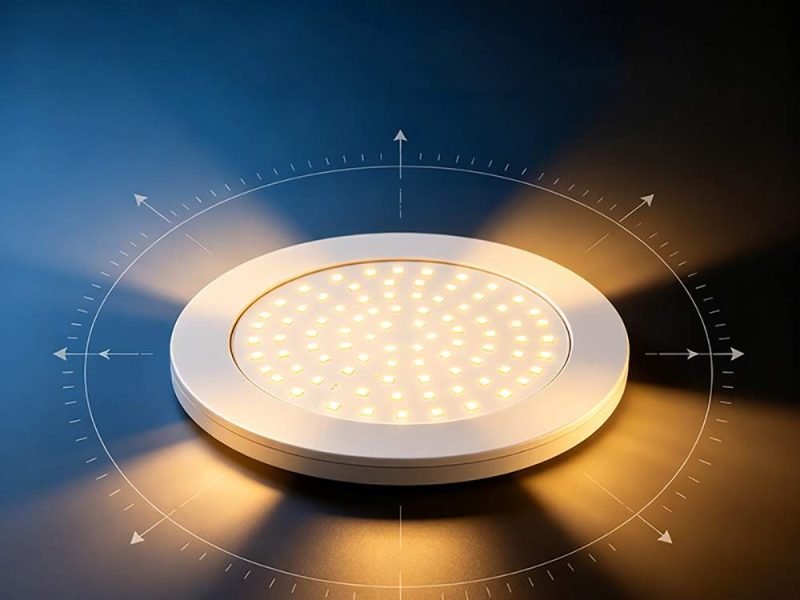
When shopping for LED lighting, you may have noticed a number followed by “lm” on almost every product specification sheet.
800 lm.
1,500 lm.
3,000 lm.
10,000 lm.
But what do those numbers actually mean?
If you are still thinking, “I know watts, but lumens are the new mystery number,” you are not alone. For decades, consumers were accustomed to choosing light bulbs by wattage. A 60W bulb meant a certain level of brightness, or at least that was the assumption.
LED technology changed that relationship.
Today, lumens are one of the most important specifications for understanding how much visible light a lamp or LED fixture produces. However, lumens are only one part of the lighting equation. Color temperature, beam angle, efficiency, optics, diffuser design, and the size of the space all influence how bright a light actually feels.
So, what are lumens, and how should you use them when choosing LED lighting?
Let’s break it down.
What Are Lumens?
A lumen (lm) is the unit used to measure the total amount of visible light emitted by a light source.
In simple terms:
Lumens = the amount of visible light produced.
Generally, the higher the lumen rating, the more light a lamp or fixture produces. Integral LED describes lumens as a measure of the total visible light from a source, while also distinguishing it from electrical power consumption measured in watts.
For example:
- 500 lumens → relatively low light output
- 1,000 lumens → moderate light output
- 2,000 lumens → higher light output
- 5,000 lumens → substantial light output
But there is an important catch:
More lumens does not automatically mean better lighting.
A 3,000-lumen spotlight aimed directly at your eyes would probably be a terrible lighting solution, even though its lumen number looks impressive.
What matters is not only how much light a product produces, but where that light goes and how it is used.

Lumens vs. Watts: What Is the Difference?
This is probably the most common confusion when people start learning about modern LED lighting.
– Watts measure energy consumption.
– Lumens measure visible light output.
They are not the same thing.
In the past, wattage was commonly used as a rough indication of brightness because traditional incandescent bulbs had relatively predictable relationships between electrical power and light output.
LEDs changed that.
An LED can produce significantly more light while consuming much less electricity. For example, Integral LED notes that a 6.5W LED lamp can provide approximately the light output associated with a 50W halogen lamp.
So if you are comparing modern LED products, asking:
“How many watts is it?”
doesn’t tell you enough.
A better question is:
“How many lumens does it produce?”
And then:
“How efficiently does it produce those lumens?”
That second question brings us to another useful specification: lumens per watt.
What Is Lumens Per Watt (lm/W)?
Lumens per watt (lm/W) measures lighting efficiency.
The formula is simple:
lm/W = Lumens ÷ Watts
For example, suppose an LED fixture produces:
2,000 lumens at 20W
Its efficacy is:
2,000 ÷ 20 = 100 lm/W
Another fixture might produce:
2,000 lumens at 10W
That would equal:
200 lm/W
Both fixtures produce the same total light output, but the second one uses half the electrical power.
This is why lm/W is particularly important for B2B lighting buyers, distributors, architects, and manufacturers evaluating LED products.
A higher lm/W can indicate better energy efficiency, although real-world performance also depends on the complete luminaire design rather than just the LED chip.
Integral LED similarly recommends considering lm/W when evaluating LED panels because it provides a useful comparison of light output relative to power consumption.
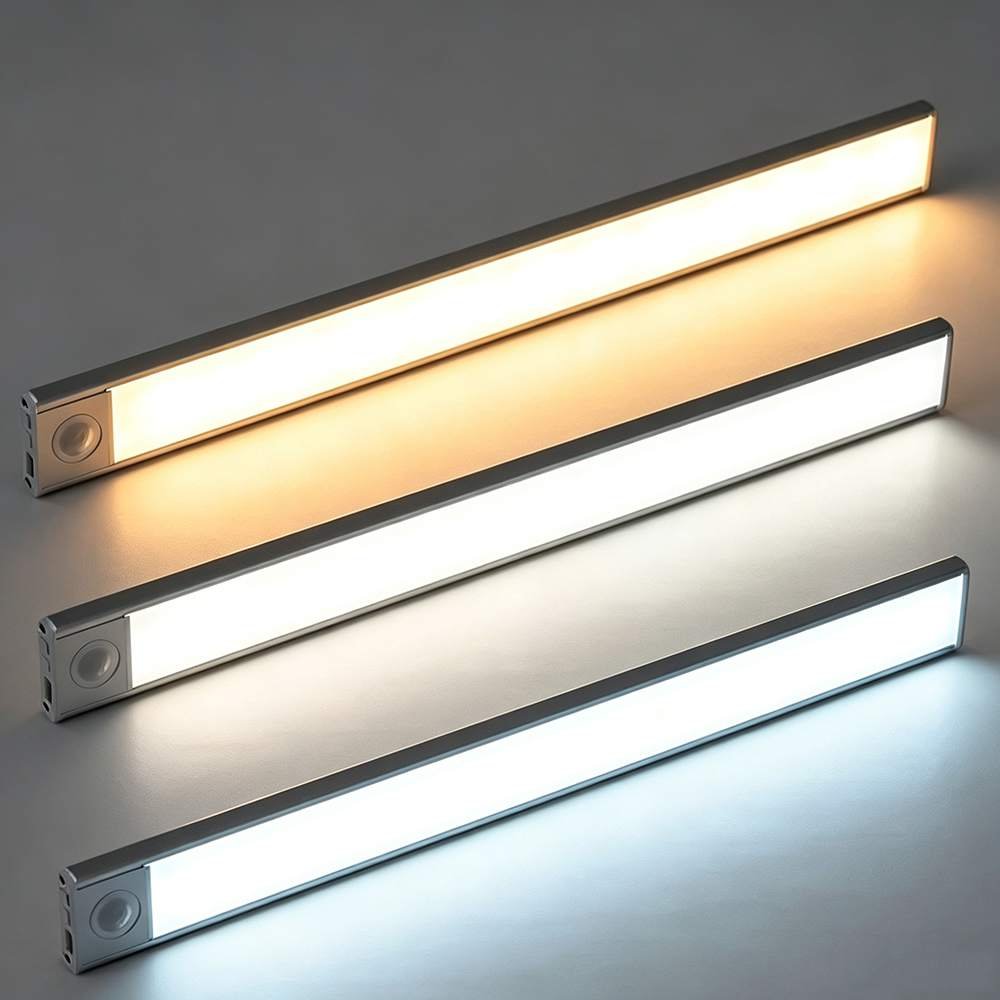
Are More Lumens Always Better?
Not necessarily.
Imagine you are choosing a desk lamp.
A 5,000-lumen lamp sounds impressive, but if you only need comfortable reading light, that much output may be excessive.
Likewise, a small decorative wall light doesn’t need the same lumen output as a warehouse high-bay fixture.
The correct lumen output depends on:
- Room size
- Ceiling height
- Intended activity
- Fixture type
- Light distribution
- Surface colors
- Existing lighting
- Personal preference
Integral LED also points out that the required lumen level varies according to factors such as room size, ceiling height, color scheme, fitting type, and whether the area is used for general or task lighting.
So instead of asking:
“How many lumens is the best?”
Ask:
“How many lumens do I actually need for this application?”
That’s a much better question.
How Many Lumens Do You Need?
There is no universal lumen number for every room.
A small bedroom and a large commercial kitchen obviously shouldn’t use the same amount of light.
As a general reference, Integral LED lists approximately 300–400 lumens per square meter for general kitchen lighting and around 700–800 lumens per square meter for kitchen task areas.
Another lighting guide gives broader residential estimates and notes that kitchens, bathrooms, and workspaces generally require more light than relaxed living areas.
These figures should be treated as starting points rather than strict rules.
For example, a dark kitchen with dark cabinets may require more useful light than a bright white kitchen with highly reflective surfaces.
Lumens and Lux Are Not the Same
This is another important distinction.
Lumens measure the total light output from a light source.
Lux measures the amount of light falling onto a surface.
One lux equals one lumen per square meter.
This distinction becomes important when designing professional lighting systems.
Imagine two LED fixtures, each producing 2,000 lumens.
One spreads the light over a large area.
The other concentrates it onto a smaller work surface.
They produce the same number of lumens, but the illuminated surface can have very different lux levels.
So:
– Lumens tell you how much light the source produces.
– Lux tells you how much light reaches a particular surface.
That’s why professional lighting design cannot rely on lumen numbers alone.
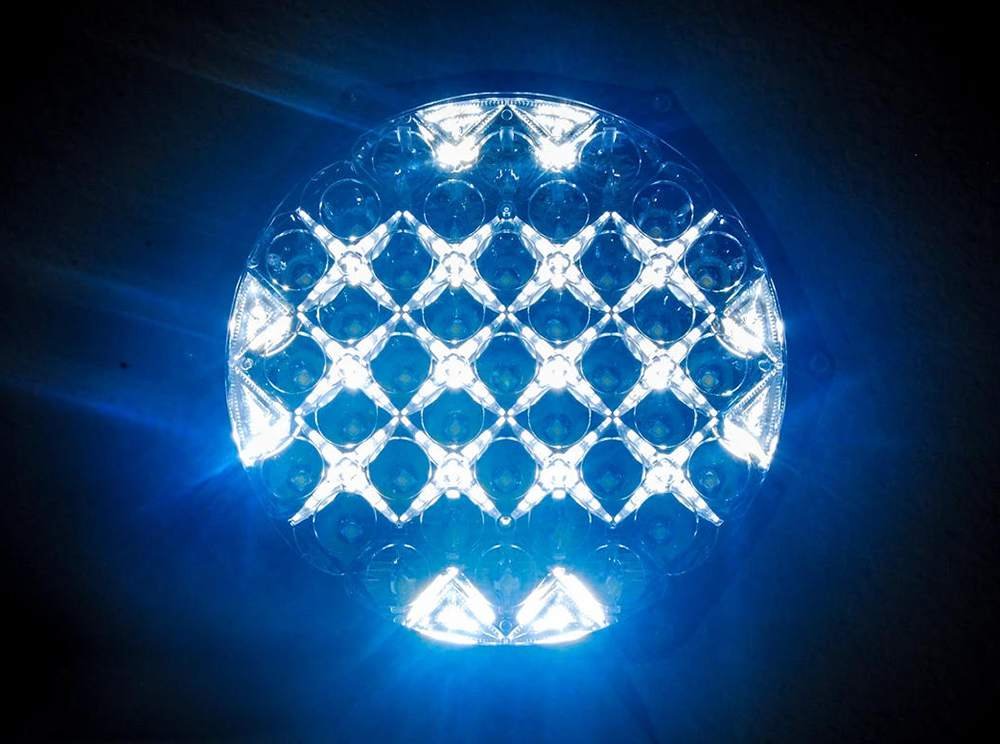
Lumens and Beam Angle
Beam angle also affects how bright a light appears.
A narrow beam concentrates light into a smaller area.
A wide beam spreads the same general output over a larger area.
For example, a spotlight may have a relatively narrow beam and produce strong illumination on a specific object.
A ceiling panel may distribute its output across a much wider area.
This is why two products with similar lumen ratings can create completely different visual results.
IGAN Iluminación specifically notes that lumens measure total light output, while light distribution or beam angle is a separate characteristic.
When selecting LED lighting, therefore, don’t look at the lumen number in isolation.
Look at:
Lumens + beam angle + mounting height + application.
What Are “Useful Lumens”?
This becomes particularly relevant for directional LED products.
Not all of the light emitted by a fixture necessarily reaches the area where you want it.
A spotlight, for example, may emit some light outside the useful forward direction.
Integral LED distinguishes between total lumen output and “useful lumens,” which are intended to provide a more relevant comparison for directional lamps.
For buyers comparing:
- Spotlights
- Downlights
- Track lights
- Directional LED fixtures
this distinction can be useful.
A product with a high total lumen rating isn’t automatically the best performer for your application.
How Lumens Work With Color Temperature
Here’s another common misconception:
Higher lumens do not mean cooler or whiter light.
Lumens and color temperature are two separate specifications.
A 3000K LED can produce 1,000 lumens.
A 4000K LED can also produce 1,000 lumens.
And a 5000K LED can produce 1,000 lumens as well.
The lumen value tells you about light output.
The Kelvin value tells you about the appearance of the light.
For example:
3000K → warm white
4000K → neutral white
5000K → cool white
So when specifying LED lighting, you should consider both.
A kitchen might need 1,000 lumens at 4000K, while a bedroom might use a similar lumen output at 3000K for a warmer atmosphere.
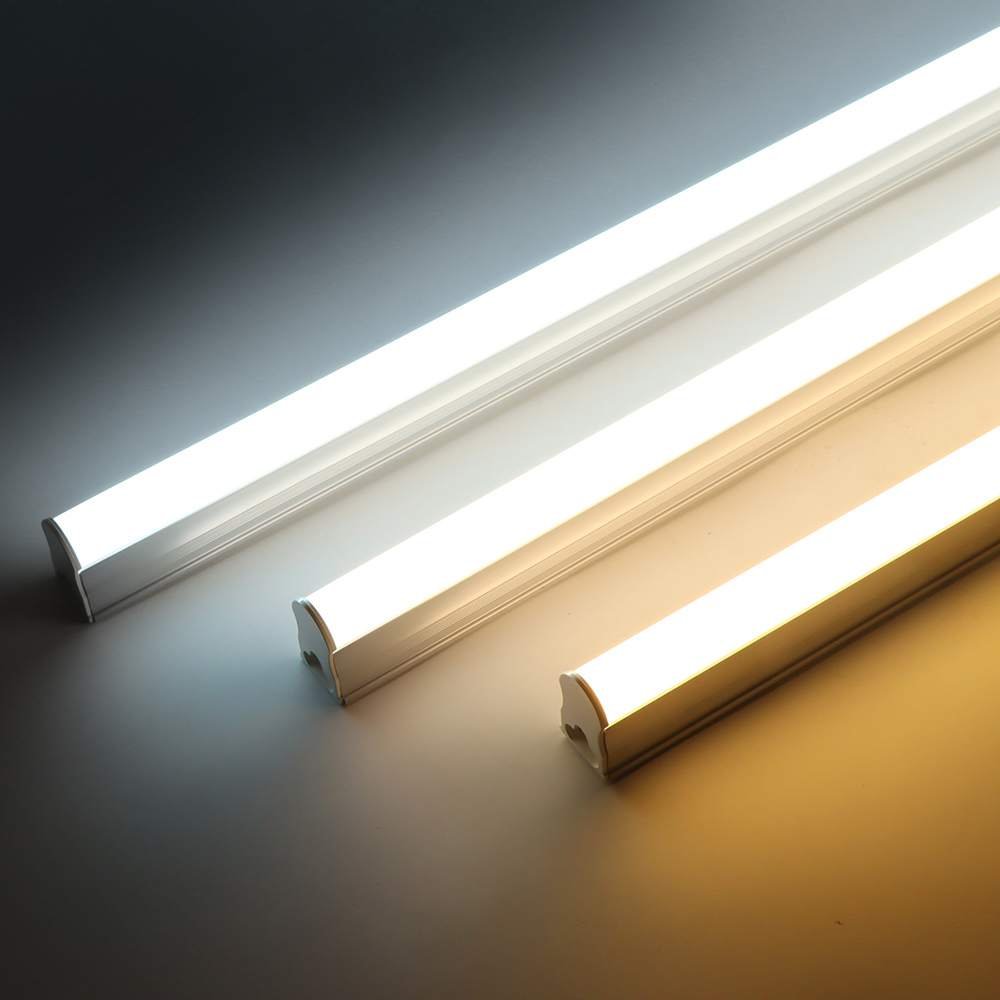
How Lumens Matter for Under Cabinet Lighting
Lumens become especially interesting when choosing compact LED products such as under cabinet lights.
An under cabinet fixture doesn’t need to illuminate an entire room.
Its job is usually to illuminate a countertop or work surface.
That means light distribution is extremely important.
For example, an LED strip with moderate lumen output installed close to the countertop can provide excellent task lighting.
A brighter fixture mounted in the wrong position could create glare or uncomfortable hotspots.
This is why manufacturers developing under cabinet lighting need to consider more than simply increasing LED power.
A better product may combine:
- Appropriate lumen output
- High CRI
- Suitable color temperature
- Good optical design
- Diffuser
- Proper beam distribution
- Efficient thermal management
The goal isn’t simply more light.
The goal is more useful light.
Lumens in LED Strip Lighting
LED strips are another area where lumen specifications can sometimes be confusing.
Instead of simply listing total lumens for the entire roll, manufacturers may specify output as:
Lumens per meter (lm/m)
For example:
800 lm/m
means the strip produces approximately 800 lumens per meter under the stated testing conditions.
This makes it easier to compare strips of different lengths.
However, when an LED strip is installed inside an LED profile, the final light output may be affected by the profile, diffuser, installation position, and optical design.
The diffuser can slightly reduce transmitted light, but it can also dramatically improve visual uniformity by reducing harsh LED points.
Again, the highest raw lumen number isn’t necessarily the best solution.
Why LED Lighting Can Produce More Lumens With Less Power
One of the biggest advantages of LED technology is efficiency.
Traditional incandescent lighting produces a significant amount of heat because much of the electrical energy does not become visible light.
LED technology can produce substantial light output with considerably lower power consumption.
That’s why replacing a 60W incandescent bulb with an LED does not mean accepting 60W worth of brightness.
Instead, consumers can select an LED based on the desired lumen output while using much less electrical energy.
This is one reason lumens have become more important in modern lighting specifications.
What Should B2B Buyers Look for Besides Lumens?
If you’re purchasing LED lighting for commercial projects or sourcing products from an LED lighting manufacturer, lumen output should be only one part of your evaluation.
A professional specification sheet may also include:
Power consumption: How much electricity the product uses.
Efficacy: How many lumens are produced per watt.
CRI: How accurately colors appear under the light.
Color temperature: Whether the light appears warm, neutral, or cool.
Beam angle: How widely the light is distributed.
Lifetime: Expected operating life.
IP rating: Protection against dust and water.
UGR: Relevant for evaluating glare in certain indoor applications.
Operating temperature: Particularly important for enclosed LED fixtures.
Looking at these specifications together provides a much more complete picture of product performance.
A Simple Way to Read an LED Lighting Specification
Suppose you see this on a product page:
Power: 12W
Luminous Flux: 1,200 lm
CCT: 4000K
CRI: >90
Beam Angle: 120°
You can immediately understand several things.
The product consumes 12 watts and produces 1,200 lumens.
Its efficacy is:
1,200 ÷ 12 = 100 lm/W
The 4000K rating means neutral white light.
The CRI above 90 indicates strong color-rendering performance.
And the 120° beam angle suggests relatively broad light distribution.
That’s far more useful than simply seeing:
“12W LED light.”
Lumens: The Number You Should Actually Pay Attention To
For modern LED lighting, watts are no longer a reliable shortcut for determining brightness.
Instead:
Watts = energy consumption
Lumens = light output
Lux = light received on a surface
lm/W = lighting efficiency
Kelvin = color temperature
Understanding these differences makes it much easier to compare LED products intelligently.
And perhaps the most important lesson is this:
Don’t buy the highest lumen product simply because the number looks impressive.
Choose the lumen output that matches the space, task, fixture, and lighting design.
Conclusion
So, what are lumens?
They are the standard unit used to describe the total visible light output of a light source. The higher the lumen rating, the more visible light a lamp generally produces.
But good lighting is not a numbers competition.
A well-designed LED fixture with appropriate lumens, excellent light distribution, high CRI, suitable color temperature, and good optical control can perform far better than a product that simply advertises a huge lumen number.
For consumers, understanding lumens makes it easier to choose the right brightness.
For designers, it helps create more balanced lighting environments.
And for B2B lighting brands and manufacturers, understanding lumens is essential when developing and comparing LED lighting products.
In short, the next time you see “1,500 lm” on an LED product, you’ll know exactly what that number is trying to tell you — and, just as importantly, what it isn’t.