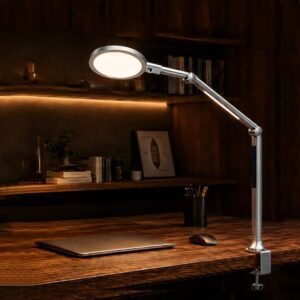

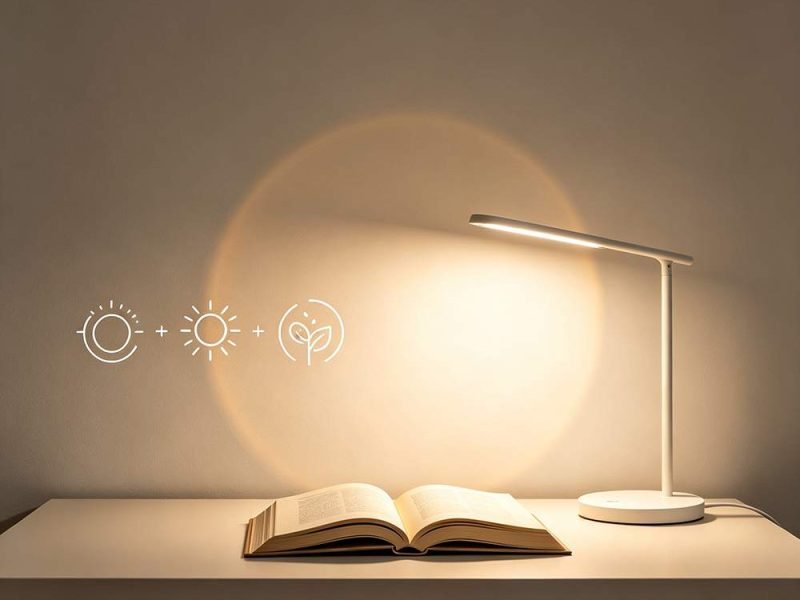
A good desk lamp is more than just a small light placed on your working table. Whether you are working from home, studying, reading, designing, crafting, or spending long hours in front of a computer, the right desk lamp can significantly improve your comfort, productivity, and visual experience.
Many people choose a desk lamp simply based on appearance. A stylish design looks attractive, but after using it for a few days, they may discover problems:
- The light is too harsh and causes eye fatigue.
- The brightness is insufficient for detailed tasks.
- The lamp cannot be adjusted to the right position.
- The color temperature makes the workspace feel uncomfortable.
- The light creates annoying reflections on the computer screen.
This is why choosing the right LED desk lamp requires more consideration than simply picking the most beautiful model.
A suitable desk lamp should balance brightness, color quality, adjustability, energy efficiency, design, and functionality according to your actual needs.
In this guide, we will explain the key factors you should consider when choosing a desk lamp for your home or office.
1. Consider Your Main Purpose Before Choosing a Desk Lamp
The first question you should ask is:
What will I mainly use this desk lamp for?
Different activities require different lighting characteristics.
A desk lamp for reading is not necessarily the same as a lamp for office work, drawing, or computer use.
Desk Lamp for Office Work
For office environments, the lamp should provide comfortable illumination for:
- Reading documents
- Writing notes
- Using a keyboard
- Reviewing paperwork
- Video meetings
A good office desk lamp usually needs:
- Adjustable brightness
- Neutral white light
- Wide light coverage
- Minimal glare
- Flexible positioning
For people who work many hours at a desk, a poor-quality light source can increase eye discomfort and make long working sessions more tiring.
Desk Lamp for Studying and Reading
Students and readers usually need focused but comfortable lighting.
A suitable study desk lamp should provide:
- Stable illumination
- Flicker-free LED technology
- Adjustable brightness levels
- Proper color temperature
A light that is too dim may force your eyes to work harder, while an excessively bright light can create glare.
Desk Lamp for Creative Work
Designers, artists, engineers, and hobbyists often have higher requirements.
They may need:
- Accurate color rendering
- Adjustable arm positioning
- Larger illumination areas
- High-quality LED chips
For example, when working with colors, fabrics, paintings, or product samples, the ability to reproduce colors accurately becomes especially important.
2. Choose the Right Brightness: How Many Lumens Does a Desk Lamp Need?
One of the most important specifications of an LED desk lamp is brightness.
Brightness is measured in lumens.
Unlike traditional bulbs that are often compared by watts, modern LED lighting should be evaluated mainly by lumen output.
A higher lumen value means the lamp produces more visible light.
However, brighter does not always mean better.
The ideal brightness depends on:
- Desk size
- Working distance
- Room lighting
- Type of activity
- Personal preference
Generally:
Usage | Recommended Brightness |
Reading / relaxing | 300-500 lumens |
General office work | 500-800 lumens |
Computer desk | 500-1,000 lumens |
Drawing / detailed work | 800-1,200 lumens |
For most home offices, an LED desk lamp between 500 and 1,000 lumens provides a good balance between comfort and visibility.
If you’d like to learn more about lumens brightness, you can also check out our previous article, “how bright is different lumens“.
3. Pay Attention to Color Temperature
Color temperature is another important factor that many buyers overlook.
It determines whether the light appears warm, neutral, or cool.
It is measured in Kelvin (K).
Common desk lamp color temperatures include:
2700K-3000K: Warm White
Warm white creates a relaxing atmosphere.
Advantages:
- Comfortable for evening reading
- Creates a cozy feeling
- Suitable for bedrooms and relaxation areas
However, it may not be ideal for detailed office work because the yellowish tone can reduce visual clarity.
4000K: Neutral White
4000K is one of the most popular choices for workspaces.
Advantages:
- Balanced and natural appearance
- Comfortable for long working hours
- Suitable for offices and study areas
Many professional work environments prefer neutral white lighting because it provides a good balance between comfort and concentration.
5000K-6500K: Cool White
Cool white produces a brighter, daylight-like feeling.
Advantages:
- Improves alertness
- Suitable for detailed tasks
- Useful for design and technical work
However, very cool lighting may feel too intense for some users, especially during evening hours.
For most home and office applications, a desk lamp with adjustable color temperature is often the best choice.
A lamp that allows switching between warm, neutral, and cool lighting can adapt to different situations:
- Warm light for relaxing after work
- Neutral light for daily office tasks
- Cool light for detailed projects
4. Look for Adjustable Design and Flexible Positioning
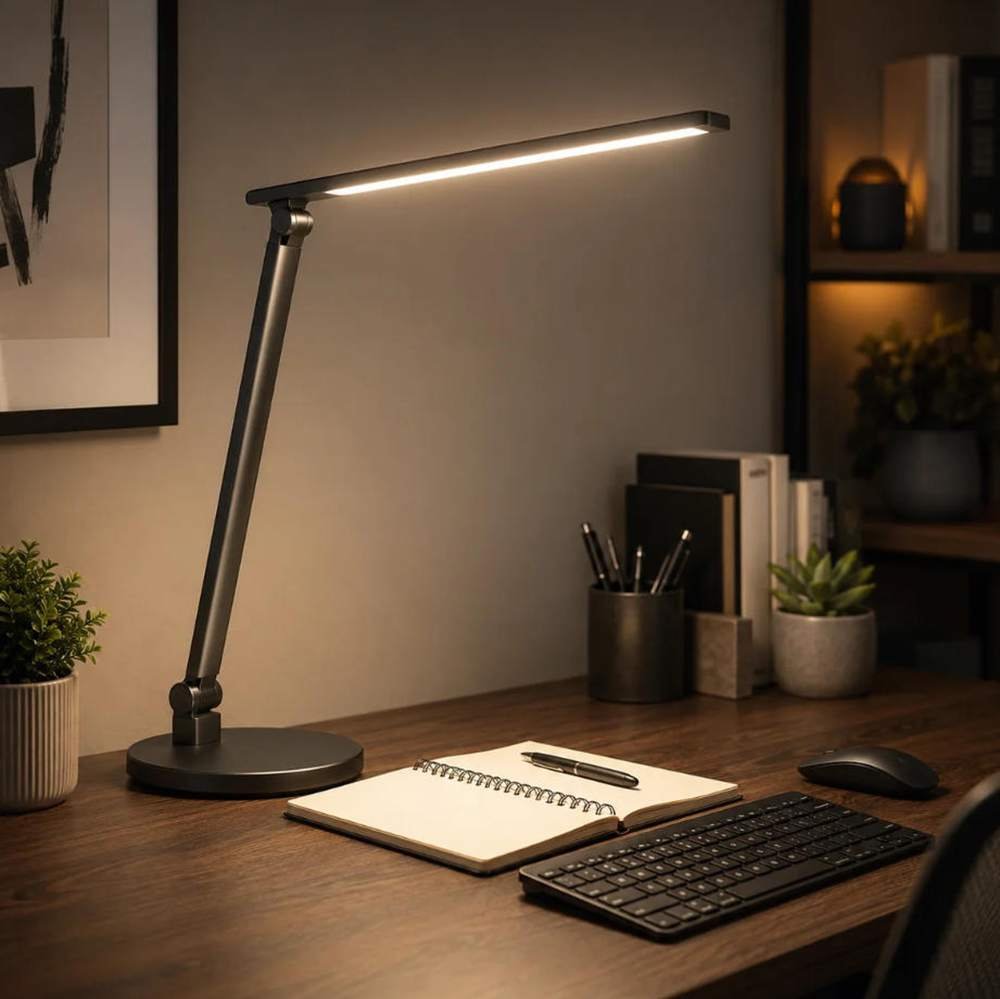
A desk lamp should not only provide light but also allow you to control where the light goes.
A fixed-position lamp may look simple, but it can become inconvenient when your working requirements change.
A quality LED desk lamp often includes:
Adjustable Arm
An adjustable arm allows users to:
- Move the light closer when focusing on details
- Raise the lamp for wider coverage
- Change the lighting angle
This is especially useful for designers, students, and professionals.
Rotatable Lamp Head
A rotating lamp head allows you to direct light exactly where needed.
For example:
- Point downward for writing
- Tilt sideways for reading
- Adjust away from the monitor to reduce reflections
Foldable Design
Foldable desk lamps are becoming increasingly popular because they offer:
- Easy storage
- Portable use
- Space-saving advantages
This is especially valuable for small home offices or shared workspaces.
5. Choose LED Desk Lamp With Eye-Care Features
Many modern LED desk lamps advertise “eye protection” features, but what does this actually mean?
A high-quality desk lamp should focus on reducing visual stress through several technologies.
Flicker-Free Lighting
Some low-quality LED lights produce invisible flickering caused by unstable power control.
Although you may not notice it directly, prolonged exposure may contribute to visual discomfort.
A quality LED desk lamp should use stable LED drivers to provide consistent illumination.
Low Glare Design
Direct glare can cause discomfort, especially when:
- Working near a computer screen
- Reading glossy paper
- Using reflective surfaces
A good lamp design controls light distribution instead of simply increasing brightness.
High Color Rendering Index (CRI)
CRI measures how accurately a light source reproduces colors.
A higher CRI means objects appear closer to their natural colors.
For normal office work:
- CRI 80+ is acceptable
For creative work:
- CRI 90+ is preferred
Designers, photographers, and artists often require higher color accuracy.
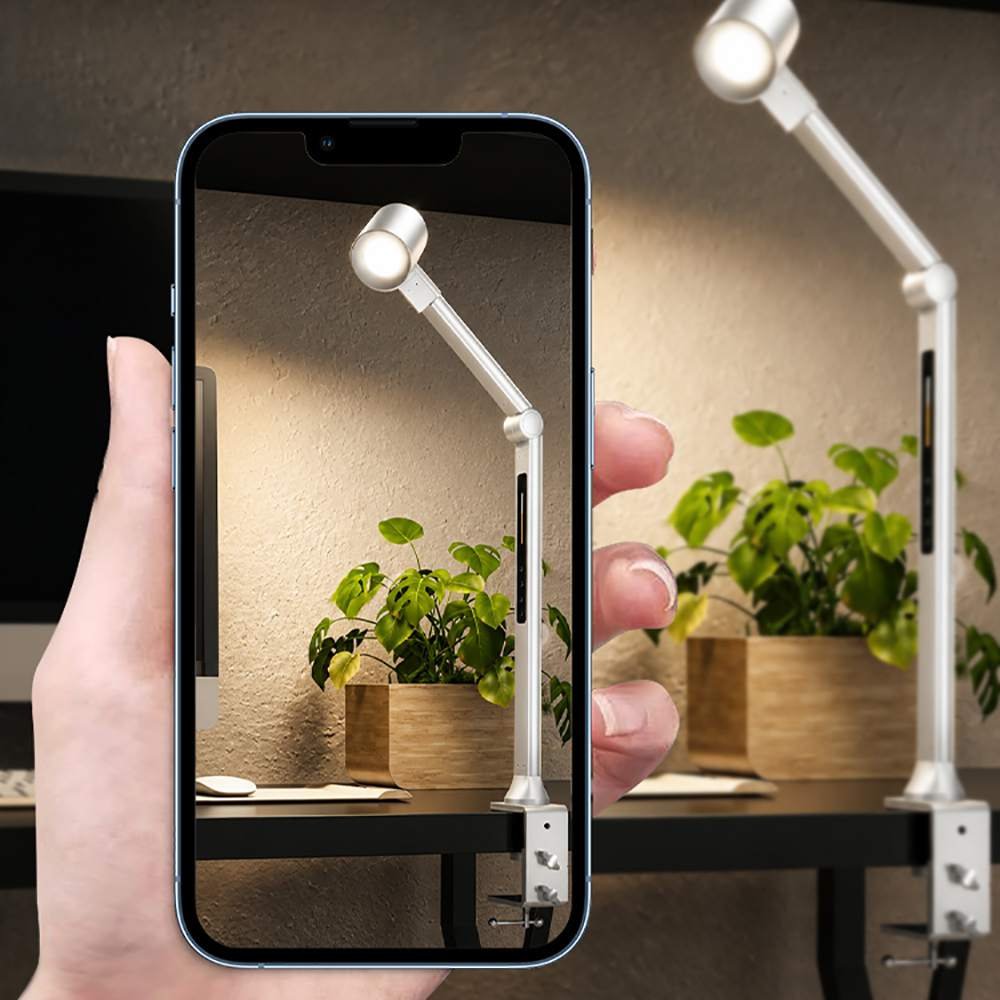
6. Consider Smart Functions and Extra Features
Modern desk lamps have evolved far beyond traditional lighting products.
Many advanced LED desk lamps now include smart functions.
Touch Control
Touch controls provide:
- Quick brightness adjustment
- Easy operation
- Modern appearance
They are especially popular in minimalist home office designs.
Multiple Brightness Levels
Different tasks require different brightness.
For example:
Morning:
- Higher brightness helps create an energetic workspace
Evening:
- Lower brightness creates a more comfortable environment
Multiple brightness settings allow better flexibility.
USB Charging Ports
Some desk lamps include built-in USB charging ports.
This allows users to charge:
- Smartphones
- Tablets
- Wireless headphones
For modern workspaces, this small feature can significantly improve convenience.
Wireless Charging
Premium desk lamps may include wireless charging bases, reducing cable clutter on the desk.
This is particularly useful for users who want a clean and organized workspace.
7. Choose the Right Desk Lamp Style for Your Space
Function is important, but design also matters.
A desk lamp is often placed in a highly visible area, so it should match your interior style.
Minimalist Desk Lamps
Suitable for:
- Modern offices
- Home workspaces
- Scandinavian interiors
Characteristics:
- Simple shapes
- Clean lines
- Neutral colors
Architect Style Desk Lamps
These feature adjustable arms and mechanical structures.
Advantages:
- Excellent flexibility
- Professional appearance
- Suitable for designers and engineers
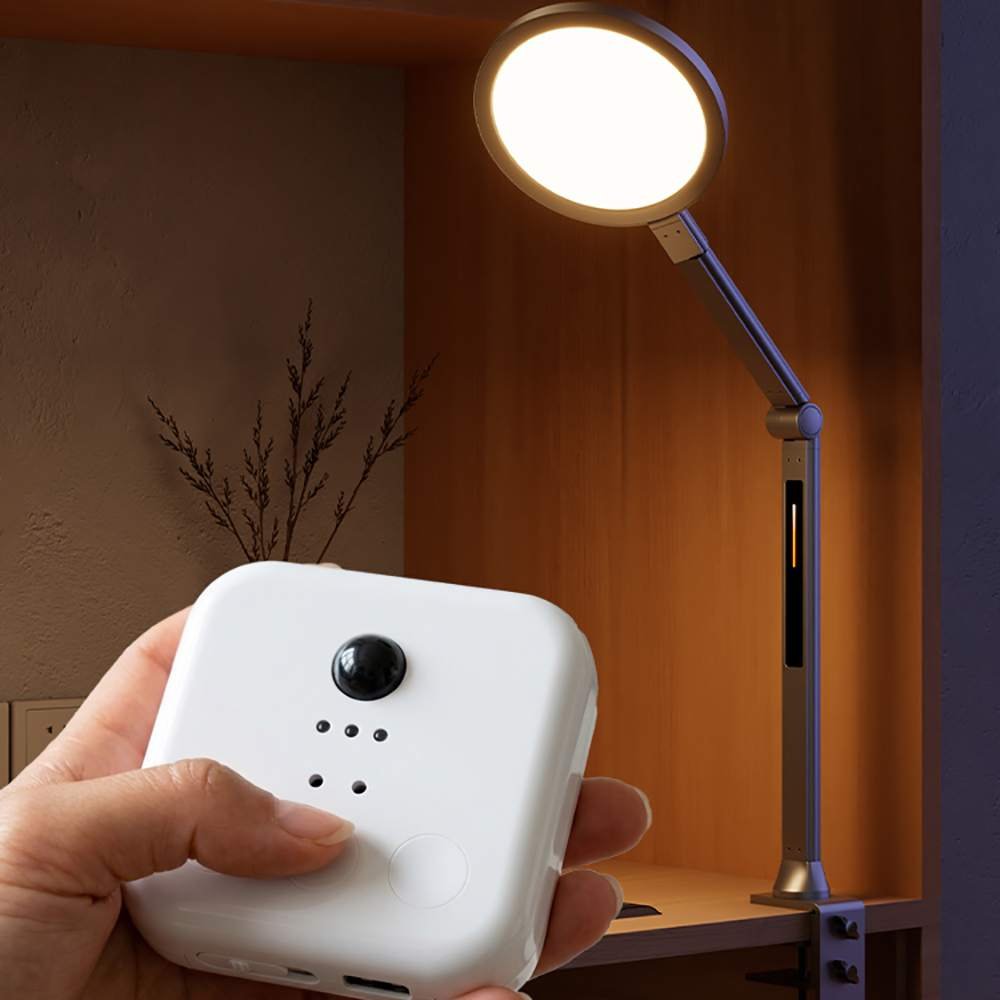
Portable Rechargeable Desk Lamps
Battery-powered desk lamps are becoming more popular because they provide:
- Wireless freedom
- Easy movement
- Flexible placement
They can be used not only on desks but also:
- Dining tables
- Bedside tables
- Outdoor spaces
8. Wired vs Rechargeable Desk Lamp: Which Is Better?
Both options have advantages.
Wired Desk Lamp
Advantages:
- Unlimited working time
- Stable power supply
- Usually higher brightness
Best for:
- Permanent office desks
- Professional workstations
Rechargeable Desk Lamp
Advantages:
- No cable restrictions
- Easy movement
- Cleaner appearance
Best for:
- Flexible home offices
- Small desks
- Multi-purpose spaces
For users who frequently change working locations, rechargeable LED desk lamps provide excellent convenience.
9. Common Mistakes When Buying a Desk Lamp
Many buyers make these mistakes:
9.1 Choosing Appearance Over Function
A beautiful lamp may not provide comfortable lighting.
Always check:
- Brightness
- Color temperature
- Adjustability
- Light quality
9.2 Buying the Brightest Lamp Available
More brightness is not always better.
Too much light can cause:
- Glare
- Eye discomfort
- Uncomfortable reflections
9.3 Ignoring Desk Size
A small desk does not necessarily need a large lamp.
A compact foldable LED desk lamp may be a better choice for limited spaces.
9.4 Ignoring Future Usage
Consider whether your needs may change.
A flexible adjustable lamp can support:
- Office work
- Reading
- Studying
- Creative projects
10. Recommended Features for the Best LED Desk Lamp
If you are looking for a high-quality LED desk lamp for home or office use, consider choosing a model with:
✓ Adjustable brightness
✓ Adjustable color temperature
✓ Flicker-free LED technology
✓ High CRI LEDs
✓ Flexible arm design
✓ Rotatable lamp head
✓ USB charging function
✓ Energy-efficient LED chips
✓ Modern ergonomic design
These features provide a better balance between comfort, efficiency, and long-term usability.
Final Thoughts
Choosing the right desk lamp is not just about finding a light source for your table.
The best lamp should match your lifestyle and working habits.
For office workers, prioritize comfort, brightness control, and glare reduction.
For students, choose stable and adjustable lighting.
For designers and creators, focus on color accuracy and flexibility.
For modern homes, a multifunctional LED desk lamp with smart controls and rechargeable features can provide both practicality and style.
A well-designed desk lamp can transform your workspace from a simple table into a more comfortable, productive, and enjoyable environment.
Before purchasing, remember this simple rule:
Choose the lamp based on how you use your desk, not only how the lamp looks.
The right lighting does not just brighten your workspace — it improves the way you work, study, and live.