
LED lighting has become almost impossible to avoid. It is in our homes, offices, kitchens, cars, smartphones, shops, and even outdoor spaces. Compared with traditional incandescent lighting, LED lights use less electricity, last much longer, and can be designed in almost any shape.
But as LED light becomes more common, another question keeps coming up:
Is LED light actually good for you, or could it be bad for your health?
You may have heard that LED lights damage your eyes, expose you to too much blue light, interfere with sleep, or cause headaches because of flickering. On the other hand, you may also have heard that LEDs are safer, more efficient, and environmentally friendly than older lighting technologies.
So which side is right?
The short answer is that LED light is not inherently bad for you. For normal everyday use, quality LED lighting is generally considered safe. However, the characteristics of the light—including brightness, color temperature, glare, flicker, and when you use it—can make a significant difference to comfort and wellbeing.
In other words, the question is not simply whether LED technology is “good” or “bad.” The more useful question is:
What kind of LED light are you using, and how are you using it?
What Makes LED Light Different?
Before discussing health effects, it helps to understand why LED lighting behaves differently from traditional bulbs.
LED stands for Light Emitting Diode. Instead of heating a filament until it glows like an incandescent bulb, an LED produces light through a semiconductor when electrical current passes through it.
This makes LED technology highly efficient. LEDs can provide the same general level of illumination while consuming considerably less electricity than incandescent lighting. Indiana University of Pennsylvania, for example, lists lower energy consumption, longer life, and reduced maintenance among the major advantages of LED lighting.
LEDs are also highly controllable. Manufacturers can produce warm white, neutral white, cool white, RGB, tunable white, dimmable, sensor-controlled, and smart LED lighting products.
That flexibility is a major advantage—but it also means that not every LED light provides the same lighting experience.
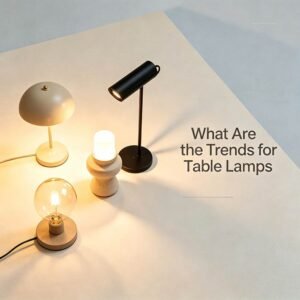
A warm, diffused 2700K LED table lamp is a very different experience from a powerful 6500K ceiling fixture shining directly into your eyes.
Are LED Lights Bad for Your Eyes?
This is probably the biggest concern people have.
The good news is that ordinary LED lighting used normally is not generally expected to cause permanent eye damage. The amount and intensity of exposure matter, and normal household lighting is very different from staring directly into a high-intensity LED source.
One recent LED safety review notes that everyday white-light LEDs are generally safe when properly specified and used, while glare, excessive brightness, blue-light exposure at night, and poor-quality drivers are more practical concerns.
However, “safe” does not necessarily mean “comfortable.”
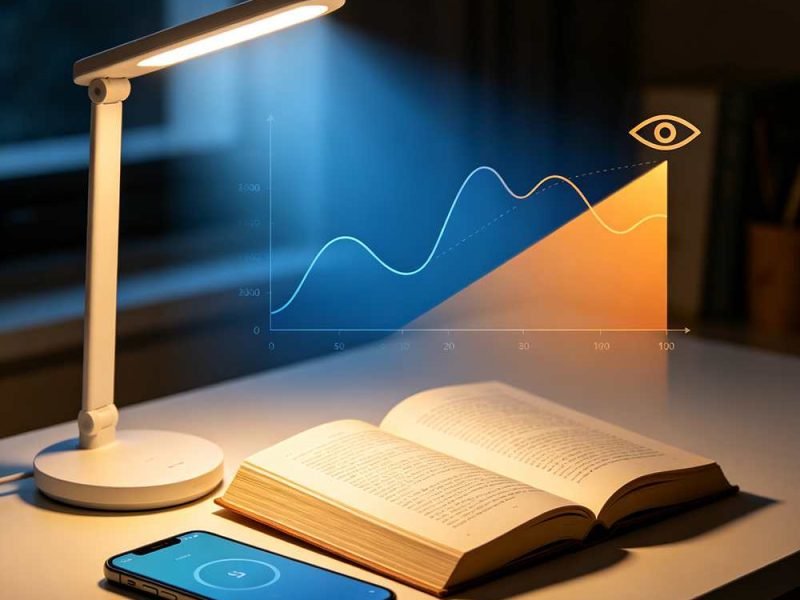
A poorly designed LED light can be extremely bright, produce significant glare, or have noticeable flicker. You might finish a few hours of work under such a light with tired eyes or a headache even though the light has not permanently damaged your vision.
This is an important distinction:
Eye discomfort is not the same thing as permanent eye damage.
If an LED light makes you squint, gives you headaches, or feels painfully bright, the answer isn’t necessarily to stop using LED technology altogether. It may simply mean that the particular fixture, brightness level, color temperature, or installation needs to change.
What About Blue Light From LED Lights?
Blue light is another reason LED lighting sometimes gets a bad reputation.
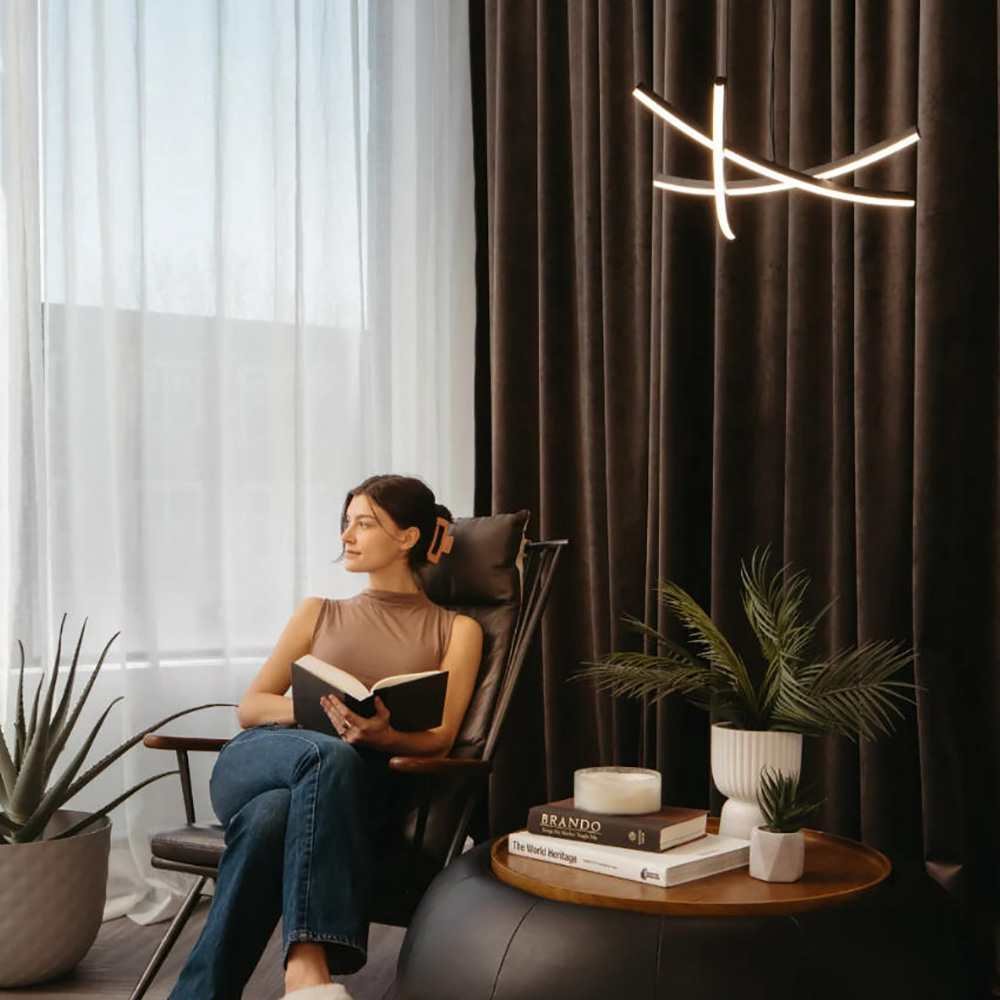
LED products—particularly cool-white and daylight-colored products—can emit a significant amount of blue-spectrum light. Blue light itself is not inherently harmful. Natural daylight contains plenty of blue light, and exposure to blue-rich light during the daytime can help promote alertness and support the body’s normal circadian rhythm.
The situation becomes more complicated at night.
Your body uses light exposure as one of the signals that helps regulate its sleep-wake cycle. Bright, blue-rich light in the evening can interfere with the body’s preparation for sleep, including the normal timing of melatonin production.
This doesn’t mean that using an LED bulb after sunset will automatically ruin your sleep.
Instead, think about intensity + color + timing.
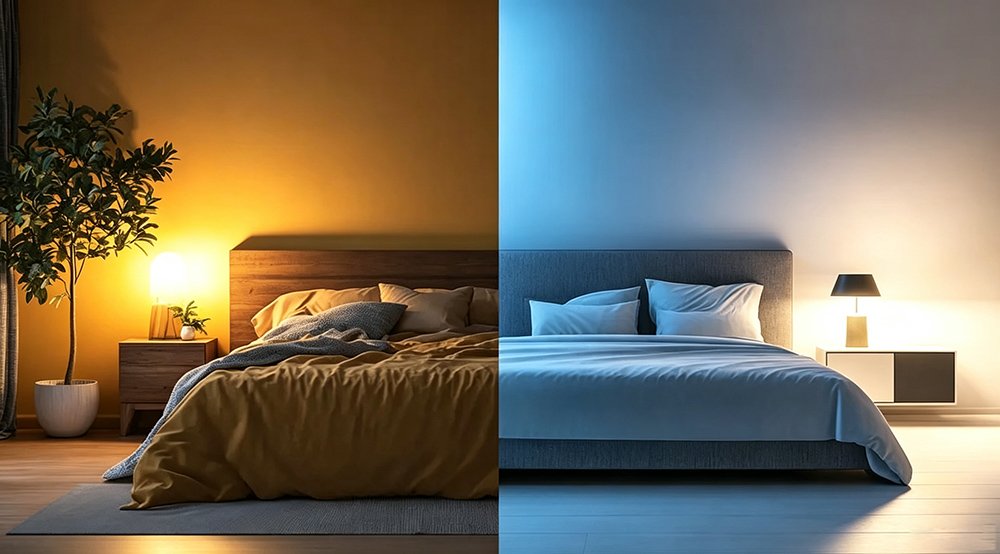
A bright 5000K or 6500K LED light blasting across a bedroom at 11 p.m. is quite different from a dim 2700K bedside lamp.
For evening spaces, warmer LED lighting is generally a more comfortable choice. A warm-white range around 2700K–3000K is often used to create a softer atmosphere, while cooler temperatures such as 4000K and above are more commonly associated with workspaces and task-oriented environments.
Can LED Lights Cause Headaches?
They can, but the reason may not be what you think.
If you experience headaches under LED lighting, several factors could be involved:
Excessive brightness is one possibility. A light that is simply too bright for the room can cause visual discomfort.
Glare is another. An exposed LED chip can be much more intense when viewed directly than the same light source behind a diffuser.
And then there is flicker.
Some LED products fluctuate in light output because of the way their driver regulates electrical current. This fluctuation may be visible, or it may occur at a frequency that you don’t consciously notice. Some people are more sensitive to it than others, and poor-quality LED drivers can make the problem worse.
This is why two LED lights with the same wattage and color temperature can feel completely different.
A well-designed LED fixture with good thermal management, optics, and driver technology may feel comfortable for hours. A poorly designed product may become annoying surprisingly quickly.
Is Flickering LED Light Dangerous?
Not every flickering LED light represents a serious safety hazard.
Flickering can result from several things, including a poor-quality driver, an incompatible dimmer, unstable electrical supply, or a component that is beginning to fail.
However, persistent flickering is worth investigating, especially if it is accompanied by buzzing, unusual heat, burning smells, or electrical problems.
From a comfort perspective, flicker can also be problematic for sensitive users. Some people may experience headaches, fatigue, or discomfort even when they cannot consciously see the flicker.
For rooms where people spend many hours—such as offices, study rooms, kitchens, and workshops—choosing quality LED lighting with good driver design is therefore worthwhile.
Are LED Lights Too Bright?
This is another misconception worth clearing up.
LED lights are not automatically too bright.
The problem is usually that the wrong brightness has been selected for the application.
LED technology can produce anything from a tiny decorative glow to extremely powerful industrial illumination. If you install a high-output LED fixture in a small room and point it directly toward eye level, of course it may feel harsh.
But brightness can be controlled using:
- Appropriate lumen output
- Dimming
- Diffusers
- Indirect lighting
- Proper beam angles
- Multiple lower-output fixtures
In fact, good lighting design is often less about finding the brightest possible lamp and more about putting the right amount of light in the right place.
A recent LED safety guide makes a similar point: perceived harshness depends not only on raw lumens but also on how the light is distributed, diffused, and positioned.
What LED Color Temperature Is Best for Your Health?
There is no single color temperature that is perfect for every situation.
Instead, choose the color temperature according to the activity and time of day.
Color Temperature | Typical Appearance | Good Applications |
2200K–2700K | Very warm | Bedroom, bedside, relaxing spaces |
2700K–3000K | Warm white | Living room, dining room, evening lighting |
3000K–3500K | Soft neutral | Kitchen, bathroom, general residential lighting |
4000K | Neutral white | Office, study, task lighting |
5000K–6500K | Cool/daylight | Workshops, garages, detailed task work |
For example, an LED table lamp used beside a bed may benefit from a warmer color temperature, while a desk lamp used for detailed work may benefit from a more neutral white.
Similarly, an under cabinet light used for food preparation might work well around 3000K–4000K depending on the kitchen design and the user’s preference, while a decorative cabinet light used at night may be more comfortable in a warmer tone.
The key is not to assume that “cooler = better visibility” or “warmer = healthier.” The appropriate choice depends on what you are doing.
Are LED Lights Better Than Incandescent Lights?
When energy consumption and lifespan are considered, LEDs have some clear advantages.
LED lights generally consume less electricity and can operate for much longer than traditional incandescent bulbs. That means lower energy consumption and fewer replacements over the life of the product.
LEDs also offer more flexibility in terms of dimming, color temperature, smart control, and product design.
But incandescent lighting does have one characteristic that some people still prefer: its naturally warm spectrum and familiar visual appearance.
Fortunately, modern LED technology has largely closed that gap. Warm-white LEDs can now provide a much more traditional atmosphere without requiring an incandescent filament.
So if you like the cozy appearance of traditional bulbs, you don’t necessarily have to give up that atmosphere when switching to LED.
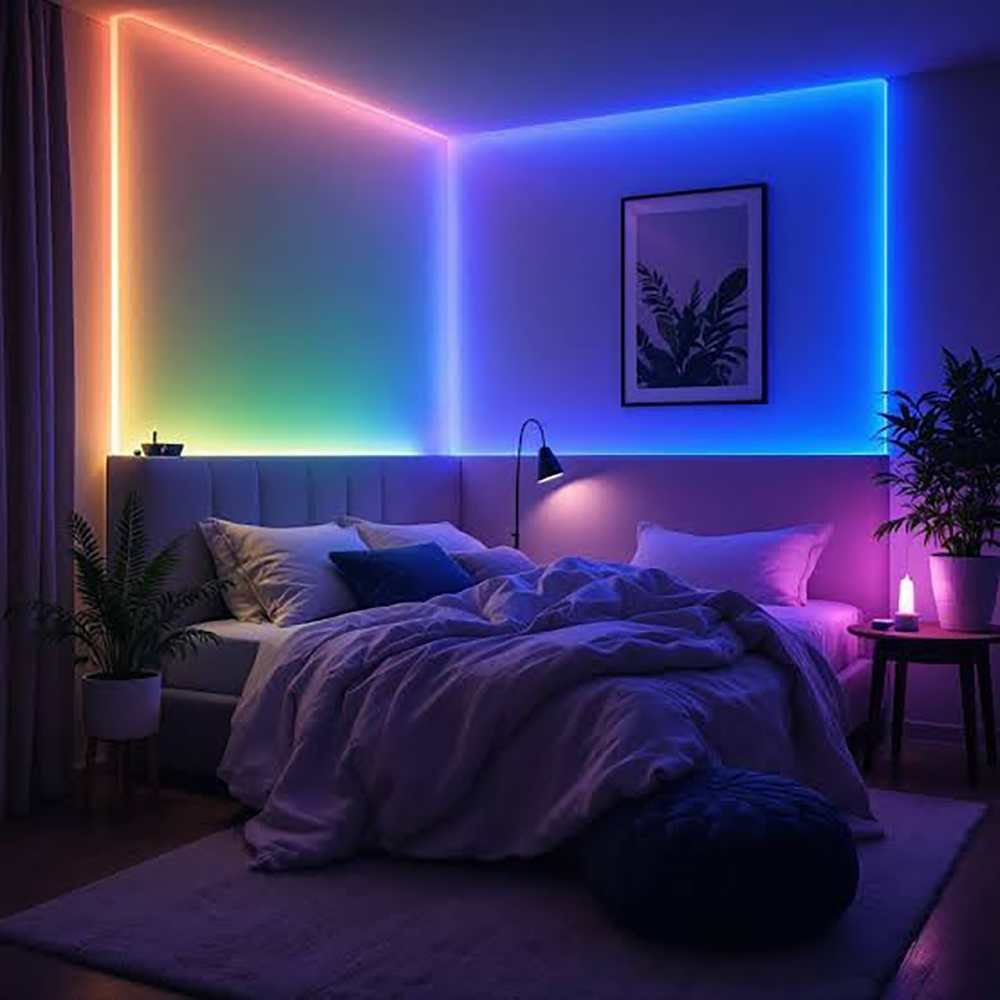
How to Make LED Lighting More Comfortable
If you already have LED lights in your home and want to make them more comfortable, you don’t need to replace everything tomorrow morning.
Start with the simplest changes.
First, reduce unnecessary brightness. If you are using a dimmable fixture, try lowering the output.
Second, reduce direct glare. Avoid positioning exposed LED sources directly in your normal line of sight. Diffusers and indirect lighting can make a surprisingly large difference.
Third, choose warmer light in the evening. A 2700K–3000K LED light is generally more relaxing than a bright daylight-colored source late at night.
Fourth, choose quality products. Driver quality matters, particularly for products that will operate for many hours each day.
Finally, think about the whole lighting environment. Instead of relying on one extremely bright ceiling fixture, combine ambient lighting, task lighting, and accent lighting. This allows different areas to have different brightness levels.
What About LED Lights and the Environment?
Health isn’t the only reason LEDs have become popular.
Their lower electricity consumption can reduce the energy required to provide lighting, while their long operating life means fewer replacement products are needed over time. These characteristics can reduce both operating costs and the amount of lighting waste generated through frequent replacement.
LEDs also do not contain mercury in the way fluorescent lamps do. However, LED lamps contain electronic components and should still be disposed of responsibly rather than automatically thrown into ordinary household waste.
So LED lighting can have environmental advantages, but product quality, manufacturing, energy source, lifespan, and end-of-life disposal all matter.
So, Is LED Light Good or Bad for You?
After looking at the different concerns, the answer becomes much less dramatic than many internet headlines suggest.
LED light itself is not simply “good” or “bad.”
Quality LED lighting used appropriately offers significant advantages: low energy consumption, long operating life, flexible color temperatures, dimming options, and a huge range of applications.
At the same time, poorly designed or poorly installed LED lighting can create real comfort problems. Excessive brightness, glare, inappropriate color temperature, and flicker can make a lighting environment unpleasant. Bright, blue-rich lighting at night can also interfere with the body’s normal sleep-wake signals.
And this leads to a much more useful conclusion:
Don’t ask only whether a light is LED. Ask whether it is a well-designed LED light.
When choosing LED lighting, consider the brightness, color temperature, flicker performance, glare control, driver quality, dimming compatibility, and intended application.
For daytime work, a neutral and sufficiently bright LED light can help create an effective environment. For evening relaxation, a warmer and dimmer source is usually more appropriate. And if a particular LED fixture consistently causes headaches, eye discomfort, or other symptoms, changing the lighting setup is a sensible first step.
LED technology has changed the lighting industry because it gives us far more control over light than previous generations of lighting could offer. The challenge now isn’t deciding whether LEDs are good or bad.
It’s learning how to use that control wisely.