
LED lights are often promoted as long-lasting alternatives to traditional incandescent and halogen lighting. You may see products advertised with lifespans of 15,000, 25,000, 50,000 hours, or even longer. But sooner or later, almost every LED lighting user asks the same question:
Can LED lights actually burn out?
The short answer is yes, LED lights can eventually fail, but they usually do not fail in exactly the same way as traditional incandescent bulbs.
Instead of suddenly going from full brightness to complete darkness, an LED light often becomes gradually dimmer as it ages. However, the LED chip is not necessarily the first component to fail. In many LED products, the driver, power supply, wiring, or other electronic components can stop working before the LEDs themselves reach the end of their expected life.
Understanding this difference can help explain why some LED lights last for many years while others seem to fail surprisingly early.
Do LED Lights Really Burn Out?
Technically, LED lights can burn out or stop working completely. However, the phrase “burn out” can be misleading.
An incandescent bulb produces light by heating a metal filament. Eventually, the filament becomes too weak and breaks. When that happens, the bulb suddenly stops producing light. This is the classic “pop and it’s gone” failure most people associate with a burned-out light bulb.
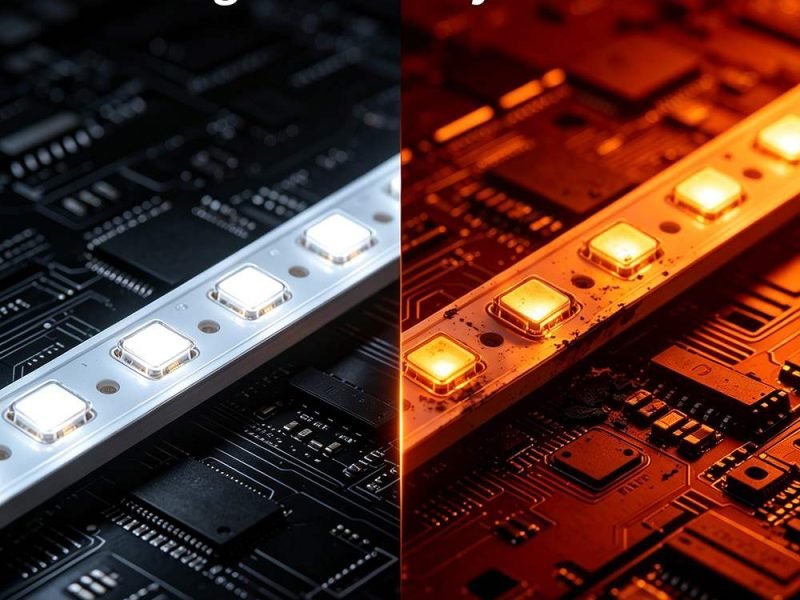
LED lighting works differently. An LED, or light-emitting diode, produces light through a semiconductor rather than a heated filament. As the LED ages, its light output normally decreases gradually. This process is called lumen depreciation.
Philips Hue, for example, explains that LED lifespan is commonly associated with the L70 standard, which refers to the point when light output has fallen to approximately 70% of its original level.
So when a manufacturer says an LED product has a lifespan of 25,000 or 50,000 hours, it does not necessarily mean that the LED will suddenly stop working after exactly that number of hours.
It is more accurate to think of the rated lifespan as a point in the product’s aging process.
What Happens to an LED as It Ages?
Imagine installing a new LED wall light in your living room.
On the first day, it produces its full rated brightness. After thousands of hours of operation, the LED may still be working, but its light output can gradually decrease.
At some point, you may notice that the light does not seem quite as bright as it used to be.
That does not necessarily mean the LED has “burned out.”
This gradual reduction in brightness is known as lumen depreciation. Philips Hue describes L70 as the operating period until an LED reaches around 70% of its original light output.
This is one of the biggest differences between LED lighting and traditional incandescent lighting.
Lighting type | Typical aging behavior |
Incandescent | Often sudden filament failure |
Fluorescent | Gradual degradation and possible flickering |
LED | Usually gradual lumen depreciation |
LED fixture with electronic driver | LED may still work while driver fails |
The important point is that LED lifespan and complete product failure are not always the same thing.
How Long Do LED Lights Last?
There is no single lifespan that applies to every LED light.
Different products use different LED chips, drivers, housings, thermal-management systems, and electronic components. Installation conditions and usage patterns also make a difference.
Philips Hue currently lists many of its smart LED products at approximately 25,000 hours.
Other LED lighting products may advertise 30,000, 50,000, or more hours depending on their design and application.
For perspective, a 25,000-hour LED used for approximately four hours per day would theoretically represent more than 17 years of operation. At eight hours per day, it would be roughly 8.5 years.
Of course, these calculations should not be interpreted as a guarantee that the complete fixture will continue working perfectly for that exact period.
The rated life of the LED source can be different from the service life of the complete lighting product.
The LED Chip May Not Be the First Thing to Fail
This is where things get interesting.
When an LED fixture stops working, many people naturally assume that the LED itself has burned out. In reality, another component may have failed first.
One of the most important components is the LED driver.
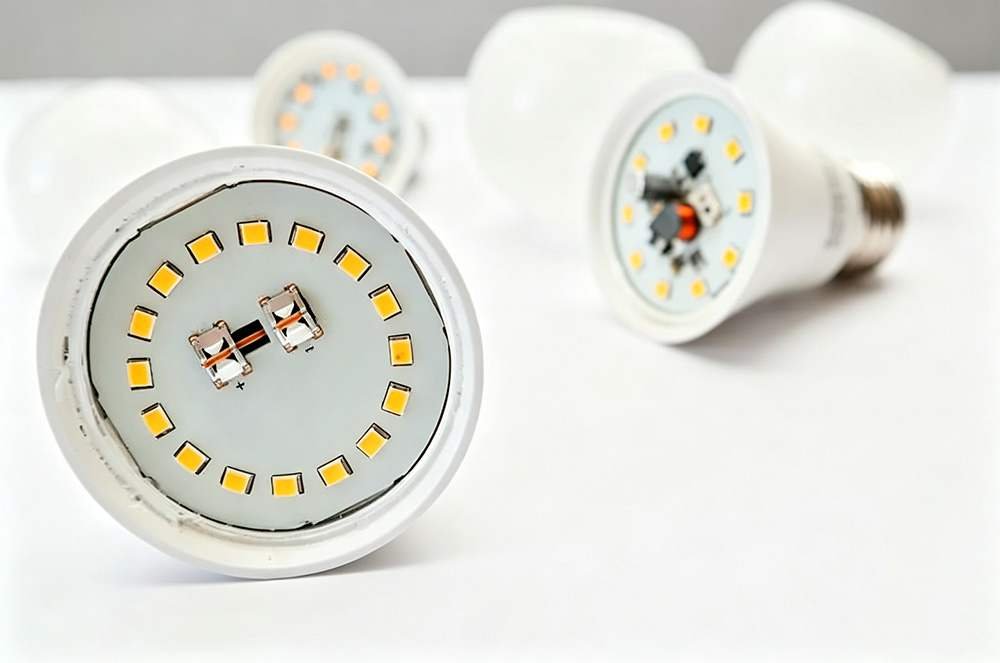
The driver converts and regulates electrical power so that the LED can operate correctly. If the driver fails, the LED chips may still be perfectly functional—but the fixture may no longer produce light.
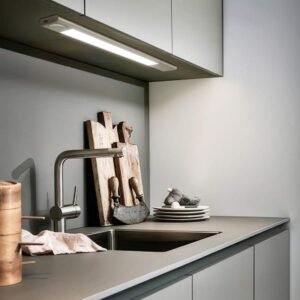
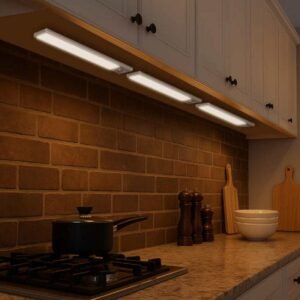
This is particularly important for integrated LED products such as LED wall lights, under cabinet lights, desk lamps, and linear lighting.
A Reddit discussion about LED lifespan illustrates this distinction particularly well. Users described LEDs becoming dimmer or flickering after extensive operation, while others pointed out that heat management and the electronics surrounding the LED can play a major role in determining actual lifespan.
In other words:
An LED light that stops working is not necessarily an LED chip that has burned out.
The failure may have occurred somewhere else in the system.
Why Do Some LED Lights Burn Out Early?
If LEDs are designed to last thousands of hours, why do some products fail after only a few months or a few years?
There are several possible explanations.
Heat Is One of the Biggest Enemies of LED Lighting
LEDs are more energy-efficient than incandescent bulbs, but that does not mean they produce no heat.
The LED junction still generates heat, and that heat needs to be transferred away from the LED.
If the fixture has poor thermal management, heat can accumulate inside the housing. Over time, excessive temperature can accelerate LED degradation and affect other electronic components.
Modern.Place also identifies temperature as an important factor in LED longevity and emphasizes the importance of heat sinks and adequate heat dissipation.
This is particularly important for compact LED products where there is very little physical space for heat to escape.
A beautifully slim LED fixture may look great, but if its thermal design is poor, the electronics inside may have a much harder life.
Poor-Quality Drivers Can Cause Premature Failure
The driver is another common weak point.
A high-quality LED chip paired with a poor-quality driver is not necessarily a long-lasting lighting solution.
Voltage regulation, component quality, surge protection, thermal design, and electrical compatibility can all influence how long the driver survives.
This is one reason why two LED lights with similar wattage and brightness can have very different real-world lifespans.
Voltage Fluctuations and Electrical Problems
LED electronics can also be affected by unstable electrical conditions.
Voltage fluctuations, electrical surges, poor wiring, loose connections, or an incompatible dimmer can potentially cause premature failure.
Philips Hue notes that power-supply quality and voltage conditions can influence LED lifespan, while also emphasizing the importance of using compatible dimmers where applicable.
If an LED light repeatedly flickers, turns off unexpectedly, or fails shortly after installation, replacing the bulb immediately may not solve the underlying problem.
The electrical environment itself may need to be checked.
Can Leaving LED Lights On 24/7 Burn Them Out?
Technically, LEDs can operate continuously, but continuous operation naturally accumulates operating hours and therefore contributes to aging.
If an LED is running 24 hours a day, it will reach its rated operating hours much sooner than a light that operates for only a few hours each evening.
For example, 25,000 hours represents approximately:
- 9 yearsat 24 hours per day
- 6 yearsat 8 hours per day
- 1 yearsat 4 hours per day
This does not mean an LED suddenly dies when the clock reaches 25,000 hours. It simply illustrates why usage patterns matter.
Modern.Place similarly notes that continuous operation can reduce the practical lifespan of LED lighting compared with more moderate usage.
For decorative lighting, there is therefore little reason to leave a light running all day and night when it is not needed.
What Does a Dying LED Light Look Like?
LED lights rarely come with a tiny warning message saying, “Please replace me next Tuesday.”
Instead, you may notice changes in performance.
Common warning signs include:
The light becomes noticeably dimmer.
This can be normal lumen depreciation, especially after many years of use.
The light starts flickering.
Flickering can be related to LED degradation, but it can also indicate a driver, dimmer, connection, or power-supply problem.
The light changes color.
A noticeable shift in color can sometimes indicate degradation of LED components or other parts of the optical system.
Only part of the fixture works.
With products containing multiple LED modules, some sections may fail while others continue operating.
The light suddenly stops working.
This is more likely to indicate a driver, power, wiring, or component failure than ordinary gradual LED aging.
The important thing is not to assume that every failure means the LED chips themselves are defective.
Can You Make LED Lights Last Longer?
Fortunately, several practical steps can help extend the service life of LED lighting.
First, pay attention to heat management. Avoid installing LED products in locations where heat becomes trapped unless the product is specifically designed for that environment.
Second, use compatible electrical components. If a product is dimmable, make sure the dimmer is compatible with LED technology and with the specific fixture.
Third, choose products with appropriate drivers and thermal designs. For integrated LED lighting, the quality of the complete fixture matters—not just the LED chip.
Fourth, avoid unnecessary electrical stress. Proper voltage, correct wiring, and suitable power supplies are essential.
Finally, buy lighting products from manufacturers that provide reliable specifications and warranty support. A low purchase price does not necessarily mean a lower total cost if the fixture needs to be replaced frequently.
Does a 50,000-Hour LED Really Last 50,000 Hours?
This is one of the most misunderstood claims in LED lighting.
If a product is advertised with a 50,000-hour lifespan, that number should not automatically be interpreted as:
“This light will work perfectly for 50,000 hours and then suddenly turn off.”
Instead, LED lifetime is commonly associated with lumen maintenance. The L70 concept measures the point at which light output has decreased to approximately 70% of its initial output.
This distinction is particularly important when comparing lighting products.
A 50,000-hour rating can be useful, but you should also consider the driver, heat dissipation, housing design, operating temperature, power quality, and overall product construction.
A great LED chip cannot compensate indefinitely for a poorly designed fixture.
So, Can LED Lights Burn Out?
Yes—but “burn out” is not quite the right way to think about LED failure.
LEDs generally age through gradual lumen depreciation rather than the sudden filament failure associated with incandescent bulbs. At the same time, an LED lighting product can absolutely stop working because of a failed driver, overheating, electrical problems, component defects, or other causes.
That is why the real question is not simply:
“How many hours will this LED last?”
A better question is:
“How well is the entire LED lighting system designed?”
For products such as LED wall lights, under cabinet lighting, LED table lamps, and integrated linear fixtures, the LED chip is only one part of the equation. Thermal management, driver quality, electrical compatibility, housing design, and manufacturing quality can all influence real-world performance.
In the end, good LED lighting should not be thought of as something that simply “burns out” one day. It is a system that gradually ages—and when properly designed, it can provide useful, reliable illumination for many years before replacement becomes necessary.