
The right lighting can significantly influence how customers experience a restaurant. It affects the appearance of food, the atmosphere of the dining room, the comfort of guests, and even how a restaurant looks in photographs and social media posts.
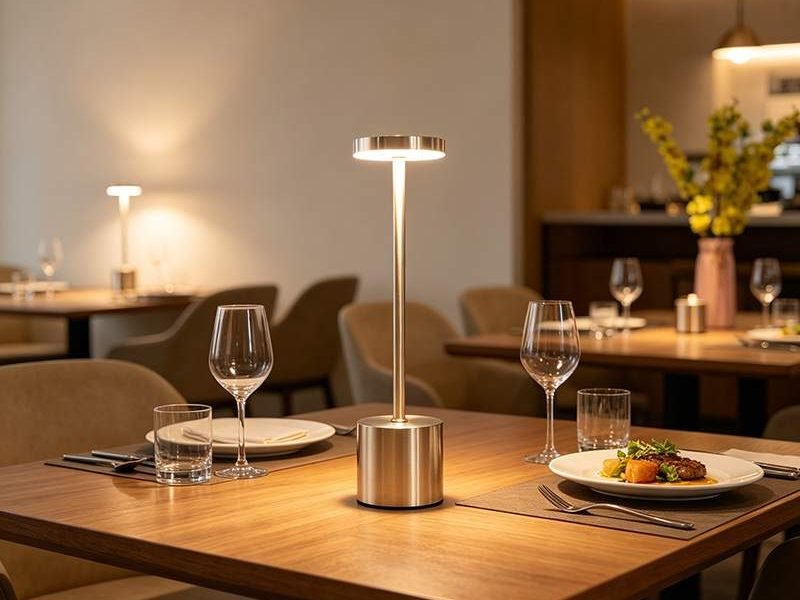
Among the different lighting options available today, the LED table lamp for restaurant applications has become increasingly popular. Unlike permanently installed ceiling or wall lighting, a table lamp can provide localized illumination exactly where it is needed. It can also create a warmer and more intimate dining atmosphere without requiring major electrical installation.
However, choosing restaurant table lamps is different from buying a decorative lamp for a home. Restaurant lighting needs to withstand frequent use, cleaning, charging, transportation, and sometimes outdoor conditions. Battery life, brightness, color temperature, durability, and ease of maintenance can all affect the long-term cost of ownership.
So what makes the best LED table lamp for restaurant use?
This guide explains the most important factors to consider before purchasing LED table lamps for restaurants, cafés, bars, hotels, and other hospitality environments.
Why Use LED Table Lamps in a Restaurant?
Traditional restaurant lighting typically comes from ceiling fixtures, pendant lights, wall lights, and recessed downlights. These systems provide general illumination, but they may not create enough light directly on the dining table.
A portable LED table lamp can solve this problem by adding a small, controllable source of light at each table.
It can provide several benefits.
Creating a More Intimate Atmosphere
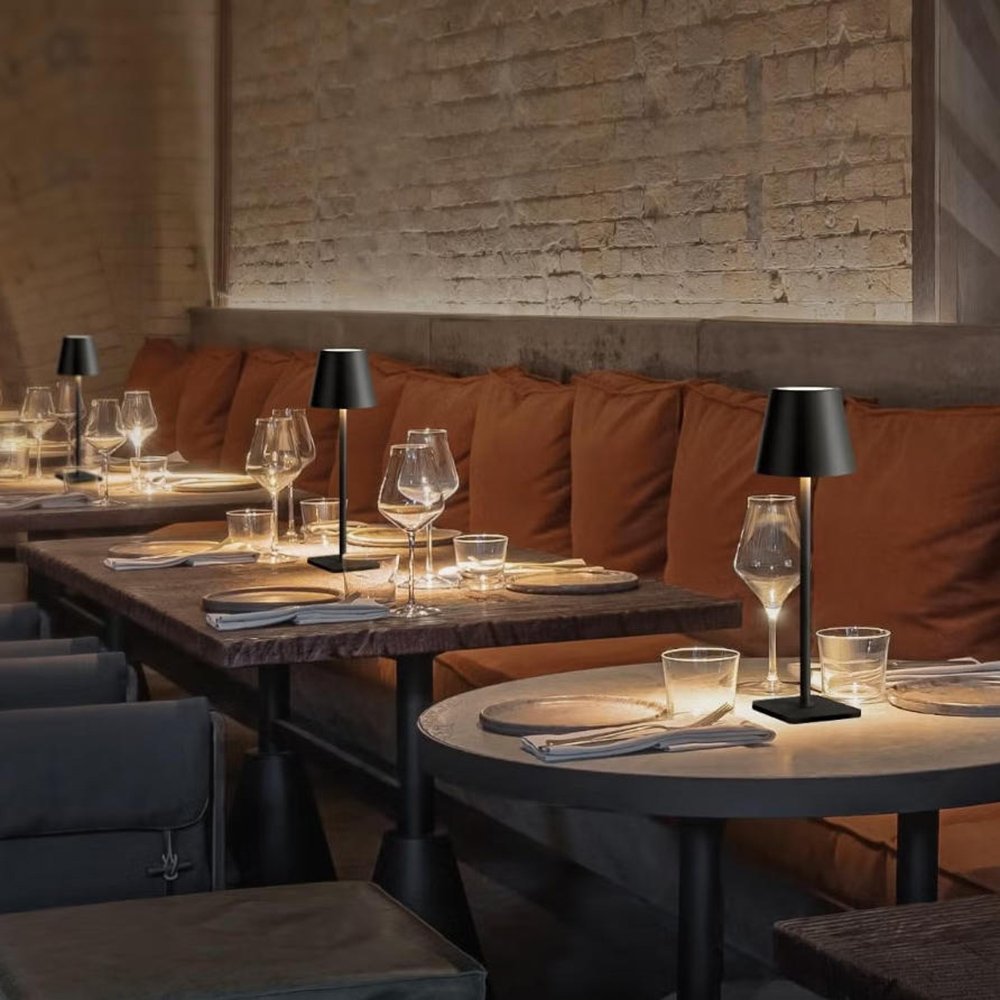
A small pool of warm light can make a dining table feel more private and comfortable.
Instead of illuminating the entire restaurant evenly, table lamps allow restaurants to create different layers of light throughout the space.
This can be particularly effective in fine dining restaurants, wine bars, cafés, hotel restaurants, and other venues where atmosphere is an important part of the customer experience.
Improving Table-Level Visibility
A table lamp can provide additional illumination for menus, food, drinks, and table settings.
This is particularly useful when the restaurant intentionally maintains a relatively low ambient light level.
Flexible Layouts
Because many modern restaurant LED table lamps are cordless, they can be moved whenever the table layout changes.
This is useful for restaurants that frequently rearrange tables for private events, large groups, or different service configurations.
Reducing Installation Requirements
A rechargeable LED table lamp does not necessarily require a permanent electrical connection at every table.
This can reduce installation complexity and allow restaurants to add or reposition lighting without modifying the electrical system.
Rechargeable or Plug-In: Which Is Better?
For restaurants, rechargeable LED table lamps are often more practical than conventional plug-in lamps.
A cordless lamp can be placed anywhere on the table without worrying about power cables running across the dining surface.
It can also be collected after service, charged in a central location, and returned to the tables before the next service.
However, rechargeable lighting introduces a new consideration: battery management.
Restaurant operators should evaluate how many hours the lamp can operate at the required brightness and how long it takes to recharge.
For example, a restaurant that operates for six hours each evening may require a lamp with enough battery capacity to complete an entire service without recharging.
For venues with multiple service periods, battery capacity becomes even more important.
What to Check
When comparing rechargeable restaurant table lamps, look at:
- Battery capacity
- Rated operating time
- Charging time
- Charging method
- Battery replacement options
- Number of charging cycles
- Charging station availability
- Whether the lamp can be used while charging
Do not judge battery performance solely by the advertised capacity in mAh. Actual operating time also depends on LED power, brightness level, battery efficiency, and control electronics.
How Bright Should a Restaurant Table Lamp Be?
Restaurant table lighting does not necessarily need to be extremely bright.
The purpose is usually to provide comfortable localized illumination rather than replace the restaurant’s main lighting system.
A lamp that is too bright can create glare and make the dining environment feel less relaxing. A lamp that is too dim may make menus difficult to read and food appear poorly illuminated.
The ideal brightness depends on the restaurant’s overall lighting design.
Fine dining establishments often prefer relatively low ambient illumination with small pools of warm table light. Casual restaurants may require brighter table lighting because customers need to read menus and see food clearly.
A dimmable LED table lamp for restaurant use therefore provides more flexibility than a fixed-output model.
Restaurants can use a lower brightness setting during dinner service and increase the output when additional visibility is required.
Choose the Right Color Temperature
Color temperature is particularly important in restaurant lighting because it affects the appearance of food and the overall atmosphere.
It is measured in Kelvin (K).
2200K–2700K: Very Warm Light
Very warm light produces a candle-like atmosphere.
It can work well in:
- Fine dining restaurants
- Wine bars
- Romantic restaurants
- Hotel lounges
- Evening dining spaces
It creates a cozy and intimate feeling but may not provide the most neutral representation of colors.
2700K–3000K: Warm White
This is one of the most versatile ranges for restaurant table lamps.
It provides a warm atmosphere while maintaining relatively good visibility.
It can work well for:
- Restaurants
- Cafés
- Bistro dining
- Hotel restaurants
- Bars
3000K–4000K: Neutral White
Neutral white produces a cleaner and more functional appearance.
It may be more appropriate for cafés, casual restaurants, breakfast areas, or venues where menu readability and food visibility are more important than creating a very intimate atmosphere.
For a flexible commercial product, adjustable color temperature can be particularly useful because the restaurant can select different settings for different environments.
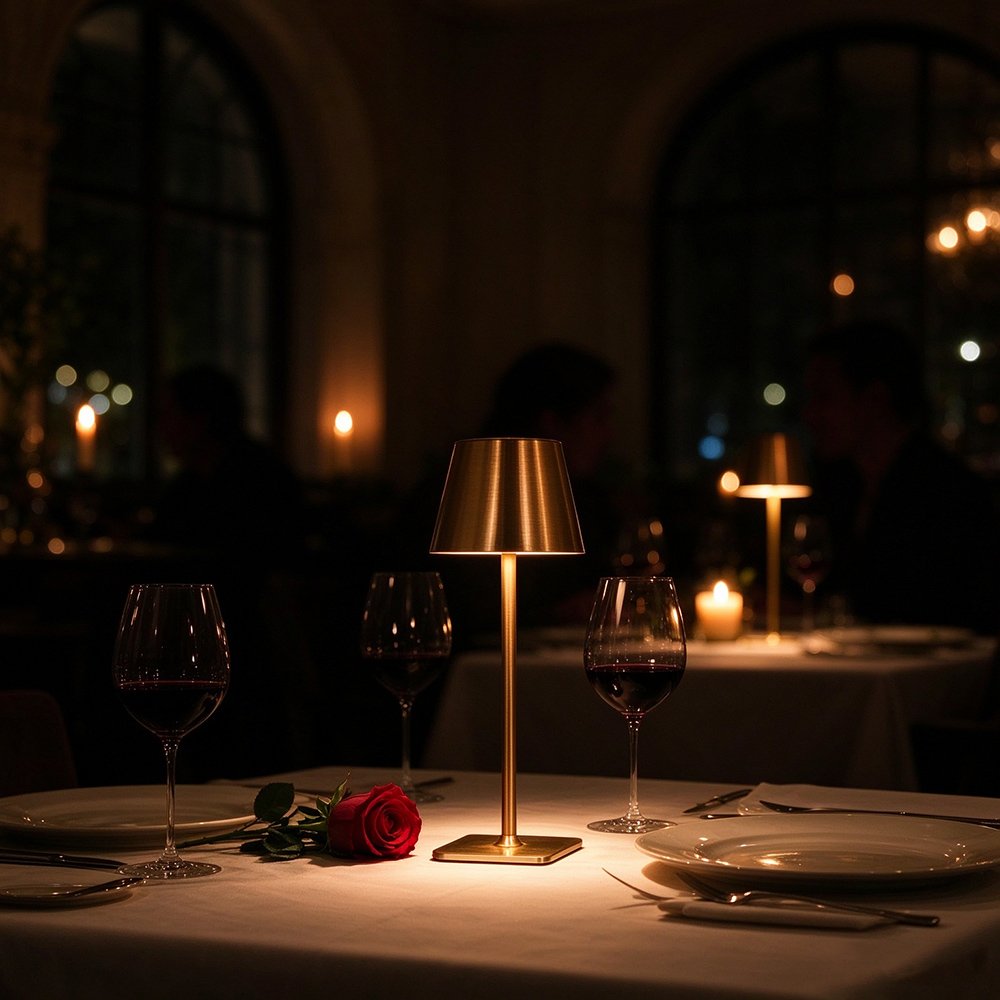
Why CRI Matters for Restaurant Table Lamps
Color temperature is only one part of light quality.
CRI, or Color Rendering Index, measures how accurately a light source renders colors compared with a reference light source.
This matters in restaurants because customers expect food to look natural and appealing.
A steak, salad, fruit, wine, dessert, and other dishes can look very different under different lighting conditions.
A higher-quality LED source with good color rendering can help preserve the appearance of food, tableware, and interior finishes.
For restaurant applications, buyers should therefore consider CRI alongside brightness and color temperature.
If the table lamp is intended to highlight food presentation, a good-quality LED source with strong color rendering should be a priority.
Dimming Is One of the Most Useful Features
Restaurant lighting conditions can change significantly throughout the day.
A café may need brighter lighting in the morning but a warmer and dimmer atmosphere during evening service.
A restaurant may also use different lighting levels for lunch, dinner, private events, or special occasions.
A dimmable LED table lamp allows the same product to support multiple scenarios.
Depending on the product design, dimming may be controlled through:
- Touch control
- Push-button control
- Rotary control
- Remote control
- Wireless control
- Smart app
For a large restaurant installation, simple touch or push-button controls may be preferable because employees can operate them quickly without additional equipment.
For higher-end hospitality projects, wireless or smart control systems can provide centralized management and scene control.
Is an IP Rating Important?
If the LED table lamp will only be used indoors, an extremely high IP rating may not be necessary.
However, restaurants can be demanding environments.
The lamps may be exposed to:
- Food splashes
- Water
- Drinks
- Cleaning chemicals
- Frequent wiping
- Outdoor humidity
If the lamps will be used on outdoor restaurant terraces, patios, balconies, or garden dining areas, weather resistance becomes significantly more important.
In these situations, look for a suitable IP rating and confirm that the entire product—not just a particular component—has been designed for the intended environment.
A water-resistant lamp can also be easier to clean and maintain, but buyers should still follow the manufacturer’s cleaning instructions.
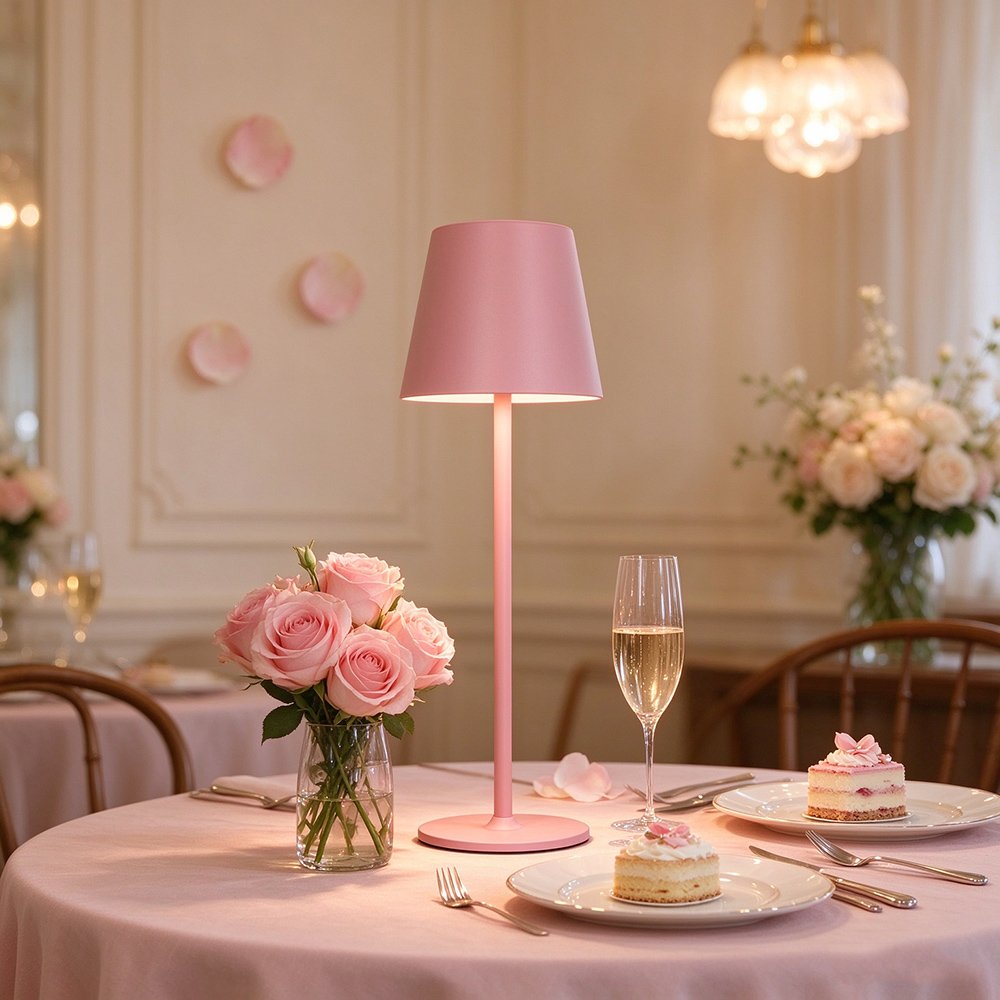
Restaurant Table Lamp Design and Materials
Appearance matters because the table lamp becomes part of the restaurant’s interior design.
The same lighting technology can look completely different depending on the housing.
Common materials include:
- Aluminum
- Stainless steel
- ABS or other engineering plastics
- Glass
- Acrylic
- Polycarbonate
- Wood or wood-look materials
Aluminum is particularly common in premium portable LED table lamps because it provides a combination of strength, heat dissipation, and a refined appearance.
The finish should also match the restaurant environment.
Black, white, silver, brass, bronze, and other finishes can be used to coordinate with tables, chairs, decorative elements, and architectural lighting.
For restaurant groups or hotel projects, customized colors and branding can also help create a more consistent visual identity.
Heat Dissipation and LED Lifespan
Restaurant operators expect lighting products to withstand frequent use.
LEDs generally have long operating lives, but product longevity depends on more than the LED chip itself.
The complete lamp may contain:
- LED module
- PCB
- Driver
- Battery
- Charging circuit
- Housing
- Diffuser
- Control components
Good thermal management helps maintain stable LED performance over time.
Aluminum housing can be useful because it can transfer heat away from the LED module while also protecting the internal components.
For high-use commercial products, manufacturers should therefore consider LED selection, PCB design, battery performance, driver quality, and thermal management as a complete system.
How Long Should a Restaurant LED Table Lamp Last?
The LED light source in a quality commercial lamp can potentially operate for tens of thousands of hours.
However, restaurant operators should not evaluate the product only by its LED rated lifespan.
The battery in a rechargeable lamp may have a much shorter useful life than the LED module.
Likewise, switches, charging ports, drivers, and other electronic components may experience wear or failure before the LEDs themselves reach their rated operating hours.
For this reason, commercial buyers should ask suppliers about:
- LED rated life
- Battery cycle life
- Driver reliability
- Warranty period
- Replacement parts
- Battery replacement
- After-sales support
A lamp that costs slightly more but has replaceable batteries and serviceable components may have a lower long-term cost than a cheaper lamp that must be completely replaced when the battery reaches the end of its useful life.
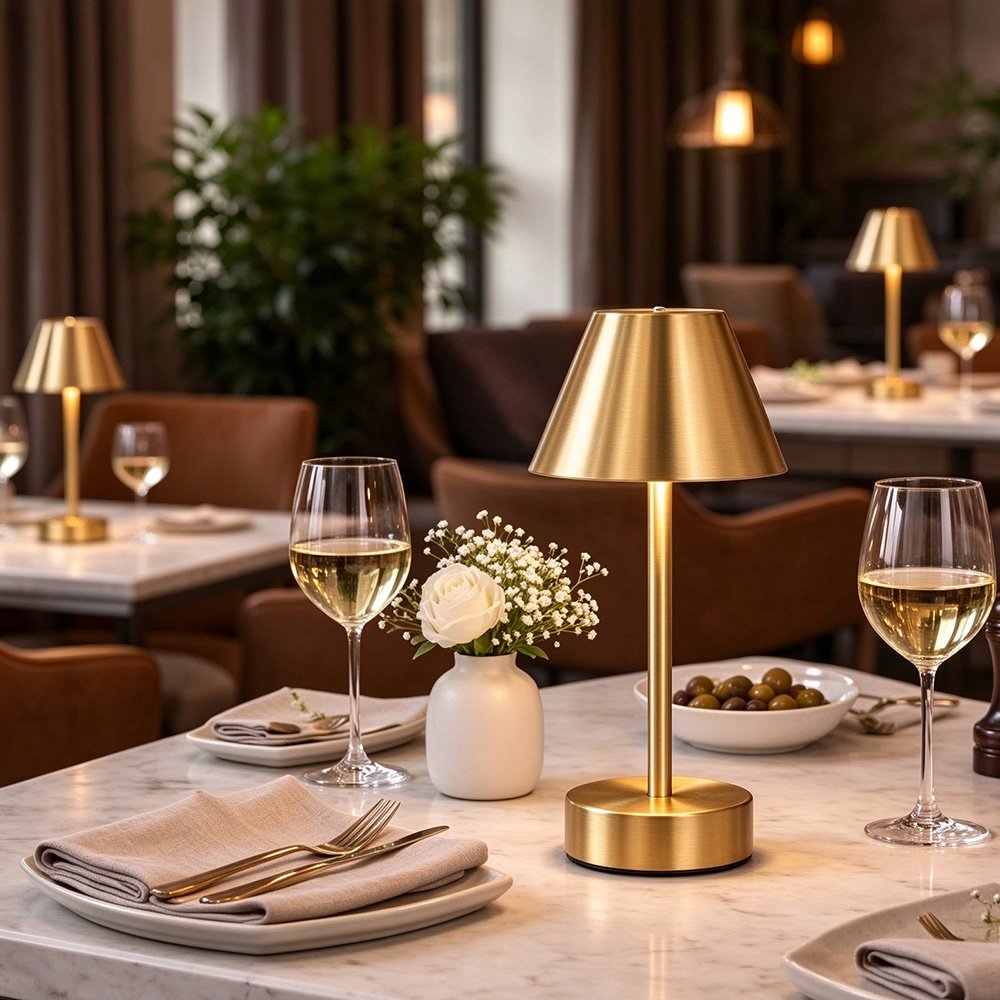
Charging and Maintenance for Restaurants
If a restaurant uses dozens or hundreds of cordless table lamps, charging management becomes part of daily operations.
For example, a restaurant with 80 tables may need 80 lamps, plus spare units for lamps that are being charged or serviced.
A centralized charging system can simplify this process.
Some commercial table lamps are designed to be charged individually, while others can be placed on multi-unit charging stations.
Before purchasing a large quantity, restaurant operators should consider where the lamps will be stored and charged between services.
The charging process should also be simple enough for staff to manage consistently.
Regular cleaning is equally important.
Restaurant lamps can accumulate dust, fingerprints, grease, and food residue. A smooth housing with fewer exposed gaps is generally easier to clean.
What About Outdoor Restaurant Dining?
Outdoor dining creates additional requirements.
An outdoor restaurant LED table lamp may need:
- Higher water resistance
- Better corrosion resistance
- Greater battery capacity
- Stable performance across temperature changes
- Durable housing
- Easy cleaning
For coastal restaurants or locations with high humidity, corrosion resistance is particularly important.
For outdoor events, portability also becomes more valuable because staff may need to move the lamps between tables frequently.
The best outdoor restaurant lamp is therefore not necessarily the same product used in an indoor fine-dining environment.
How Many LED Table Lamps Does a Restaurant Need?
The answer depends on the restaurant layout and lighting concept.
A small restaurant may use one lamp per table.
A larger restaurant might use one lamp for every two guests or position lamps strategically based on table size.
Large tables may require more than one lamp to avoid uneven illumination.
The goal should not be to maximize the number of lamps. Instead, combine table lamps with ceiling, wall, pendant, or decorative lighting to create layers.
Table lamps should complement the restaurant’s main lighting rather than compete with it.
A Practical Buying Checklist
Before ordering an LED table lamp for restaurant applications, evaluate the following:
Battery: Can it complete a full service period on one charge?
Brightness: Is the output sufficient without creating glare?
Dimming: Can employees adjust the brightness easily?
Color temperature: Does the light create the desired dining atmosphere?
CRI: Does food look natural and attractive?
Durability: Can the housing withstand frequent commercial use?
Water resistance: Is the product suitable for outdoor dining if required?
Charging: Is the charging process practical for the number of lamps being purchased?
Maintenance: Can the lamp be cleaned easily?
Serviceability: Can batteries or other components be replaced?
Design: Does the appearance fit the restaurant’s interior?
Customization: Can the manufacturer provide colors, logos, packaging, or other modifications for larger orders?
What Should B2B Buyers Ask the Manufacturer?
Restaurants, hotel groups, distributors, and hospitality procurement companies should go beyond retail specifications when sourcing table lamps in volume.
Ask the manufacturer about MOQ, sample availability, lead time, battery specifications, charging solutions, warranty, certifications, customization, packaging, and replacement parts.
If the lamps will be used across multiple locations, consistency is also important. The manufacturer should be able to maintain the same brightness, color temperature, housing finish, and battery performance across production batches.
OEM and ODM capabilities can be particularly valuable for restaurant groups that want a table lamp designed specifically around their brand identity.
For example, a manufacturer may be able to customize the lamp’s housing shape, color, finish, logo, control method, battery capacity, packaging, and lighting parameters.
Final Thoughts
The best LED table lamp for restaurant use needs to balance appearance, lighting quality, durability, battery performance, and operational convenience.
For indoor restaurants, warm white light around 2700K–3000K, good color rendering, adjustable brightness, and a rechargeable design can provide a practical combination of atmosphere and functionality.
For outdoor dining, water resistance, corrosion resistance, battery capacity, and durability become more important.
For large commercial orders, the decision should go beyond the appearance of a single sample. Battery cycle life, charging management, serviceability, quality consistency, customization, certification, and supplier manufacturing capabilities can have a much greater impact on the total cost of ownership.
Ultimately, a well-designed restaurant LED table lamp should almost disappear into the dining experience: it should provide enough light to make the table comfortable and food attractive, while creating a warm atmosphere without distracting customers. For restaurants and hospitality businesses, that balance is what makes a table lamp more than simply a decorative accessory—it becomes an important part of the overall lighting design.