
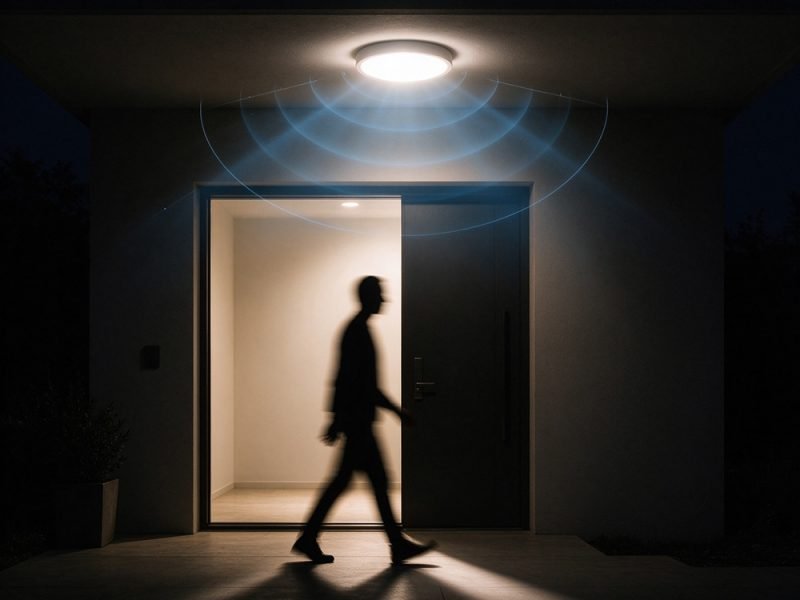
Motion sensor lights have become increasingly popular in residential, commercial, and outdoor lighting applications. From automatic closet lights and hallway lighting to outdoor security floodlights, these products offer a convenient way to illuminate an area whenever movement is detected.
Their main appeal is simple: the light turns on automatically when someone approaches and switches off after a period without detected movement. This can improve convenience, reduce unnecessary energy consumption, and provide additional security.
However, are motion sensor lights always a good choice? Despite their advantages, they also have several limitations, including false activation, detection blind spots, sensitivity to environmental conditions, and limited control over lighting duration.
Before purchasing one, it is worth understanding both sides. This article explores the main advantages and disadvantages of a motion sensor light, explains why some common problems occur, and provides practical advice on choosing the right product for different applications.
How Does a Motion Sensor Light Work?
A motion sensor light is an automatic lighting system that uses a sensor to detect movement and control the operation of the light.
When a person or object enters the sensor’s detection area, the sensor sends a signal to the lighting circuit, activating the LED light. After no movement is detected for a preset period, the light automatically switches off.
Most motion sensor lights also include a timer and, depending on the model, an ambient light sensor. The timer determines how long the light stays on after the last detected movement, while the ambient light sensor can prevent unnecessary activation during daylight.
There are several types of motion detection technologies.
PIR Motion Sensors
Passive Infrared (PIR) sensors detect changes in infrared radiation, which is naturally emitted by people and other warm objects.
When a person moves across the sensor’s detection zones, the infrared pattern changes and triggers the light.
PIR sensors are widely used in indoor lighting, including closets, kitchens, hallways, and bathrooms. They generally work well when the sensor has a clear view of the area.
Microwave Motion Sensors
Microwave sensors emit low-power electromagnetic waves and detect changes in the reflected signals caused by movement.
Compared with PIR sensors, microwave sensors can detect movement through certain non-metallic materials, such as thin plastic or glass. This can make them suitable for applications where the sensor needs to be concealed or protected inside a fixture.
However, their broader detection capability may also cause unwanted activation if movement outside the intended area is detected.
Dual-Technology Sensors
Some motion detection systems combine two sensing technologies, such as PIR and ultrasonic detection.
Using more than one detection method can help improve reliability and reduce certain false activations or missed detections. However, these systems are generally more complex and may cost more than basic sensor solutions.
Advantages of Motion Sensor Lights
Motion sensor lights offer several practical benefits. Their value is particularly noticeable in areas where people frequently enter and leave, or where manually operating a switch is inconvenient.
1. Energy Savings
One of the biggest advantages of motion sensor lighting is its potential to reduce energy consumption.
Traditional lights may remain switched on even when nobody is using the space. This is especially common in hallways, storage rooms, garages, bathrooms, and outdoor areas.
A motion sensor light automatically switches off after the detection area becomes inactive for a preset period. As a result, it can reduce unnecessary operating hours.
For example, a closet light does not need to remain on after someone leaves. Similarly, an outdoor entrance light can remain off during quiet periods instead of illuminating the area throughout the night.
The actual energy savings depend on how frequently the light is used, its power consumption, the timer setting, and whether the previous lighting system was regularly left on unnecessarily.
2. Improved Convenience
Automatic operation eliminates the need to search for a switch whenever you enter a dark area.
This is particularly useful when your hands are occupied.
Imagine entering a kitchen while carrying groceries, opening a closet while holding clothes, or walking into a storage room with several items in your hands. A motion sensor light can illuminate the space automatically without requiring you to touch anything.
For under-cabinet and wardrobe lighting, this feature makes everyday use much more convenient.
Some products also offer hand-wave or gesture control. Instead of detecting body movement automatically, these lights respond to a deliberate hand gesture, which can be especially useful when working near kitchen counters.
3. Enhanced Safety
Dark hallways, staircases, garages, and outdoor pathways can create potential hazards.
Motion sensor lights help illuminate these areas as soon as someone approaches, reducing the need to walk through darkness or locate a switch.
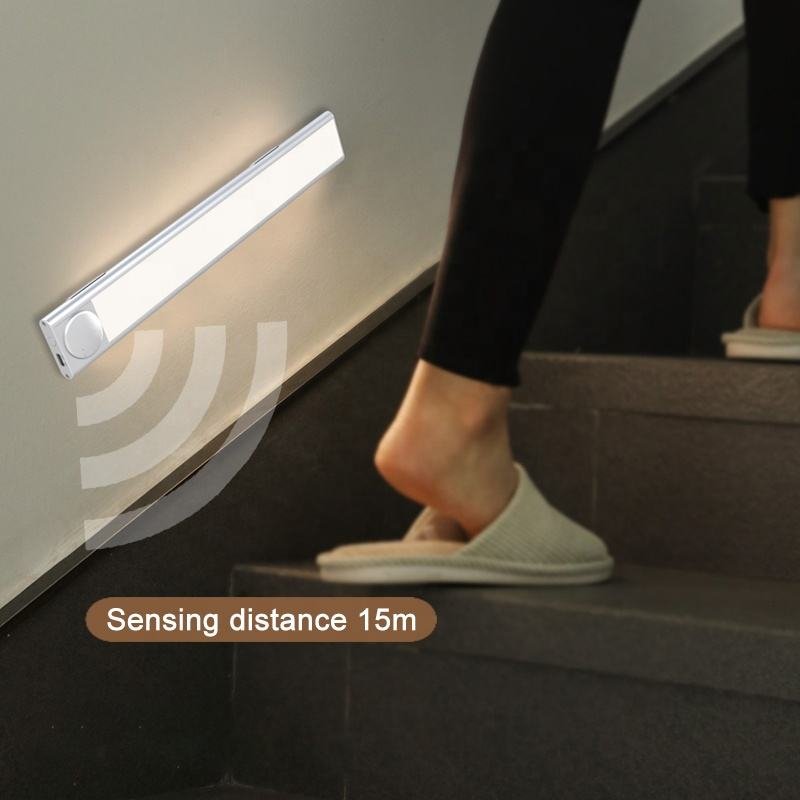
For example, an automatic light near a staircase can help people see steps and obstacles during nighttime movement. Outdoor sensor lights can also illuminate driveways, entrances, and garden paths when residents or visitors approach.
This benefit can be particularly valuable for households with children, older adults, or people who frequently move around the home at night.
4. Additional Security
Motion-activated outdoor lighting can contribute to home security.
When a light suddenly switches on as someone approaches a building, it may attract attention and discourage unwanted activity. It can also make entrances and surrounding areas more visible to residents or security cameras.
For example, motion sensor floodlights can be installed near garages, side entrances, driveways, and backyards.
However, motion sensor lighting should be considered a supporting security measure rather than a complete security solution. It cannot replace appropriate locks, alarms, cameras, or other security systems.
5. Longer Effective Lighting Life
LED lights already offer long service life compared with many traditional lighting technologies.
When a motion sensor reduces the total number of hours a light operates, it may further reduce the amount of time the LED system spends in use.
This can be beneficial in areas where lighting is only occasionally required.
However, frequent switching may affect certain electronic components, and actual product lifespan depends on LED quality, driver design, thermal management, and switching performance. Therefore, reduced operating hours do not automatically guarantee a longer service life.
Disadvantages of Motion Sensor Lights
Although motion sensor lights offer clear benefits, they are not suitable for every situation. Some limitations may affect daily convenience, especially when the sensor is poorly selected or incorrectly installed.
1. False Activation
False activation is one of the most common complaints about motion sensor lights.
A sensor may detect movement that does not come from a person intentionally using the space. For example:
- Pets moving around the house.
- Tree branches or plants swaying in the wind.
- Passing vehicles near outdoor lighting.
- Sudden environmental temperature changes affecting PIR detection.
- Movement in adjacent areas detected by an overly sensitive microwave sensor.
When this happens, the light may switch on even when nobody needs it.
Frequent false activation can become annoying, particularly in bedrooms or outdoor areas where unexpected lighting may disturb people.
To reduce this problem, choose a product with adjustable sensitivity and install it in a position that covers only the intended detection area.
2. Limited Detection Range and Blind Spots
A motion sensor light can only respond to movement within its effective detection area.
The detection range and angle vary depending on the sensor technology, lens design, installation height, and surrounding environment.
PIR sensors generally require a clear line of sight. Walls, furniture, cabinet doors, and other obstacles can block the sensor from detecting movement.
For example, if a PIR sensor is installed inside a closet but hidden behind clothing or shelving, it may not detect someone opening the door or reaching into the storage area.
Movement direction can also influence detection. Some PIR sensors respond more reliably when a person moves across the sensor’s detection zones than when walking directly toward it.
Microwave sensors can overcome certain line-of-sight limitations, but they may detect movement beyond the intended area.
Therefore, it is important to check the actual detection angle and range rather than relying only on the maximum distance stated in a product description.
3. Unexpected Automatic Shut-Off
Another disadvantage is that a motion sensor light may turn off when someone is still using the space but has stopped moving.
This is particularly noticeable with PIR-based products.
For example, imagine sitting in a bedroom reading a book, working at a desk, or standing relatively still while organizing clothes. If the sensor does not detect sufficient movement before the timer expires, the light may switch off unexpectedly.
You may then need to move your hand or body to reactivate it.
This can be frustrating in areas where people perform stationary activities.
A practical solution is to choose a model with an adjustable lighting duration or a manual-on mode. For workspaces and rooms where people remain still for extended periods, a conventional switch or occupancy-sensing system designed for stationary presence may be more appropriate.
4. Environmental Conditions Can Affect Sensor Performance
Motion sensors do not operate independently of their surroundings.
PIR sensors rely on detecting changes in infrared radiation. Large temperature differences, strong heat sources, direct sunlight, and nearby heating or air-conditioning equipment may affect their performance.
In very hot environments, the temperature difference between a person’s body and the background may become smaller, potentially reducing detection reliability.
Microwave sensors have different limitations. They can detect movement through certain non-metallic materials, but metal objects can block or reflect their signals. Their sensitivity may also result in unwanted detection through thin partitions or windows.
For outdoor applications, rain, vegetation, changing temperatures, and the layout of nearby buildings should all be considered when selecting an installation position.
5. Higher Initial Cost
A motion sensor light may cost more than a basic LED light because it includes additional electronic components, such as sensors, control circuits, and sometimes adjustable settings.
More advanced products may also include rechargeable batteries, remote controls, multiple sensing modes, or smart connectivity.
For simple lighting applications where a switch is already convenient, these additional features may not provide enough value to justify the higher purchase price.
However, in frequently used areas or locations where lights are often forgotten, the convenience and potential energy savings may justify the additional investment.
6. Less Control Over When the Light Turns On and Off
Traditional lighting gives users direct control over the switching process. With a motion sensor light, operation depends on the sensor’s detection logic and preset settings.
This can create inconvenience in certain situations.
For example, an outdoor light may activate whenever a neighbor walks near the property, or an indoor closet light may turn on whenever someone passes nearby.
Some products allow users to adjust detection sensitivity, lighting duration, and day/night operation. Others offer limited customization.
If you prefer more control, consider a model with manual override, multiple operating modes, or a combination of automatic and manual switching.
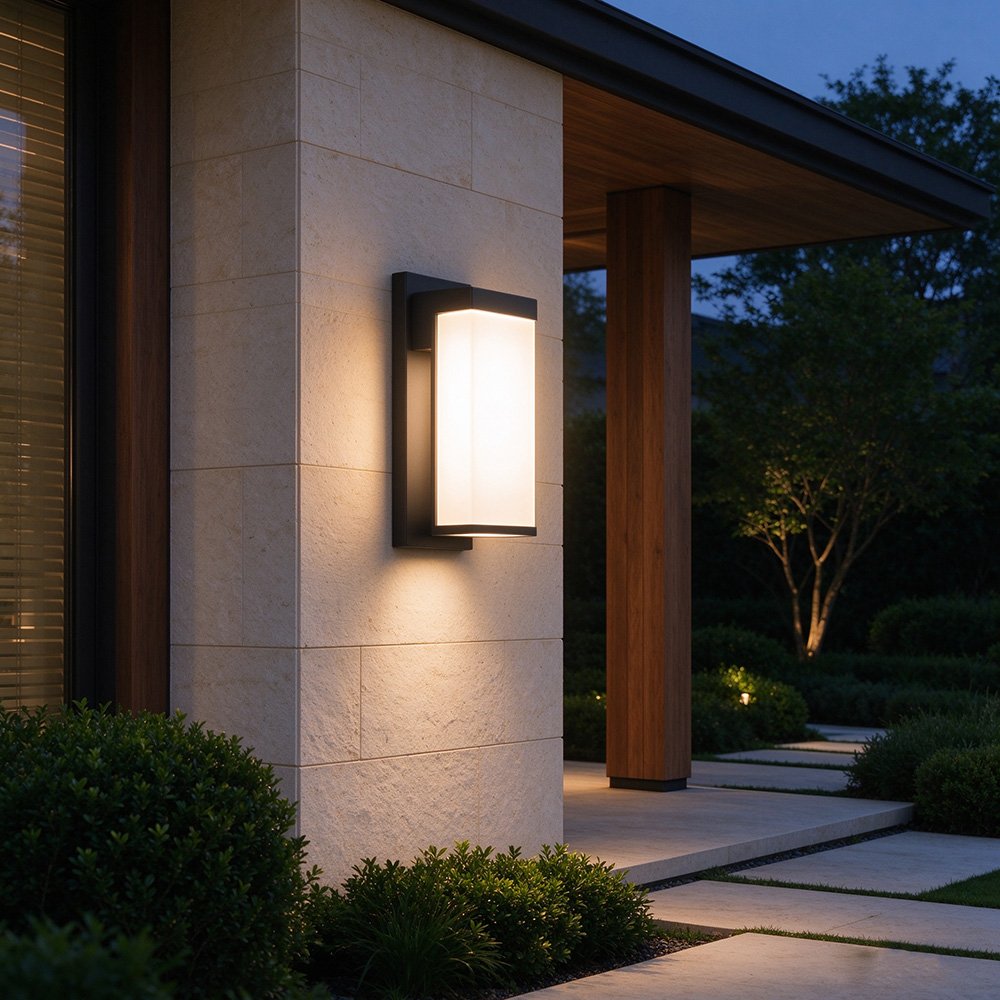
Motion Sensor Light Pros and Cons at a Glance
The following table summarizes the main advantages and disadvantages.
Advantages | Disadvantages |
Reduces unnecessary lighting operation | May activate unexpectedly |
Convenient automatic switching | Detection range and angle are limited |
Improves visibility in dark areas | May switch off when users remain still |
Provides additional security support | Environmental conditions can affect performance |
Can reduce total lighting operating hours | Usually costs more than basic lighting |
Useful for hands-free applications | Offers less direct control without manual override |
Overall, motion sensor lights are most effective when their detection technology, installation position, and operating settings match the intended application.
How to Reduce the Disadvantages of Motion Sensor Lights
Most common problems can be reduced by selecting the right product and configuring it properly.
Here are five practical recommendations.
1. Choose the appropriate sensor type.PIR sensors are suitable for many indoor applications with a clear detection area. Microwave sensors may be more appropriate when movement needs to be detected through certain non-metallic materials. Consider dual-technology solutions where more reliable occupancy detection is required.
2. Check the detection range and angle.Make sure the sensor covers the intended area without unnecessarily detecting movement outside it. Do not assume that a longer detection range is always better.
3. Look for adjustable settings.Adjustable sensitivity and timer settings allow you to customize how the light responds. A manual-on or always-on mode can also be useful for applications where continuous lighting is occasionally needed.
4. Install the sensor correctly.Avoid placing PIR sensors behind obstacles or directly beside strong heat sources. For outdoor lighting, position the sensor to minimize unwanted activation from passing vehicles or moving vegetation.
5. Test the lighting before finalizing installation.Walk through the detection area from different directions and observe how quickly the light activates and how long it remains on. Adjust the settings until the operation matches your daily needs.
Is a Motion Sensor Light Worth Buying?
Whether a motion sensor light is worth buying depends mainly on where and how you intend to use it.
For areas where people move frequently but do not stay for long, motion sensor lighting is often an excellent choice.
Application | Recommendation | Reason |
Wardrobes and closets | Highly suitable | Automatic activation makes it easy to find clothes |
Kitchen cabinets | Highly suitable | Convenient when hands are occupied |
Hallways and staircases | Highly suitable | Provides automatic illumination when people pass |
Outdoor entrances | Highly suitable | Improves visibility and provides additional security |
Garages and storage rooms | Suitable | Reduces unnecessary lighting operation |
Bedrooms | Depends on usage | Unexpected activation may disturb sleep |
Home offices | Depends on usage | Lights may turn off when users remain still |
Living rooms | Depends on preference | Manual or smart lighting may offer greater control |
For example, a rechargeable PIR sensor light can be a practical option for a wardrobe because it provides automatic illumination without requiring complicated wiring.
For outdoor entrances, a weather-resistant motion sensor floodlight may be more appropriate.
On the other hand, if you spend long periods sitting at a desk or watching television, a conventional LED light with a manual switch or a suitable presence-detection system may provide a better experience.
Conclusion
So, are there any downsides to motion sensor lights? Yes. Although they offer convenience, energy-saving potential, improved visibility, and additional security, they can also suffer from false activation, detection blind spots, unexpected shut-offs, and sensitivity to environmental conditions.
The key is not to assume that every motion sensor light will work perfectly in every environment. Different sensor technologies have different strengths and limitations, and the right choice depends on the application.
For frequently accessed areas such as closets, hallways, kitchen cabinets, and outdoor entrances, motion sensor lighting can be a practical solution. For spaces where people remain still for long periods, manual control or more advanced occupancy detection may be preferable.
By considering the advantages and disadvantages before purchasing, you can choose a motion sensor light that provides the right balance of convenience, reliability, and energy efficiency.