
When choosing an LED light, people often focus on brightness, color temperature, and energy efficiency. However, there is another important specification that directly affects how objects look under artificial lighting: CRI, or Color Rendering Index.
Have you ever noticed that the same piece of clothing looks different under two different lights? Or that food appears more attractive under one lighting source than another? The difference may be related to the CRI of the light source.
Understanding CRI in LED lighting can help you select products that provide more natural and accurate colors. This guide explains what Color Rendering Index means, how it works, why it matters, and what CRI level you should look for when purchasing an LED light.
What Is CRI in LED Lighting?
CRI stands for Color Rendering Index. It is a measurement used to describe how accurately a light source reveals the colors of objects compared with a reference light source under specified conditions.
The CRI scale generally ranges from 0 to 100. A higher CRI value indicates that the light source renders colors more similarly to the reference source.
For example:
- CRI 90–100: Excellent color rendering, with colors appearing relatively natural and accurate.
- CRI 80–89: Good color rendering, suitable for many everyday lighting applications.
- CRI 70–79: Moderate color rendering, which may be acceptable for certain general lighting environments.
- CRI below 70: Lower color rendering accuracy, generally less desirable where color appearance is important.
A CRI of 100 represents the maximum score under the traditional CRI measurement system. It does not mean that every object will look perfectly identical under every lighting condition.
For LED lighting, CRI is particularly important because different LED light sources can produce similar brightness and color temperatures while rendering object colors differently.
How Does Color Rendering Index Work?
Color Rendering Index evaluates how a light source affects the appearance of colors.
Under the traditional CRI system, a test light source is compared with a reference illuminant having a similar correlated color temperature. A set of standardized color samples is illuminated by both sources, and the differences in their perceived colors are evaluated.
The general CRI value, commonly called Ra, is calculated from the average color-rendering scores of the first eight test color samples.
These samples represent a range of relatively moderate colors. The result is expressed on a scale from 0 to 100.
It is important to understand that the traditional CRI system has limitations. Ra averages the results of eight relatively low-saturation test colors, so it may not fully describe how a light source renders highly saturated reds or other specific colors.
For this reason, lighting manufacturers and testing laboratories may also provide additional measurements, such as R9, or use more comprehensive evaluation systems such as IES TM-30.
What Is R9 in LED Lighting?
R9 is a special color-rendering score that measures how accurately a light source renders a saturated red sample.
Unlike the first eight samples used to calculate general CRI (Ra), R9 is not included in the traditional Ra average.
Why does this matter?
Red tones are important in many real-world applications, including skin appearance, food presentation, artwork, textiles, and retail displays.
An LED light may have a CRI of 90 or higher but still have a relatively low R9 value. Therefore, when accurate red rendering is important, checking both Ra and R9 can provide a more complete understanding of lighting quality.
What Is the Difference Between High CRI and Low CRI LED Lights?
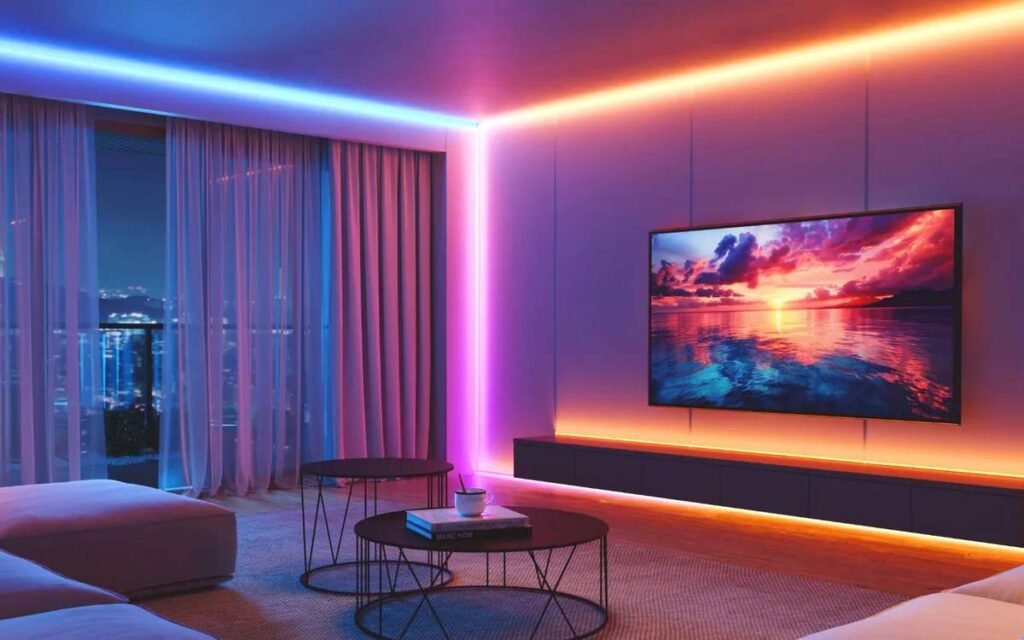
The main difference between high-CRI and low-CRI LED lights is how accurately they reproduce the colors of illuminated objects.
A high-CRI LED light generally makes colors appear more natural and closer to their appearance under the reference illuminant. This is especially noticeable when viewing skin tones, food, colorful fabrics, and decorative materials.
A low-CRI light may make some colors appear dull, distorted, or less distinguishable.
For example, in a clothing store, high-CRI lighting can help customers see fabric colors more accurately. In a kitchen, it can make the colors of fresh ingredients appear more natural.
However, higher CRI does not automatically mean brighter light, better energy efficiency, or a more comfortable color temperature. These are separate lighting characteristics that should be evaluated independently.
What CRI Level Is Best for Different Applications?
There is no single CRI requirement for every lighting application. The appropriate level depends on the environment and how important color accuracy is.
Application | Suggested CRI | Why It Matters |
Living rooms and bedrooms | 80+ | Provides natural-looking everyday lighting |
Kitchen lighting | 80–90+ | Helps reveal the natural appearance of food |
Wardrobe and closet lighting | 90+ | Makes clothing colors easier to distinguish |
Retail stores | 90+ | Helps products and materials look more accurate |
Art galleries and museums | 90–95+ | Supports accurate presentation of artwork |
Makeup and dressing areas | 90+ | Helps reveal more natural skin and cosmetic colors |
Photography and professional studios | 90–95+ | Supports more consistent color appearance |
These figures are practical selection guidelines rather than universal standards. Professional environments may require specific color-rendering performance, and the appropriate specification should be determined by the task and applicable lighting requirements.
For ordinary residential LED lighting, CRI 80 or above is a common starting point. If color accuracy is a priority, choosing a product with CRI 90 or higher is generally worthwhile.
What Are the Benefits of High CRI LED Lighting?
Choosing a high-CRI LED light can improve the visual quality of an indoor environment in several ways.
1. More Natural Color Appearance
High-CRI lighting helps objects retain a more natural appearance. This is useful in homes, retail spaces, and other environments where people interact with different colors throughout the day.
2. Better Visual Experience
When colors are rendered more accurately, it can be easier to distinguish between similar shades of clothing, furniture, decorative materials, and other objects.
3. Improved Product Presentation
For retail stores, showrooms, and display cabinets, color accuracy can influence how customers perceive products. High-CRI lighting helps present product colors and material details more faithfully.
4. More Accurate Skin and Food Colors
High-CRI lighting can be particularly valuable in bathrooms, dressing areas, kitchens, and restaurants. It helps skin tones and food colors appear more natural, especially when the light source also has good saturated-red rendering performance.
Does Higher CRI Mean Better LED Lighting?
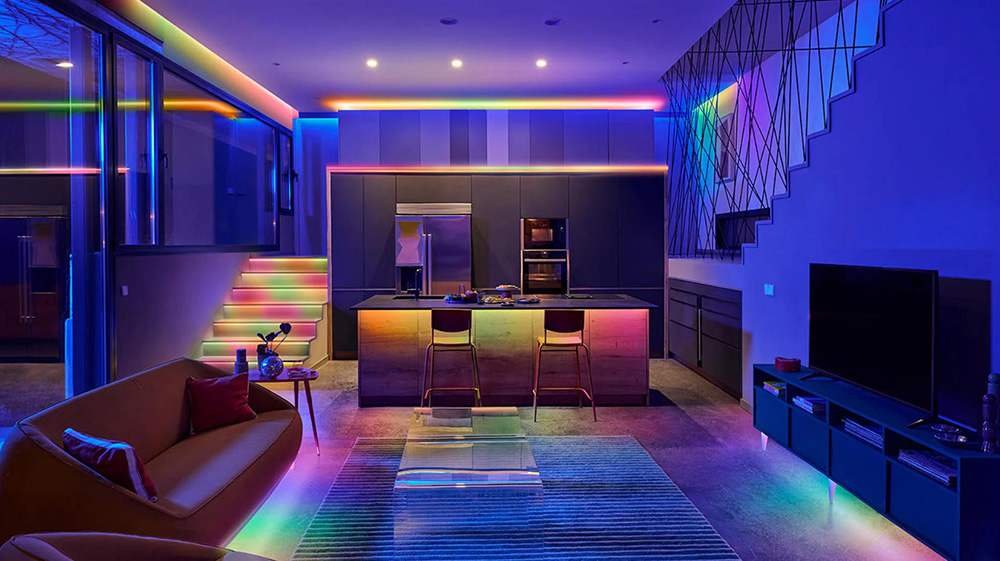
Not necessarily. CRI is an important indicator of lighting quality, but it should not be the only specification you consider when purchasing an LED light.
A high-CRI product may still have problems with brightness, glare, flicker, energy efficiency, or color consistency.
For a more complete evaluation, consider the following factors:
- Brightness:Check the lumen output to determine whether the light provides sufficient illumination.
- Color Temperature:Choose a suitable Kelvin value according to the intended atmosphere and application.
- R9 Value:Check this specification when accurate red rendering is important.
- Flicker Performance:Look for reliable driver design and credible flicker-test information.
- Beam Angle:Consider how the light is distributed across the target area.
- Energy Efficiency:Compare light output with power consumption rather than relying on wattage alone.
It is also worth noting that a high CRI value does not guarantee consistent color appearance between different LED products. Color consistency, often expressed through MacAdam steps or SDCM, is another specification worth considering in professional lighting projects.
How to Choose an LED Light with the Right CRI
Before purchasing an LED light, check the product specifications carefully.
First, identify where the light will be used. For general residential lighting, CRI 80+ is often sufficient. For wardrobes, kitchens, retail displays, and other color-sensitive environments, CRI 90+ may be a better choice.
Second, check whether the manufacturer provides detailed technical information. A reliable specification sheet should ideally include the CRI (Ra), color temperature, lumen output, power consumption, and relevant testing information.
Third, do not rely entirely on marketing descriptions such as “natural light” or “high-quality LED.” Look for measurable specifications and, where available, independent test reports.
For professional projects, it may also be useful to request samples and evaluate the lighting under actual installation conditions. This helps you assess not only color rendering but also brightness, glare, and the overall visual effect.
Conclusion
CRI, or Color Rendering Index, is an important specification for evaluating the color-rendering performance of an LED light. It indicates how accurately a light source reveals object colors compared with a reference illuminant.
For most everyday residential applications, CRI 80 or above is a reasonable starting point. For environments where color accuracy matters more, such as wardrobes, kitchens, retail displays, and makeup areas, CRI 90 or higher is often preferable.
However, choosing the right LED lighting requires more than looking at CRI alone. Brightness, color temperature, R9, flicker performance, and color consistency should also be considered.
By understanding these specifications, you can make more informed lighting decisions and select LED products that provide both functional illumination and a better visual experience.