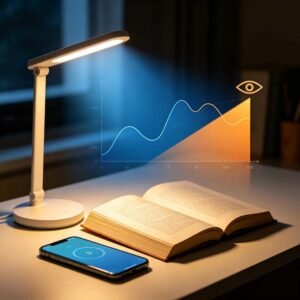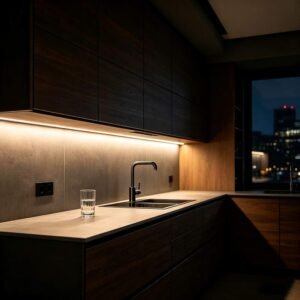

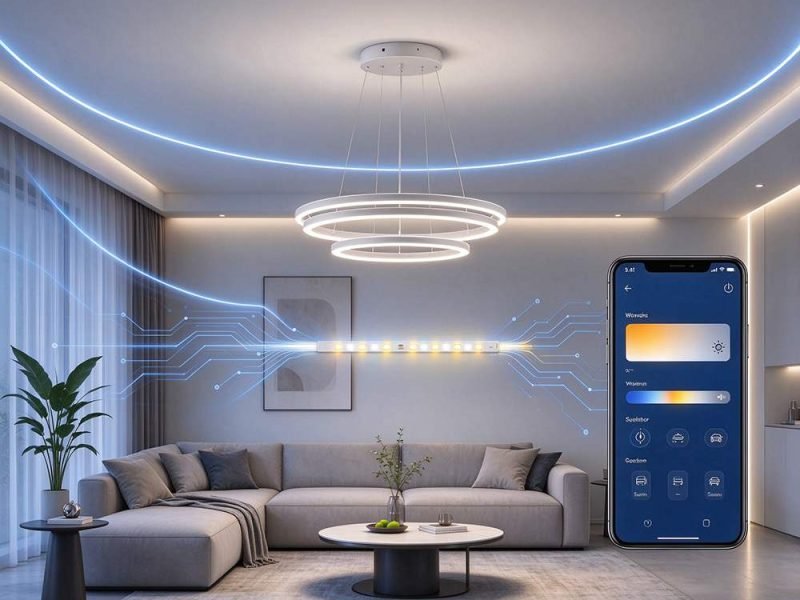
Lighting has evolved far beyond the simple function of turning a bulb on and off. Today, homeowners can adjust brightness from their phones, change color temperatures throughout the day, schedule lights to operate automatically, and connect lighting systems with other smart home devices. These capabilities are made possible by smart LED lighting, a technology that combines energy-efficient LED light sources with digital controls and connectivity.
Smart lighting is becoming increasingly popular in modern homes because it offers greater convenience, flexibility, and control over the indoor environment. However, with different control methods, communication protocols, and product types available, it can be difficult to understand what smart LED lighting actually is and which solutions are worth considering.
This guide explains how smart LED lighting works, its main features and benefits, the different types available, and how to choose the right system for your home.
What Is Smart LED Lighting?
Smart LED lighting refers to LED bulbs, light strips, lamps, wall lights, and other lighting fixtures that can be controlled or automated through digital technologies.
Unlike conventional LED lights that rely primarily on a physical switch, smart LED lighting products may support smartphone apps, remote controls, voice assistants, motion sensors, timers, and other intelligent control methods.
The term contains two important elements:
- LED lighting:Light-emitting diodes produce illumination efficiently and generally consume less electricity than traditional incandescent bulbs for a comparable light output.
- Smart control:Electronic components and communication technologies allow users to adjust lighting settings, create schedules, or trigger automatic responses.
Not every LED light is a smart light. A standard LED bulb may offer energy efficiency without any connectivity or automation. A smart LED bulb, on the other hand, may allow users to adjust brightness, change color temperature, or control the light remotely.
Smart capabilities can also be built directly into complete lighting fixtures, including cabinet lights, table lamps, wall lights, ceiling lights, and LED strip systems.
How Does Smart LED Lighting Work?
Smart LED lighting combines an LED light source, electronic control components, and a user interface or automated control system.
Although the exact design varies by product, most systems include three basic elements.
LED Light Source and Driver
The LED light source produces the light. A driver supplies the electrical power required by the LEDs and helps regulate their operation.
For dimmable or color-adjustable products, the driver and control circuitry must support the relevant functions. For example, a fixture designed to change from warm white to cool white needs an appropriate LED configuration and control system.
Smart Controller
The controller receives commands and adjusts the lighting accordingly. Depending on the product, it may control brightness, color temperature, RGB colors, operating schedules, or sensor-triggered behavior.
Some products include the controller inside the lamp or fixture, while others use a separate controller connected to an LED strip or lighting system.
Communication and Control Interface
Users interact with smart lighting through an app, remote control, voice assistant, wall controller, or sensor. Depending on the system, commands may travel through Bluetooth, Wi-Fi, Zigbee, Thread, or another supported communication method.
Not all smart lights require an internet connection. Some Bluetooth products can be controlled locally, while Wi-Fi products often provide remote access through an internet-connected app. Hub-based systems may use a dedicated bridge or compatible smart home hub.
Understanding these differences is important because the communication method affects installation, compatibility, response time, and the features available to users.
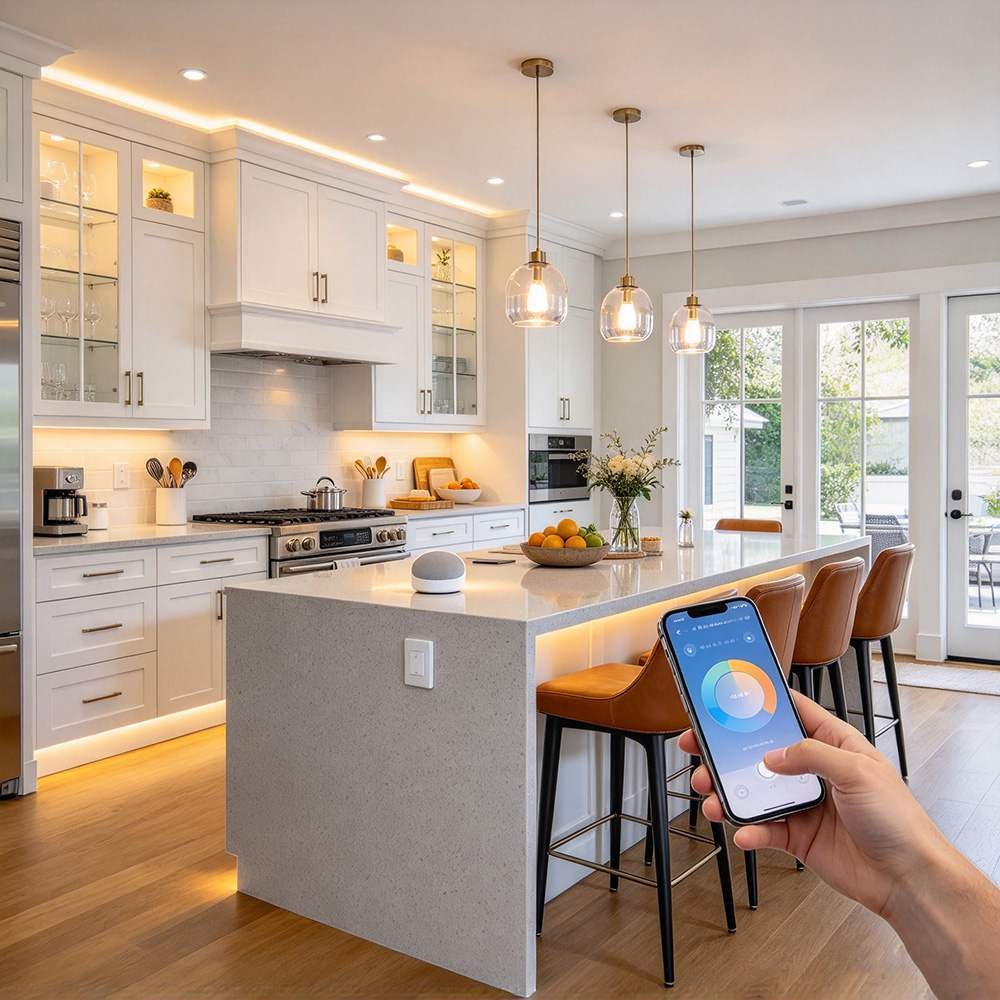
Key Features of Smart LED Lighting
Smart LED lighting offers several features that distinguish it from conventional lighting.
1. App Control and Remote Access
Many smart LED products can be operated through a smartphone app. Users can switch lights on or off, adjust brightness, select colors, and create schedules without needing to access a physical switch.
Some systems also allow remote control when users are away from home, provided the product and network support internet-based access.
This feature is particularly useful for lights installed in hard-to-reach locations, such as under kitchen cabinets, inside wardrobes, or behind furniture.
2. Dimming and Color Temperature Adjustment
Dimming allows users to adjust brightness according to the activity taking place. Brighter lighting can support cooking, cleaning, or detailed tasks, while lower brightness may be more comfortable for relaxing in the evening.
Tunable white lighting allows the user to switch between different white color temperatures. Warm white, commonly around 2700K–3000K, can create a cozy atmosphere, while cooler white settings can provide a cleaner appearance for task-oriented environments.
However, adjustable color temperature is not available in every smart light. Always check the product specifications.
3. RGB and RGBW Color Control
Some smart LED lighting products support millions of color combinations through RGB control. RGBW products add a dedicated white LED channel, which can provide more useful white illumination than relying on mixed RGB colors alone.
These features are popular for decorative lighting, gaming rooms, entertainment areas, and accent lighting behind televisions or shelves.
For everyday living spaces, it is worth prioritizing good white-light quality as well as color effects.
4. Scheduling and Automation
Smart lighting systems can operate according to predefined schedules. For example, bedroom lights can gradually turn on in the morning, while living room lights can automatically switch off at a set time.
Some systems also support scenes, which allow several lights to change together with one command. A movie scene might dim the main lights and activate subtle accent lighting, while a reading scene could brighten a lamp beside the sofa.
5. Sensor-Based Lighting
Motion sensors and occupancy sensors allow lights to respond automatically when movement or presence is detected.
For example, a motion-sensor LED cabinet light can turn on when someone approaches a kitchen worktop or opens a wardrobe. A compatible smart lighting system may also use ambient-light sensors to avoid switching on unnecessarily when sufficient daylight is available.
Sensor functions vary by product. Some lights have built-in sensors and operate independently, while others can be integrated into a broader smart home system.
What Are the Benefits of Smart LED Lighting?
1. Improved Energy Efficiency
LED technology is generally more energy-efficient than traditional incandescent lighting. Smart controls can provide additional savings by reducing unnecessary operating time and allowing users to adjust brightness to their actual needs.
For example, motion-activated cabinet lighting can switch off automatically after an area is no longer in use. Scheduling can also prevent lights from remaining on throughout the day.
Actual energy savings depend on the lighting product, usage patterns, settings, and the efficiency of the previous lighting system.
2. Greater Convenience
Smart LED lighting reduces the need to operate every light manually. Users can control several fixtures together, create preset scenes, or automate common tasks.
This can be especially helpful in larger homes, rooms with multiple lighting zones, and locations where switches are inconvenient to reach.
3. Flexible Lighting Atmosphere
A single tunable-white or RGBW fixture may support several different lighting effects. Users can adjust the atmosphere for working, entertaining, relaxing, or watching television without changing the fixture itself.
This flexibility makes smart lighting suitable for multipurpose rooms where lighting requirements change throughout the day.
4. Better Integration with Smart Homes
Compatible smart lights can work alongside other connected devices, such as voice assistants, sensors, switches, and automation platforms.
For example, a smart home routine could turn on selected lights when a compatible sensor detects activity. Other automations may link lighting to a time schedule or a supported home security system.
Compatibility should always be checked before purchasing, because not every smart light works with every platform.
What Types of Smart LED Lighting Are Available?
Smart LED lighting is available in several formats, each suited to different applications.
Smart LED bulbs: These replace conventional bulbs in compatible sockets. They are often a straightforward way to add app control, dimming, or color adjustment without replacing an entire fixture.
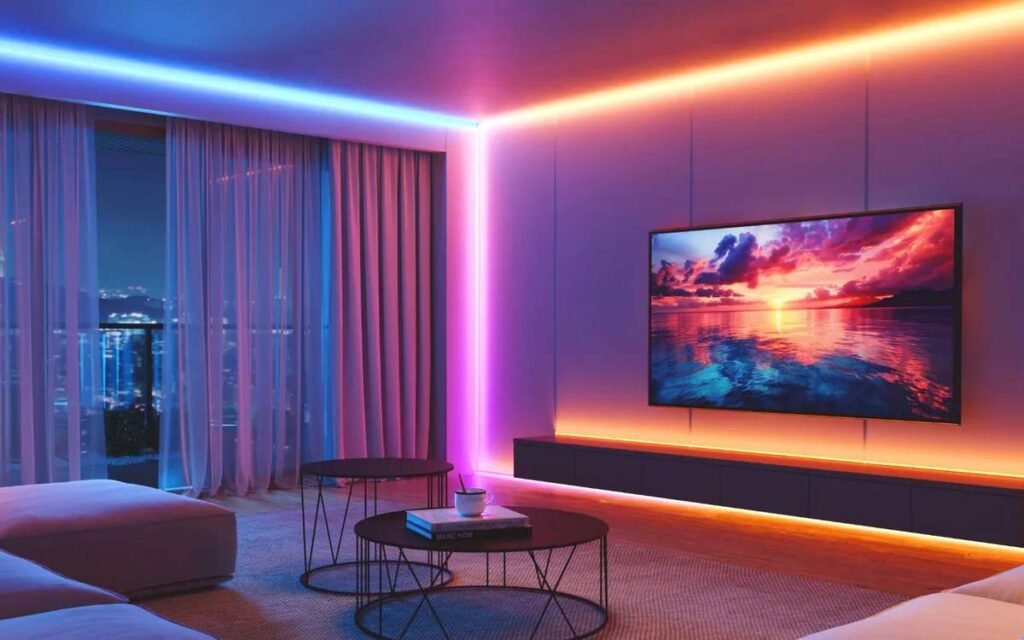
Smart LED strips: Flexible strips are commonly used under cabinets, behind televisions, inside shelving, and along architectural features. Depending on the model, they may support dimming, tunable white, RGB colors, or synchronized effects.
Smart cabinet and wardrobe lights: These products may combine LED illumination with motion sensing, touch controls, hand-wave controls, or rechargeable batteries. They are useful where automatic lighting is preferred.
Smart table and floor lamps: These provide localized or ambient lighting and may offer app control, remote operation, dimming, and color temperature adjustment.
Smart wall and ceiling lights: These integrate intelligent controls into complete fixtures. They can provide general illumination, accent lighting, or decorative effects while reducing the need for separate smart bulbs.
When choosing among these categories, consider whether you need a standalone product or a lighting solution that integrates with a wider smart home system.
Which Smart Lighting Control Method Is Best?
There is no single control method that suits every user. The best option depends on the application, installation conditions, and desired level of automation.
Control method | Main advantage | Potential limitation |
Smartphone app | Flexible settings and convenient control | May require a compatible app and network |
Remote control | Simple, direct operation | Can be misplaced and may have limited range |
Voice control | Hands-free operation | Requires compatible devices and configuration |
Motion sensing | Automatic lighting when movement is detected | Placement and sensor sensitivity affect performance |
Touch control | Simple, intuitive interaction | Requires physical access to the control area |
Hand-wave sensing | Convenient contact-free operation | Detection range and gesture recognition vary |
Scheduled automation | Consistent operation without repeated commands | Needs suitable settings and may not adapt to unexpected changes |
For under-cabinet lighting, motion sensing can be especially practical because users may have occupied hands while cooking. For a living room, app control, voice control, and dimming may be more important.
Some products combine several control options, so users do not necessarily need to choose only one.
for more detail about smart lighting control methods check our previous article “Smart Lighting Control Method“.
What Should You Consider Before Buying Smart LED Lighting?
Before purchasing smart LED lighting, evaluate the following factors.
Compatibility: Check whether the light supports your preferred app, voice assistant, smart home platform, or communication protocol. A product described as smart is not automatically compatible with every ecosystem.
Connectivity: Decide whether you prefer Wi-Fi, Bluetooth, a hub-based system, or standalone sensor operation. Consider how the lights will behave if the internet connection is interrupted.
Light quality: Check brightness, measured in lumens, and color temperature, measured in kelvins. For color-critical tasks, color rendering is also important.
Power supply and installation: Confirm voltage, driver requirements, mounting method, and whether professional electrical installation is necessary. Rechargeable products also require consideration of battery capacity and charging frequency.
Control functions: Identify which functions you genuinely need, such as dimming, tunable white, RGB colors, motion sensing, timers, or remote access. Avoid paying extra for features that will rarely be used.
Reliability and privacy: Review the manufacturer’s support policy, firmware-update approach, app permissions, and warranty. For connected products, understand what data the app collects and which features depend on cloud services.
Is Smart LED Lighting Worth It?
Smart LED lighting can be worthwhile for people who want more control over their home environment, especially when automation or adjustable lighting solves a practical problem.
A smart bulb may be sufficient if you simply want app-based dimming in an existing lamp. Motion-sensor cabinet lights are useful when hands-free operation matters, while integrated smart wall lights may be a better choice for a new renovation or a coordinated interior design.
However, smart products can cost more than conventional LED lighting, and some functions depend on compatible apps, hubs, or network connections. If you only need basic illumination, a standard LED fixture may be the simpler and more economical option.
The best decision is to start with a specific need rather than choosing a product simply because it has the most features.
Conclusion
Smart LED lighting combines the efficiency of LED technology with digital control, automation, and flexible lighting settings. Features such as app control, dimming, tunable white, RGB colors, scheduling, and motion sensing can make everyday lighting more convenient and adaptable.
From smart bulbs and LED strips to cabinet lights, table lamps, and integrated wall fixtures, there are options for different rooms, budgets, and installation requirements.
To choose the right solution, focus on lighting quality, control compatibility, connectivity, installation, and the features you will actually use. With the right combination of products and controls, smart LED lighting can help create a more comfortable, efficient, and personalized home.