
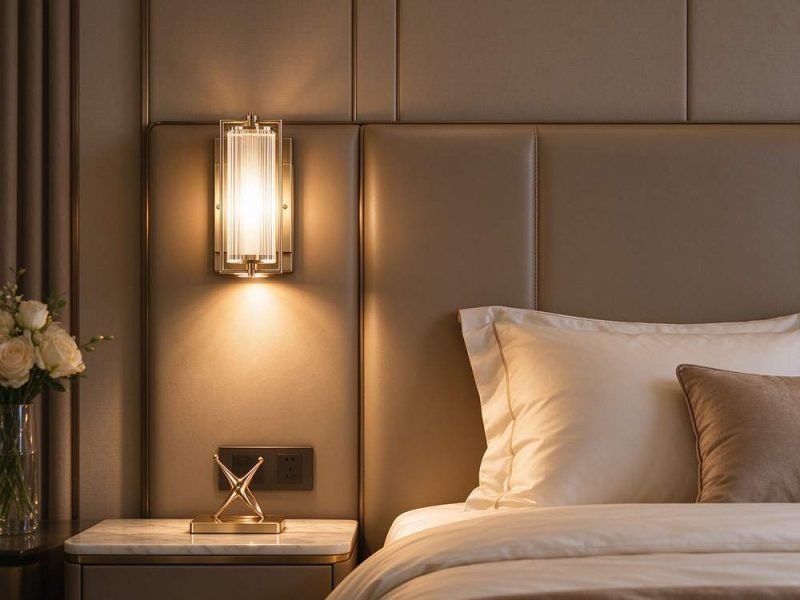
A well-chosen bedroom LED wall light can do much more than provide additional illumination. It can create a comfortable atmosphere, provide focused light for reading, reduce the need for a bedside table lamp, and even become an important part of the bedroom’s interior design.
Compared with traditional bedside lamps, LED wall lights have another important advantage: they can be mounted directly on the wall. This saves valuable space on nightstands and allows the lighting to be positioned exactly where it is needed.
However, choosing the right wall light requires more than selecting a fixture that looks attractive. Color temperature, brightness, beam angle, mounting height, light direction, controls, size, and installation method can all affect the final result.
This guide explains the most important factors to consider when choosing a bedroom LED wall light, whether you are buying one for your own bedroom, designing a residential project, or sourcing lighting products for a furniture or hospitality application.
Why Choose an LED Wall Light for the Bedroom?
Traditional bedside lamps usually require a nightstand or another piece of furniture. A wall-mounted LED light eliminates that requirement.
This makes wall lighting particularly useful in smaller bedrooms where every inch of surface space matters.
A wall-mounted fixture can also create a more organized appearance. Instead of having a lamp, power cable, phone charger, books, and other items competing for space on the bedside table, the lighting is moved to the wall.
LED technology also provides several advantages over traditional light sources:
- Lower energy consumption
- Long operating life
- Compact lighting designs
- Low heat generation compared with traditional incandescent sources
- Easy integration with dimming and smart controls
- Wide range of color temperatures
- Flexible design possibilities
For bedrooms, these characteristics make LED wall lights suitable for both general ambient lighting and specific applications such as reading.
What Type of Bedroom LED Wall Light Do You Need?
Before looking at appearance or technical specifications, determine how you want to use the light.
Different bedroom applications call for different wall-light designs.
Bedside Reading Wall Light
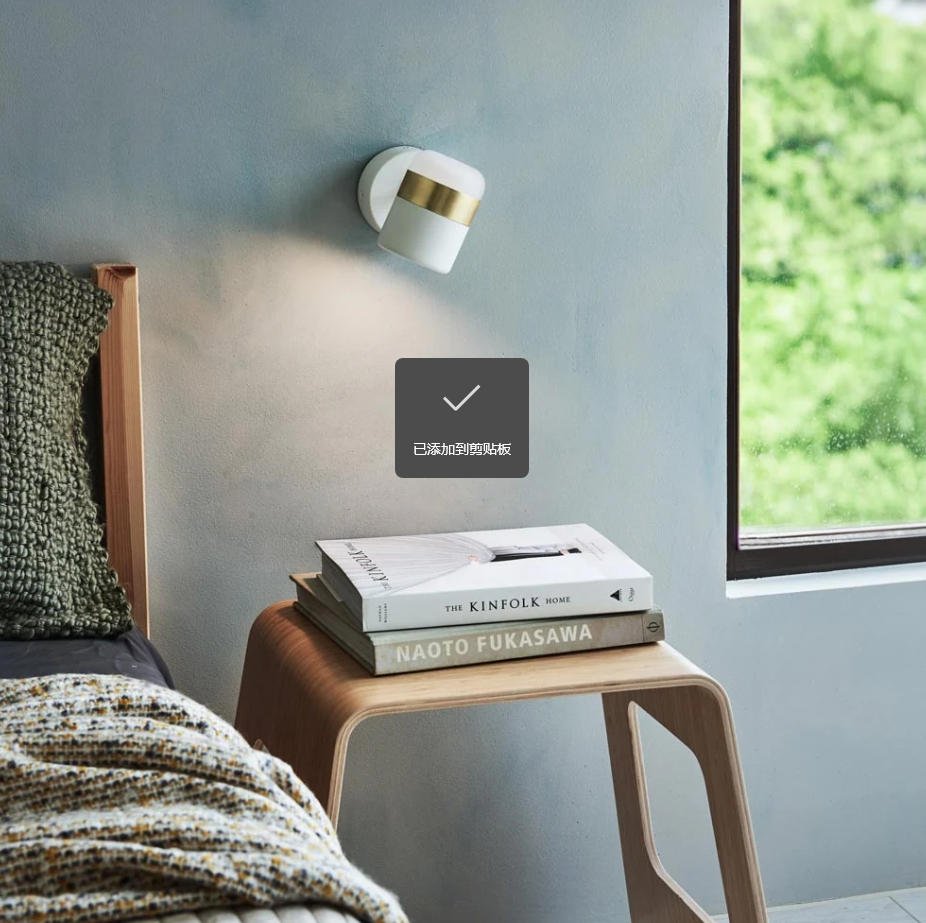
If you frequently read in bed, a directional wall light is usually more useful than a decorative fixture that simply spreads light in all directions.
Look for a design with an adjustable head, flexible arm, or directional beam. The goal is to illuminate the book or reading area without shining directly into your eyes or disturbing someone sleeping beside you.
Some modern LED wall lights combine ambient lighting with a separate reading light. This allows the user to create soft background illumination while directing a stronger beam toward the reading area.
Decorative Bedroom Wall Light
If the primary purpose is atmosphere rather than reading, a decorative LED wall light may be a better choice.
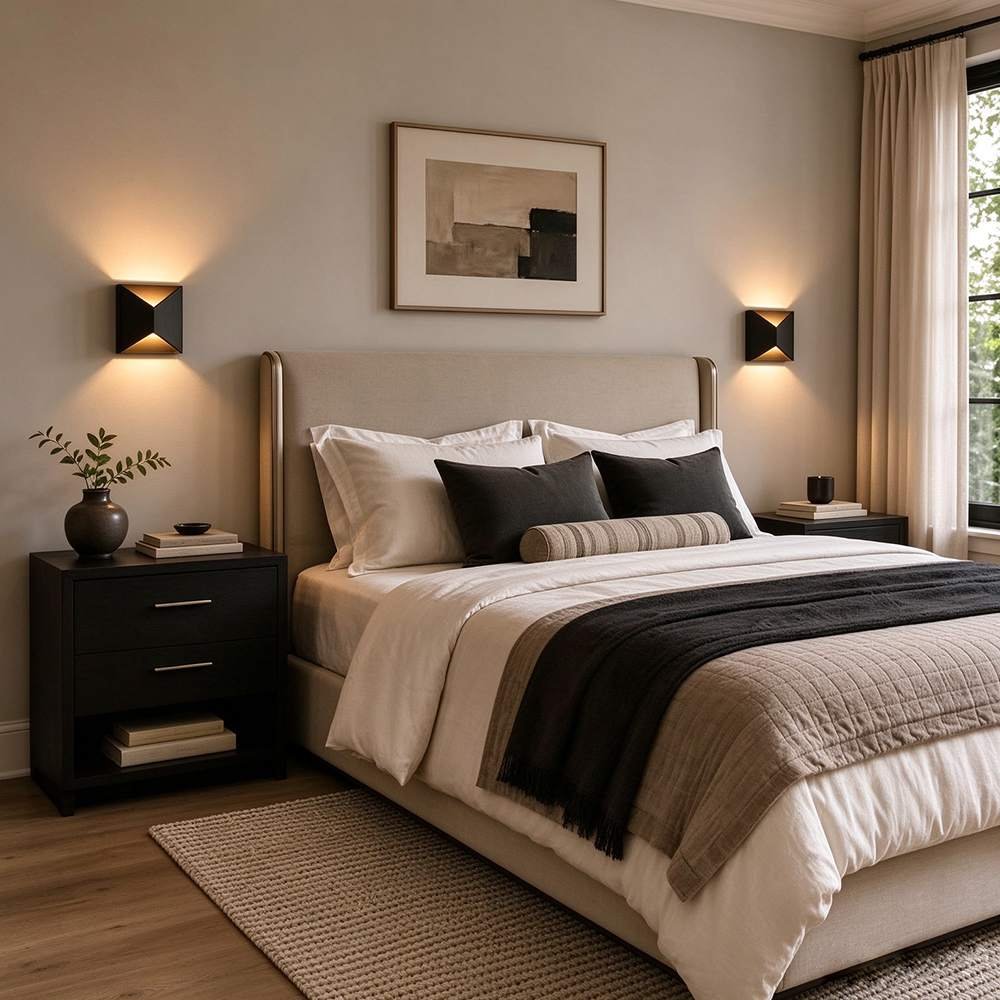
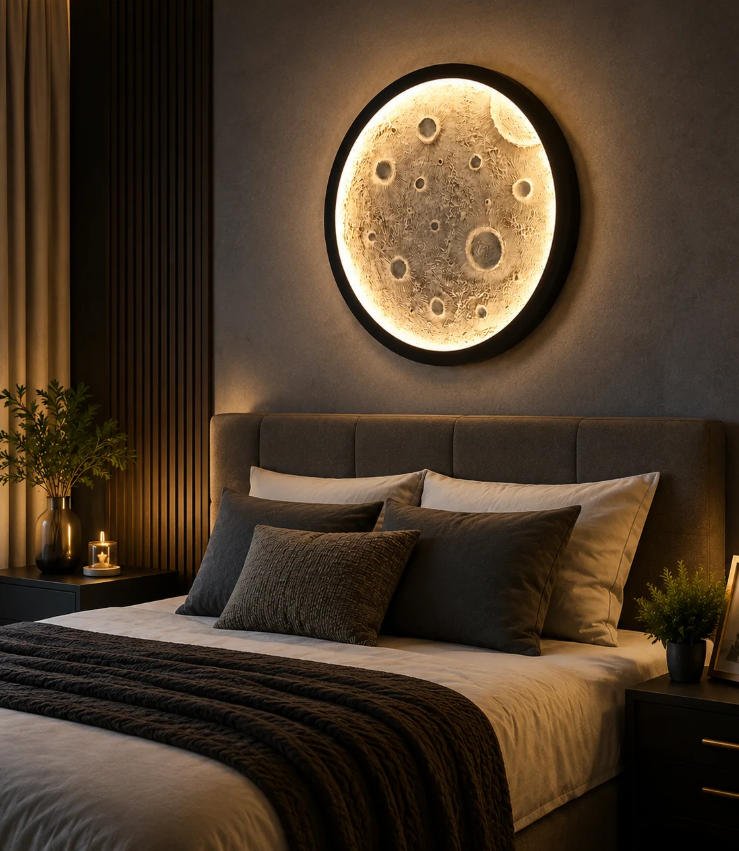
These fixtures can produce indirect, diffused, upward, downward, or bidirectional illumination. Instead of creating a strong pool of light on a specific surface, they contribute to the overall mood of the bedroom.
Decorative wall lights are particularly useful behind or beside the bed, on accent walls, or near artwork and architectural features.
Up and Down Wall Light
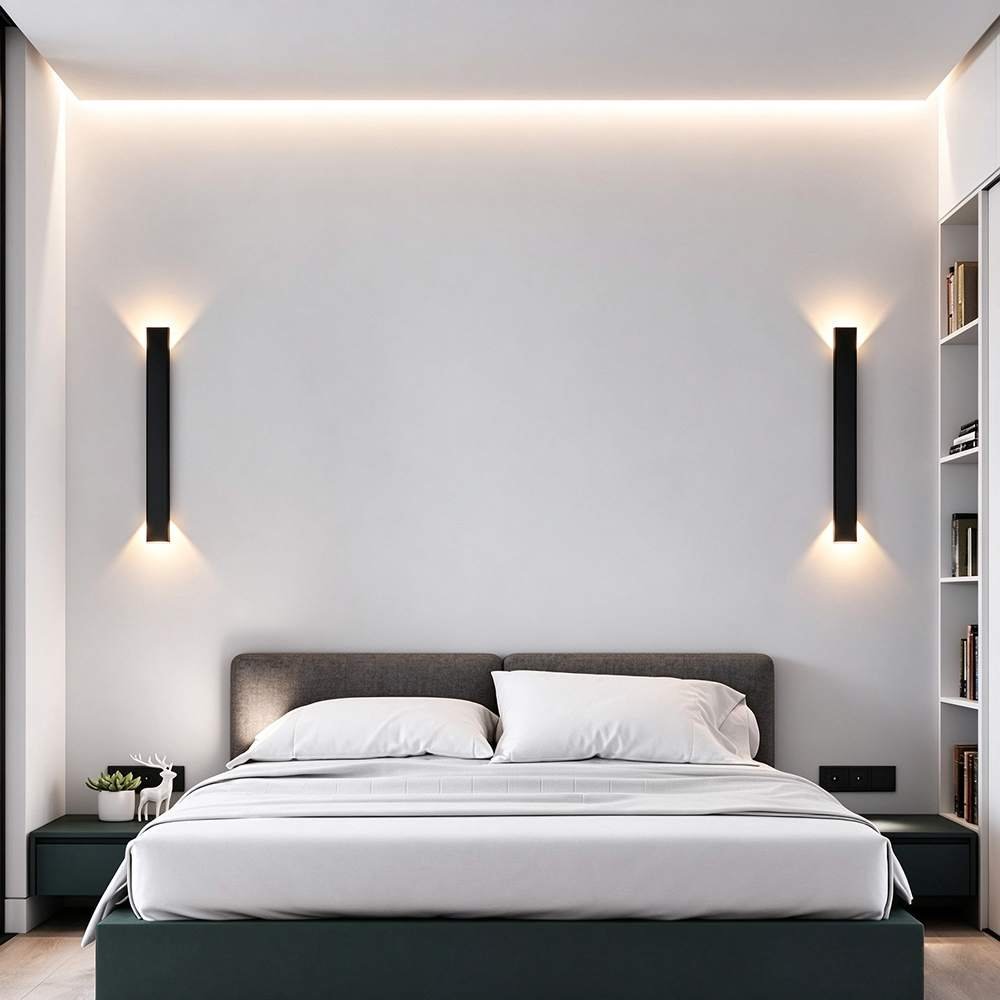
An up-and-down LED wall light sends illumination toward both the ceiling and floor or wall.
This type of design can create attractive indirect lighting while adding visual depth to the bedroom.
It is generally better suited to ambient or decorative lighting than detailed reading because the light is intentionally spread rather than concentrated on a book.
Smart LED Wall Light
Smart bedroom wall lights can provide additional control through remote controls, touch interfaces, smartphone apps, voice assistants, or other smart-home systems.
Depending on the product, users may be able to adjust brightness, color temperature, schedules, scenes, or other lighting parameters.
Smart functionality can be especially useful in bedrooms because lighting requirements often change throughout the day.
Choosing the Right Color Temperature
Color temperature is one of the most important specifications for a bedroom LED wall light.
It is measured in Kelvin (K).
A simplified guide is:
Color Temperature | Appearance | Typical Bedroom Use |
2200–2700K | Very warm | Relaxing, decorative lighting |
2700–3000K | Warm white | Bedside and general bedroom lighting |
3000–4000K | Neutral white | Reading, dressing areas, task lighting |
4000K+ | Cool white | More functional applications |
For most bedrooms, 2700K to 3000K is a comfortable starting point.
Warm white lighting tends to create a softer and more relaxing environment, which is generally appropriate for evening use.
However, there is no universal best color temperature.
If the wall light will primarily be used for reading or other detailed tasks, a slightly more neutral color temperature may be preferable.
For this reason, an adjustable CCT LED wall light can be a particularly flexible solution. Instead of choosing one fixed color temperature, the user can select warmer light for relaxing and a more neutral setting when performing visual tasks.
How Bright Should a Bedroom Wall Light Be?
Brightness is another specification that needs to be considered carefully.
A common mistake is to assume that a brighter lamp is automatically better.
In a bedroom, excessive brightness can make the environment feel harsh, particularly at night. On the other hand, insufficient illumination can make reading or other activities uncomfortable.
Rather than looking only at wattage, consider:
- Lumens
- Beam angle
- Mounting height
- Distance from the illuminated surface
- Number of fixtures
- Room size
- Wall and furniture colors
- Whether the light is direct or indirect
For a bedside reading light, the required brightness can be very different from that of a decorative wall fixture used to create ambient illumination.
A dimmable bedroom LED wall light is therefore often more practical than a fixture with only one fixed brightness level.
During the evening, you can reduce the brightness for a softer environment. When reading, you can increase the output as needed.
Consider the Light Direction
Light direction has a significant impact on comfort.
A wall light pointed directly toward the eyes can create glare, even if its overall brightness is not particularly high.
For bedside applications, consider fixtures that direct light toward the book, floor, wall, or ceiling rather than directly toward the user’s face.
Several common lighting patterns are worth considering.
Downward lighting is useful for reading and localized task lighting.
Upward lighting can create a softer indirect effect by reflecting light from the ceiling.
Up-and-down lighting can create a more architectural appearance.
Adjustable directional lighting provides the greatest flexibility because the user can change the direction according to the activity.
For a bedroom shared by two people, adjustable directional lights can be particularly useful because one person can read while the other keeps the surrounding room relatively dark.
What Mounting Height Is Best?
There is no single universal mounting height because bedroom layouts vary.
For bedside wall lights, the fixture should generally be positioned so that the light source is convenient to reach and does not shine directly into the user’s eyes.
The height of the mattress, headboard, bedside table, and user’s typical reading position should all be considered.
Before drilling into the wall, it can be useful to temporarily position the fixture and test the light direction from a normal sitting or lying position.
This is particularly important for fixed wall lights because changing the location later may require patching the wall and moving electrical wiring.
For new construction or renovation projects, the electrical outlet and junction box should also be positioned according to the final lighting design rather than being determined after the wall light has already been selected.
Dimmable or Non-Dimmable?
For bedrooms, dimming is usually worth considering.
A bedroom can require very different lighting levels depending on the time of day.
You may want relatively bright light when cleaning or getting dressed, moderate illumination when reading, and very low light when preparing to sleep.
A dimmable LED wall light can cover these situations with one fixture.
However, the dimmer, driver, and LED module must be compatible.
When sourcing or specifying a dimmable product, check whether it supports the intended control method, such as:
- Wall dimmer
- Touch control
- Remote control
- Push-button control
- Smart app
- Voice control
Not every LED wall light can work with every dimming system, so compatibility should be confirmed before installation.
Hardwired vs. Plug-In Bedroom Wall Lights
Another important consideration is how the wall light receives power.
Hardwired Wall Lights
Hardwired fixtures connect directly to the building’s electrical system.
They provide a cleaner appearance because there is usually no visible power cable running from the lamp to an outlet.
They are particularly appropriate for new construction, renovation projects, hotels, apartments, and permanent residential installations.
The disadvantage is that installation usually requires more work, particularly when electrical wiring and junction boxes are not already available.
Plug-In Wall Lights
Plug-in wall lights use a standard electrical outlet.
They are easier to install and can be a practical option for renters or homeowners who do not want to modify the wall’s electrical wiring.
The trade-off is that the power cable remains visible unless it is carefully managed.
Choose the Right Size for the Bedroom
The physical size of the wall light should be proportional to the wall, bed, headboard, and surrounding furniture.
A very large fixture beside a small bed can visually overwhelm the space. Conversely, a very small wall light may look insignificant on a large feature wall.
For bedside applications, also consider the relationship between the fixture and the width of the nightstand.
If the fixture extends too far from the wall, it may interfere with movement around the bed.
For minimalist bedrooms, slim LED wall lights are often a good option because they provide illumination without becoming a dominant visual element.
CRI and Light Quality
Brightness is not the only factor that determines whether bedroom lighting looks good.
Color Rendering Index (CRI) indicates how accurately a light source renders colors compared with a reference light source.
Higher-CRI lighting can make skin tones, clothing, furniture, artwork, and other colors appear more natural.
For bedrooms, dressing areas, and decorative applications, choosing a good-quality LED wall light with appropriate color rendering can make a noticeable difference.
If the wall light is installed beside a mirror or used in a dressing area, color quality becomes particularly important.
Should You Choose a Smart Bedroom LED Wall Light?
Smart controls are increasingly common in residential lighting.
A smart bedroom LED wall light may allow users to control:
- Brightness
- Color temperature
- On/off schedules
- Lighting scenes
- Remote operation
- Voice control
- Smartphone control
For example, a user could create a bright reading scene, a warm evening scene, and a low-level nighttime scene.
However, smart functionality also introduces additional electronics and potential compatibility considerations.
If the user does not need app or voice control, a high-quality dimmable wall light with a simple physical control may provide a better balance of functionality, reliability, and cost.
How to Choose a Bedroom LED Wall Light: A Simple Checklist
Before purchasing, consider the following questions:
1. What is the primary purpose?
Reading, ambient lighting, decoration, or a combination?
2. Where will it be installed?
Beside the bed, behind the headboard, on an accent wall, or elsewhere?
3. What color temperature do you prefer?
Warm white is usually suitable for relaxing, while neutral white can be useful for reading.
4. Do you need dimming?
For most bedrooms, dimming provides useful flexibility.
5. Should the light direction be adjustable?
This is especially important for bedside reading.
6. How will it be powered?
Choose between hardwired, plug-in, or rechargeable designs according to the installation.
7. Do you need smart controls?
Consider whether app, remote, sensor, or voice control provides genuine value.
8. Is the size appropriate?
Check the fixture dimensions against the bed, headboard, wall, and surrounding furniture.
9. Is the light quality good enough?
Consider CRI, flicker performance, diffusion, and overall optical design.
Final Thoughts
The best bedroom LED wall light is not necessarily the most powerful or feature-rich product. The right choice is the one that matches the bedroom layout, lighting purpose, installation conditions, and personal preferences.
For bedside reading, prioritize directional control, comfortable brightness, dimming, and appropriate color temperature. For decorative applications, pay more attention to light distribution, fixture design, and indirect illumination. For modern smart homes, adjustable CCT, dimming, remote control, and smart connectivity can provide additional flexibility.
If you are purchasing a wall light for a long-term residential or hospitality project, it is also worth looking beyond appearance. LED quality, driver reliability, thermal management, housing materials, optical design, and control compatibility all contribute to the overall performance of the fixture.
A well-designed LED wall light can therefore serve as both a functional lighting tool and an important element of bedroom design. By evaluating the complete lighting system rather than choosing a fixture based only on appearance or wattage, you can create a bedroom that is more comfortable, practical, and visually appealing.