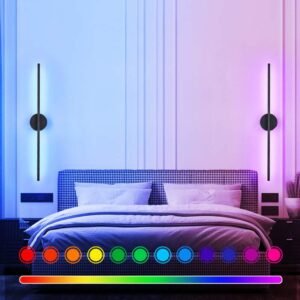

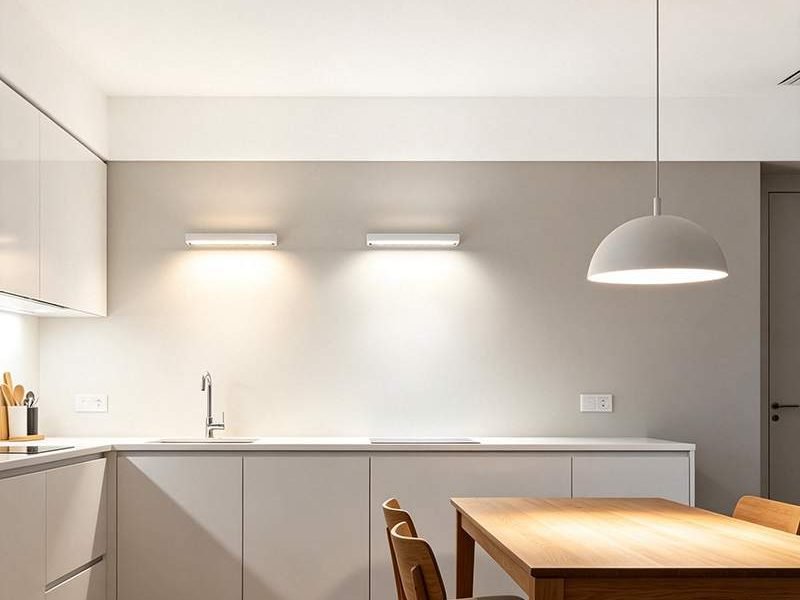
When shopping for LED lighting, one of the first specifications you will probably see is lumens.
300 lumens.
500 lumens.
800 lumens.
1,000 lumens.
2,000 lumens.
But what do these numbers actually look like in real life?
Is 500 lumens enough for a bedroom? Is 1,000 lumens bright enough for a kitchen? Would 2,000 lumens be too bright for a table lamp?
These are much more useful questions than simply asking which light has the highest lumen rating.
Lumens measure the total visible light produced by a light source. However, the way that light feels depends on the fixture, beam angle, room size, mounting height, color temperature, surface colors, and whether the light is concentrated or distributed. For example, a 1,000-lumen spotlight and a 1,000-lumen ceiling fixture can create very different experiences.
So in this guide, let’s put different lumen levels into practical terms and look at where each level makes the most sense.
Lumens at a Glance: How Bright Is Each Level?
Before getting into the details, here’s a quick comparison.
Lumens | General Brightness | Typical Applications | Best For |
300 lm | Soft / low | Bedside lamps, accent lights, closets | Relaxed or localized lighting |
500 lm | Moderate | Table lamps, small bathrooms, cabinet lighting | Small areas and task lighting |
800 lm | Medium-bright | Bedrooms, living areas, desk lamps | General residential lighting |
1,000 lm | Bright | Kitchens, workspaces, larger table lamps | Task and general lighting |
1,500 lm | Very bright | Ceiling fixtures, larger rooms, work areas | Strong general illumination |
2,000 lm | High output | Kitchens, garages, large rooms, commercial areas | Strong task/general lighting |
These are general guidelines rather than strict rules. A fixture’s optics and installation position can make the same lumen output appear dramatically different.
How Bright Is 300 Lumens?
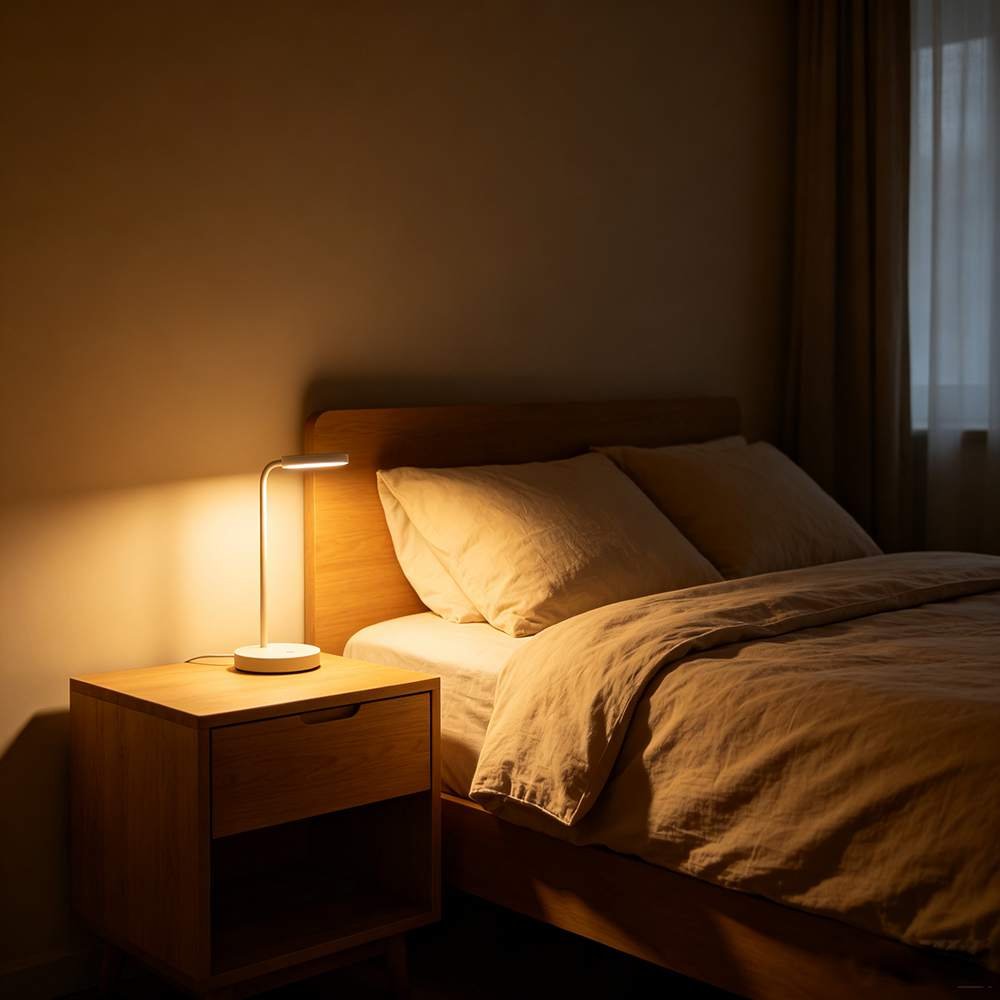
300 lumens is relatively soft and localized lighting.
It is not usually enough to illuminate a large room by itself, but it can be perfectly adequate when you only need light in a small area.
Think of a bedside lamp turned down in the evening rather than a ceiling fixture trying to illuminate the entire bedroom.
Where Is 300 Lumens Suitable?
300 lumens can work well for:
- Bedside table lamps
- Small reading lights
- Decorative wall lights
- Closets
- Small shelves
- Accent lighting
- Nighttime navigation lighting
For example, a 300-lumen rechargeable wall light can provide enough illumination to find your way around a hallway without making the entire space feel like a supermarket.
Is 300 Lumens Enough for Reading?
It can be, depending on how close the light is and how well it is directed.
A desk lamp with 300 lumens positioned close to a book can provide useful task lighting. However, 300 lumens spread across a large desk or room may feel insufficient.
This illustrates an important principle:
The same lumen output can feel completely different depending on distance and light distribution.
How Bright Is 500 Lumens?
500 lumens sits comfortably in the low-to-medium brightness range.
It is noticeably brighter than 300 lumens but still relatively easy on the eyes when used in a small space.
A 500-lumen light is often useful for localized task or accent lighting.
Where Is 500 Lumens Suitable?
Good applications include:
- Table lamps
- Desk lamps
- Small bedrooms
- Bathrooms
- Hallways
- Closets
- Under cabinet lights
- Reading lights
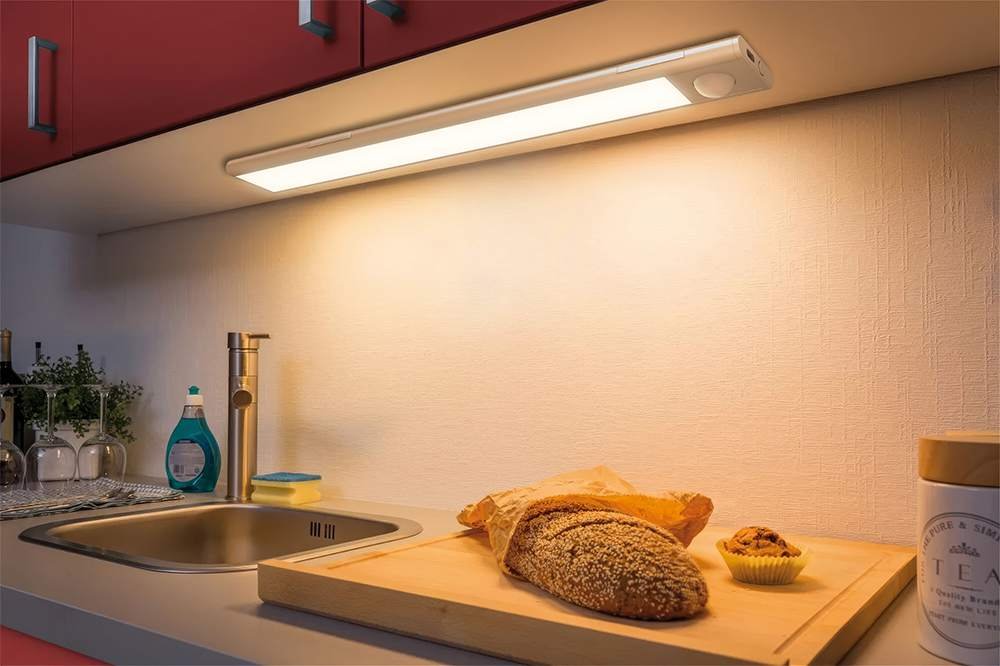
For example, a 500-lumen under cabinet light can provide useful countertop illumination without necessarily being excessively bright.
It can also work well as part of a layered lighting system.
Instead of using one enormous ceiling fixture, several 500-lumen fixtures can distribute light more evenly throughout a room.
Is 500 Lumens Bright Enough for a Room?
Usually, not as the only light source in a medium or large room.
However, for a small bedroom, hallway, closet, or bathroom, 500 lumens can be quite useful.
The important question isn’t simply “Is 500 lumens bright?”
It’s:
500 lumens for what?
That little question makes lumen comparisons much more practical.
How Bright Is 800 Lumens?
800 lumens is a versatile level for residential LED lighting.
It is bright enough for many general lighting applications while remaining relatively comfortable for everyday indoor use.
For comparison, one of the referenced lighting guides notes that a traditional 60W incandescent bulb produces roughly 800 lumens. Modern LED technology can achieve similar output using considerably less power.
Where Is 800 Lumens Suitable?
800 lumens can work well for:
- Bedrooms
- Living rooms
- Home offices
- Table lamps
- Floor lamps
- Small ceiling fixtures
- Reading areas
- Medium-sized residential spaces
It is particularly useful when the light is distributed effectively.
For example, an 800-lumen frosted ceiling fixture may produce comfortable general illumination, while an 800-lumen directional spotlight may appear much more intense in one specific location.
Is 800 Lumens Bright Enough for a Kitchen?
It can be useful for localized lighting, but one 800-lumen fixture is unlikely to be sufficient as the only lighting source for a larger kitchen.
Kitchen lighting normally benefits from multiple layers:
- Ceiling lighting
- Pendant lighting
- Under cabinet lighting
- Accent lighting
This creates more even illumination than trying to make one fixture do everything.

How Bright Is 1,000 Lumens?
Now we reach one of the most commonly discussed lumen levels.
1,000 lumens is bright enough for many practical residential and commercial applications.
Research.Lighting describes 1,000 lumens as clear, practical light that can work across kitchens, dining areas, living rooms, bedrooms, and task-oriented spaces.
Reolink similarly describes 1,000 lumens as a substantial output level suitable for residential and commercial applications, including kitchens, workshops, and outdoor security lighting.
What Does 1,000 Lumens Look Like?
Imagine a reasonably bright household LED bulb illuminating a room.
It is:
- Clearly brighter than typical low-output decorative lighting
- Strong enough for many task applications
- Suitable for general illumination in smaller spaces
- Still manageable for residential use
A 1,000-lumen LED may use roughly 10–15 watts depending on its efficiency and design, compared with substantially higher power requirements for incandescent technology.
Where Is 1,000 Lumens Suitable?
Typical applications include:
- Kitchen lighting
- Desk lamps
- Table lamps
- Wall lights
- Bedroom ceiling fixtures
- Small living rooms
- Reading areas
- Workshops
- Outdoor security lighting
For LED lighting, 1,000 lumens is often a useful middle ground between decorative lighting and high-output illumination.
How Bright Is 1,500 Lumens?
1,500 lumens is a strong level of illumination.
At this point, you’re moving beyond what most people would consider a small decorative light.
A 1,500-lumen fixture can provide substantial general or task lighting, especially when installed at an appropriate height.
Where Is 1,500 Lumens Suitable?
It can work well for:
- Kitchen ceiling fixtures
- Larger living rooms
- Home offices
- Workshops
- Garages
- Large table or floor lamps
- Commercial task lighting
For example, instead of one 1,500-lumen ceiling fixture, a designer might use several smaller fixtures to achieve better uniformity.
This is particularly important in larger rooms.
A large amount of light concentrated in one location can create bright spots and shadows.
Distributed lighting usually produces a more comfortable result.
How Bright Is 2,000 Lumens?
2,000 lumens is considered high-output lighting for many residential applications.
It can provide strong illumination and is particularly useful when you need good visibility across a larger area.
Where Is 2,000 Lumens Suitable?
Common applications include:
- Large kitchens
- Garages
- Workshops
- Large living spaces
- Commercial interiors
- Strong ceiling lighting
- Large pendant fixtures
- Outdoor floodlights
Reolink’s comparison describes 1,000 lumens as suitable for medium-sized residential and outdoor applications, while higher-output floodlights can go considerably beyond that.
That gives us a useful way to think about 2,000 lumens:
It isn’t simply “twice as good” as 1,000 lumens.
It is twice the total light output, but whether that additional output is useful depends entirely on where and how the fixture is installed.
300 vs. 500 vs. 800 vs. 1,000 vs. 2,000 Lumens
If you want a simple way to visualize the progression:
300 lumens
Think: soft bedside or accent lighting.
500 lumens
Think: small-area task lighting.
800 lumens
Think: comfortable everyday residential lighting.
1,000 lumens
Think: bright, practical task/general lighting.
2,000 lumens
Think: strong illumination for larger spaces or demanding tasks.
The jump from 300 to 2,000 lumens is significant — 2,000 lumens produces more than six times the total visible light of 300 lumens.
But that doesn’t mean a 2,000-lumen fixture will look six times brighter to your eyes in every situation.
Why the Same Lumens Can Look Different
This is one of the most important things to understand when comparing lumens.
Suppose two LED lights both produce 1,000 lumens.
Light A has a narrow 30° beam.
Light B has a wide 120° beam.
Light A concentrates its output into a smaller area, so the illuminated surface can appear much brighter.
Light B spreads the output over a much larger area, producing softer and more widespread illumination.
Research.Lighting makes a similar point: a 1,000-lumen fixture can feel different depending on its shade, diffusion, distribution, and surrounding lighting.
So when comparing LED products, look beyond the lumen number.
Consider:
- Beam angle
- Diffuser
- Mounting height
- Light source position
- Room size
- Surface reflectivity
- Color temperature

Lumens vs. Watts: Don't Confuse Them
Another common mistake is comparing LED lighting by wattage alone.
– Watts measure electrical power consumption.
– Lumens measure visible light output.
For example, a modern LED might produce approximately 1,000 lumens while consuming around 10–15W, whereas an incandescent lamp may require roughly 60–75W for a similar output.
That’s why you shouldn’t assume:
“20W must be twice as bright as 10W”.
Not necessarily.
A more efficient 10W LED could potentially produce more light than a less efficient 20W LED.
For modern LED lighting, lumen output and lumens-per-watt are much more useful specifications.
If you’d like to learn more about Lumens, you can browse our previous article “What is Lumens?” for a more detailed introduction.
How Many Lumens Do You Need for Different Applications?
Here’s a practical starting point:
Application | Approximate Output per Light | Recommended Range |
Night light | Low | 100–300 lm |
Bedside lamp | Low-medium | 300–500 lm |
Desk lamp | Medium | 500–1,000 lm |
Table lamp | Medium | 500–1,000 lm |
Under cabinet light | Localized task light | 300–1,000+ lm |
Bedroom ceiling light | Medium | 800–1,500 lm |
Kitchen fixture | Medium-high | 1,000–2,000+ lm |
Living room fixture | Medium-high | 1,000–2,000+ lm |
Garage/workshop | High | 1,500–3,000+ lm |
Outdoor floodlight | High | 1,000–3,000+ lm |
These should not be interpreted as mandatory specifications. Lighting requirements depend heavily on room dimensions, fixture distribution, ceiling height, and whether multiple lights are being used.
Does Higher Lumens Mean Better LED Lighting?
Not necessarily.
Imagine a small bedside lamp producing 2,000 lumens.
You might find it uncomfortable.
Now imagine a large workshop with only 300 lumens.
You’ll probably spend more time looking for things than actually working.
The ideal lumen output is therefore about matching brightness to the application.
This is also why layered lighting is so useful.
Research.Lighting recommends using multiple light sources rather than relying on one fixture to illuminate an entire room, particularly when creating different levels of brightness and ambiance throughout the day.
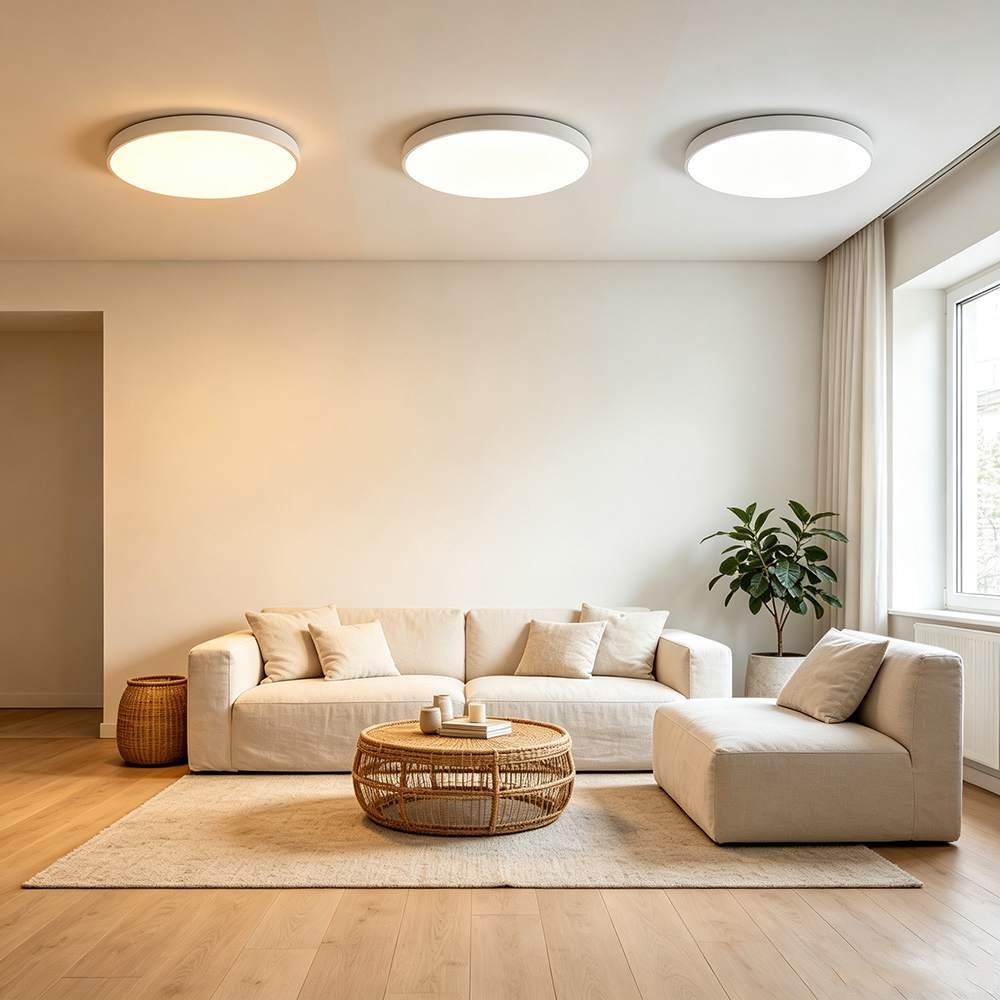
How Color Temperature Changes the Perception of Brightness
Two lights with exactly the same lumen output can also feel different because of their color temperature.
For example:
3000K produces warm white light.
4000K produces neutral white light.
5000K produces cooler white light.
A 1,000-lumen 4000K LED may appear visually crisper than a 1,000-lumen 3000K LED, even though the measured light output is the same.
This doesn’t mean one produces more lumens.
It means the quality and appearance of the light are different.
For applications such as kitchens, offices, and workspaces, this distinction can be particularly important.
The Bottom Line: Which Lumens Should You Choose?
If you’re looking for a quick answer:
Choose around 300 lumens if:
You want soft, localized, decorative, or nighttime lighting.
Choose around 500 lumens if:
You need moderate light for a small area, bedside table, cabinet, or reading application.
Choose around 800 lumens if:
You want comfortable general lighting for a bedroom, desk, or smaller residential space.
Choose around 1,000 lumens if:
You need bright, practical lighting for kitchens, workspaces, table lamps, or larger task areas.
Choose around 1,500 lumens if:
You need stronger general illumination for larger rooms or workspaces.
Choose around 2,000 lumens if:
You need high-output lighting for kitchens, garages, workshops, large rooms, or commercial applications.
But remember: lumens tell you how much light a fixture produces, not whether that light is appropriate for your particular space.
Final Thoughts
Understanding different lumen levels makes shopping for LED lighting much easier.
300 lumens and 2,000 lumens aren’t simply two numbers on a product specification sheet. They represent very different lighting capabilities and are suited to very different applications.
The most important thing is to think about the complete lighting system.
A 500-lumen under cabinet light can be extremely useful when installed close to a countertop. A 1,000-lumen desk lamp can provide excellent task lighting when properly directed. And a 2,000-lumen ceiling fixture can effectively illuminate a large space — provided the light is distributed properly.
So the next time you see a lighting product advertised as 500, 800, 1,000, or 2,000 lumens, don’t automatically ask, “Which one is brighter?”
Ask the more useful question:
“Which one provides the right amount of useful light for what I actually want to do?”
That’s where lumen numbers become genuinely useful.