
Kitchen lighting has changed quite a bit in recent years. The days when a single ceiling fixture was expected to illuminate the entire kitchen are gradually disappearing. In 2026, lighting is becoming more layered, more flexible, and much more integrated into the way people actually use their kitchens.
A kitchen may now be a cooking area in the morning, a home office at noon, a coffee bar in the afternoon, and a social space in the evening. Naturally, one lighting setting cannot do all of those jobs well.
So, what is the kitchen lighting trend in 2026?
The answer is not simply “buy a more fashionable pendant light.” The bigger trend is toward layered lighting, smart controls, softer illumination, architectural LED lighting, and lighting that can adapt throughout the day.
Among these trends, under cabinet lighting deserves particular attention because it combines practical task lighting with a clean, almost invisible appearance.
Let’s look at the major kitchen lighting trends shaping 2026 and what they mean for homeowners, designers, and lighting brands.
1. Layered Kitchen Lighting Is Becoming the New Standard
Perhaps the biggest change in 2026 is that kitchen lighting is no longer treated as a single fixture problem.
Instead, designers are combining three basic layers:
Ambient lighting provides general illumination throughout the room.
Task lighting concentrates light where people actually work, such as countertops, sinks, islands, and cooking areas.
Accent lighting adds atmosphere and highlights architectural or decorative elements.
This approach is increasingly recommended because different areas of the kitchen have different jobs. Recent 2026 lighting guides similarly emphasize combining ambient, task, and accent lighting instead of depending on one central fixture.
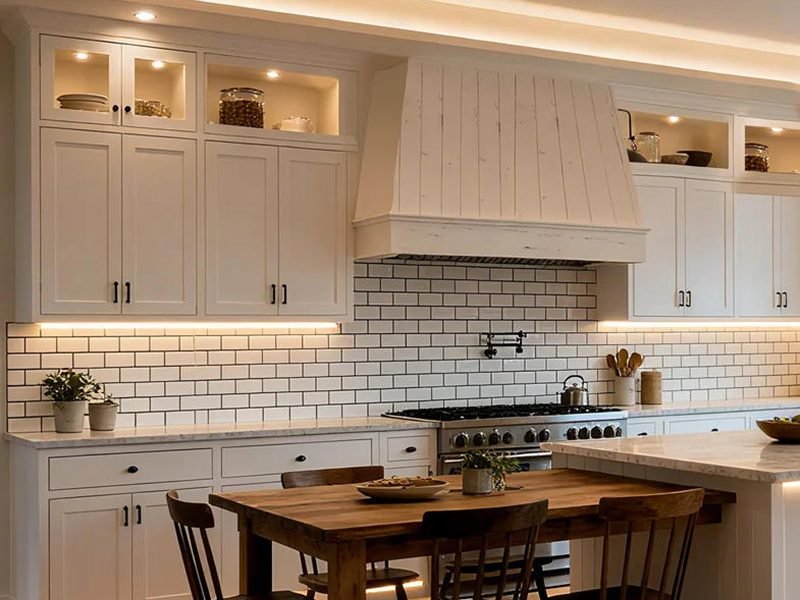
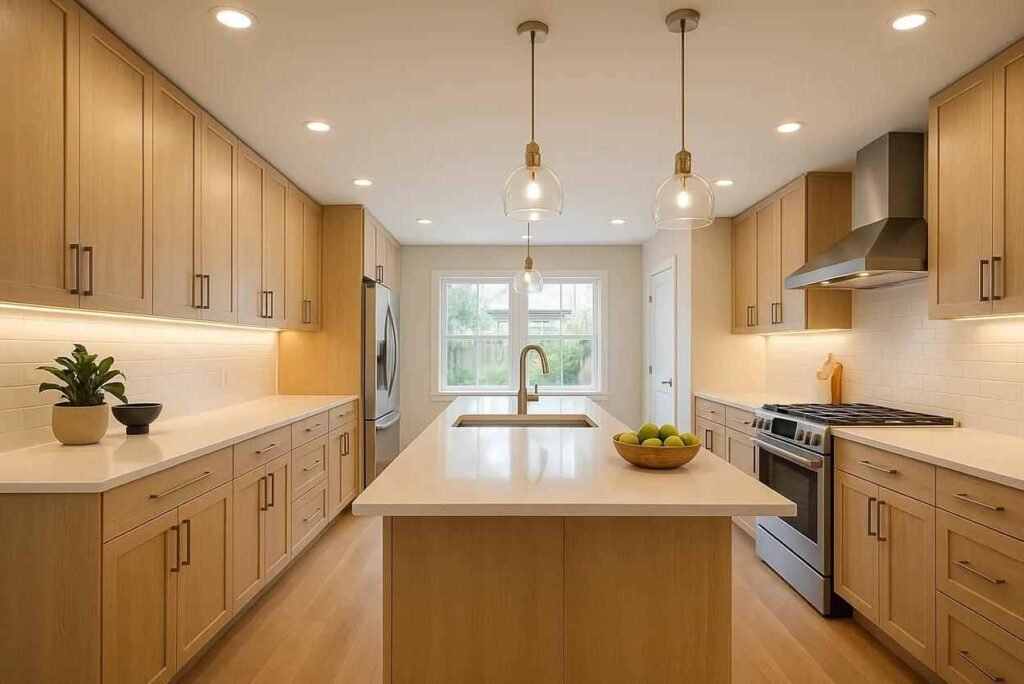
For example, a modern kitchen might combine recessed ceiling lights with pendant lights over the island, under cabinet lighting along the countertops, and subtle LED lighting inside glass cabinets.
The result is much more flexible than simply installing a very bright ceiling lamp.
And perhaps more importantly, you don’t have to turn every light on at full brightness every time you walk into the kitchen.
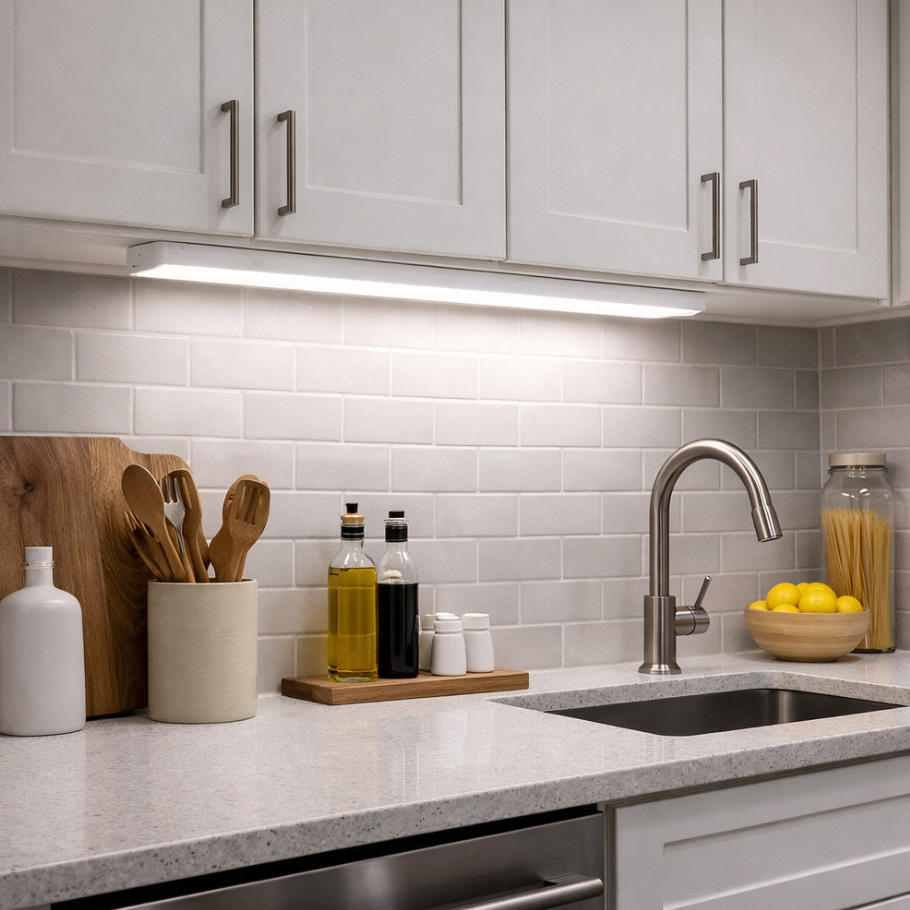
2. Under Cabinet Lighting Is Becoming More Important
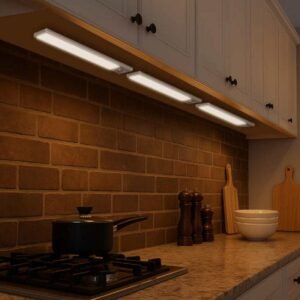
If there is one kitchen lighting trend that combines practicality and design particularly well in 2026, it is under cabinet lighting.
Think about what happens when you stand at a countertop underneath a wall cabinet.
The ceiling light is above you, but your body is also between the light source and the countertop. The result?
Your countertop can end up surprisingly dark.
An under cabinet light solves this problem by putting illumination directly where you need it.
It can improve visibility for:
- Cutting and preparing food
- Reading recipes
- Washing dishes
- Making coffee
- Cleaning countertops
It also provides a softer lighting layer at night. Instead of turning on every ceiling light when you want a glass of water at midnight, low-level cabinet lighting can provide enough illumination to navigate the kitchen.
2026 kitchen lighting guides increasingly position under-cabinet LEDs as discreet task lighting that can also work with dimmers and smart controls.
Why Is Under Cabinet Lighting So Popular?
The answer is simple: you can benefit from it without necessarily seeing it.
Modern LED strips, slim bars, and low-profile fixtures can be hidden underneath cabinets, producing a clean line of light without making the fixture itself the visual focus.
For this reason, under cabinet lighting is likely to remain one of the most practical kitchen upgrades in 2026.
3. Tunable White Lighting Is Replacing Fixed Color Temperature
Remember when you had to choose between 3000K and 4000K when buying LED lighting?
In 2026, you increasingly don’t have to choose just one.
Tunable white lighting allows users to adjust the color temperature of a light source.
For example:
Morning: use a cooler, brighter white for food preparation.
Afternoon: switch to neutral white for general activities.
Evening: move toward a warmer white for a more relaxed atmosphere.
This makes particular sense in kitchens because they are used throughout the day for very different purposes.
Current 2026 kitchen lighting recommendations highlight adjustable color temperature as a way to move between task-focused and relaxing environments.
For under cabinet lighting, tunable white is especially interesting because the same fixture can function as both task lighting and evening accent lighting.
4. Smart Kitchen Lighting Is Becoming More Practical
Smart lighting is not exactly new.
What is changing is how people use it.
Early smart lighting sometimes felt like a technology demonstration: “Look, I can turn the light on with my phone!”
That is fun for about five minutes.
In 2026, smart kitchen lighting is becoming more useful because it solves real problems.
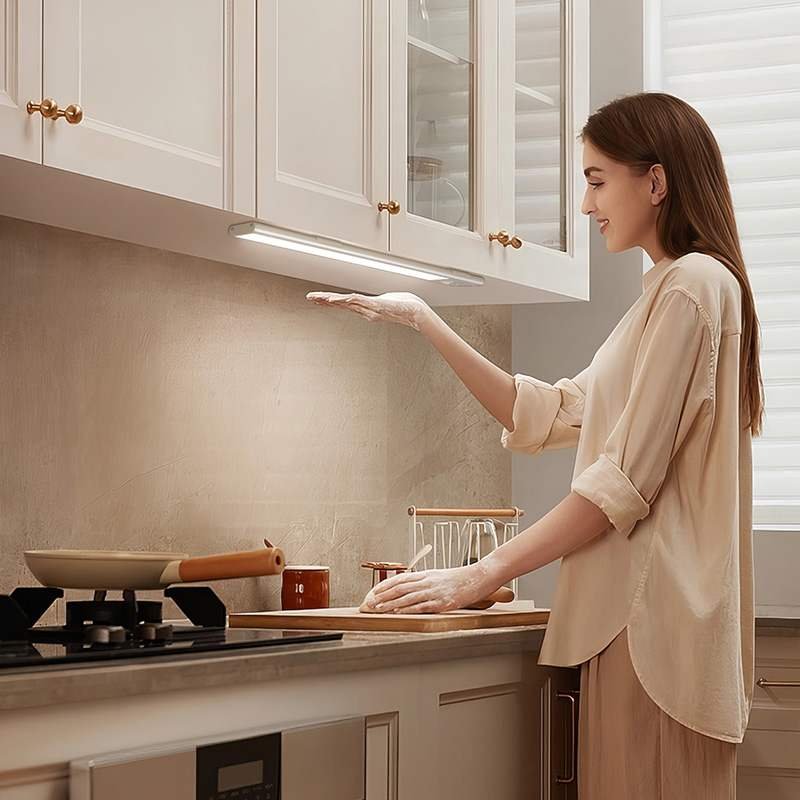
Imagine being halfway through preparing dinner with both hands covered in flour.
Instead of touching a switch, you could use voice control.
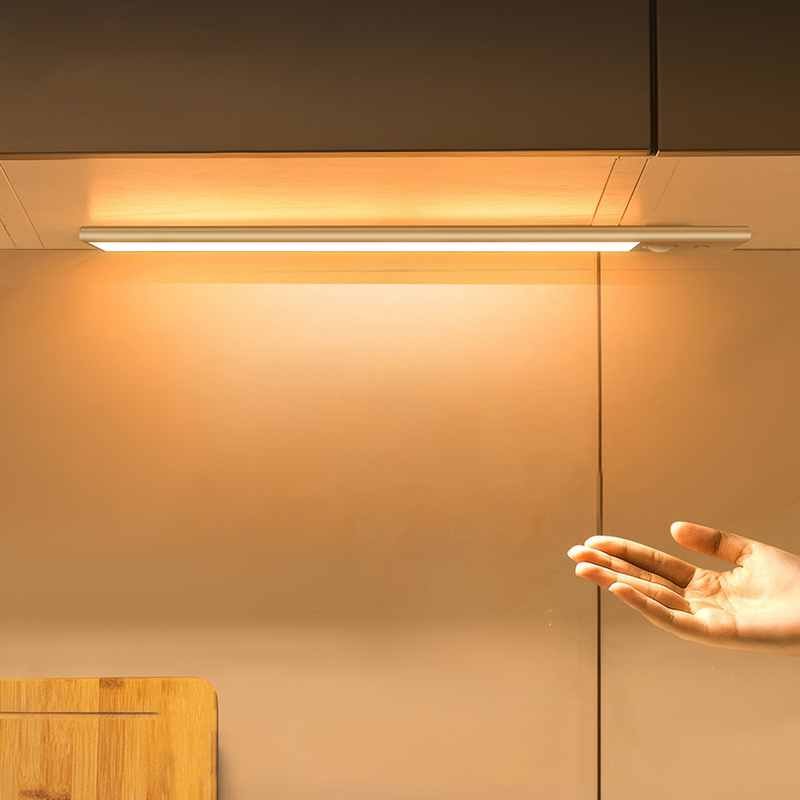
Or imagine walking into the kitchen at night and having your under cabinet light turn on automatically through a motion sensor.
Smart lighting can also allow different zones to be controlled separately.
For example:
- Countertop lighting for food preparation
- Island lighting for dining
- Pantry lighting for storage
- Accent lighting for evening entertaining
Recent industry discussions around 2026 kitchen lighting emphasize programmable controls, motion sensors, app control, and voice operation as practical rather than merely novelty features.
The important word here is practical.
The best smart lighting is technology you barely notice because it simply makes everyday life easier.
5. Motion Sensor Lighting Is Moving Into More Kitchen Areas
Motion sensors are particularly useful in areas where your hands are often occupied.
Under cabinet lighting is a perfect example.
A motion sensor can detect movement and automatically activate the light when someone approaches the countertop.
This can be useful for nighttime kitchen visits, but the concept can go much further.
In 2026, motion-activated lighting is also being used for:
- Pantry cabinets
- Drawers
- Appliance niches
- Storage areas
- Toe-kick lighting
Industry trend coverage has specifically highlighted motion-activated lighting inside drawers and hidden kitchen storage as part of more responsive kitchen environments.
For lighting manufacturers, this also creates opportunities to combine LED modules, sensors, batteries, and wireless controls into compact products.
6. Kitchens Are Becoming More Like Living Spaces
Another major trend is that the kitchen is no longer being designed purely as a functional workspace.
Open-plan kitchens increasingly connect directly to:
- Dining rooms
- Living rooms
- Home offices
- Family areas
As a result, kitchen lighting is beginning to look more like living-room lighting.
That means decorative wall lights, table lamps, sculptural pendants, and softer accent lighting are becoming more common.
One 2026 trend report, for example, highlights decorative wall lighting as a way to illuminate shelves, artwork, and architectural details rather than relying exclusively on task lighting.
This is an interesting shift.
Your kitchen doesn’t have to look like a laboratory just because you cook in it.
7. Oversized and Sculptural Pendant Lights Are Making a Statement
Pendant lighting remains important in 2026, especially over kitchen islands.
But the style is changing.
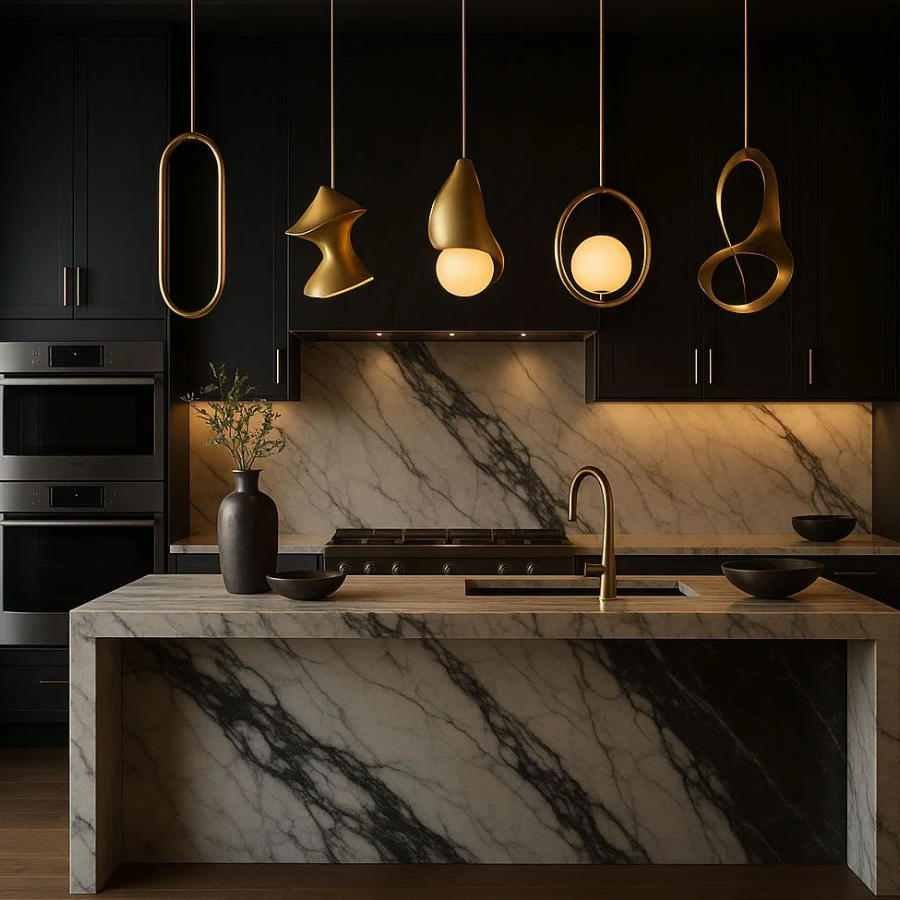
Instead of small, purely functional pendant fixtures, designers are increasingly using larger and more sculptural designs as visual focal points.
Organic shapes, curves, textured glass, natural forms, and unusual silhouettes are becoming more noticeable.
The idea is straightforward:
If the kitchen is the heart of the home, why shouldn’t its main light have some personality?
Recent 2026 trend coverage points toward oversized, curved, nature-inspired, and sculptural fixtures, particularly in larger kitchens and open-plan spaces.
Of course, there is a practical consideration.
A statement pendant should not be responsible for lighting the entire kitchen.
Pairing it with recessed lighting and under cabinet lighting gives you both visual impact and useful illumination.
8. Warm Metals and Natural Materials Are Coming Back
The “everything must be matte black” era is getting some competition.
Warm finishes such as:
- Brass
- Bronze
- Champagne
- Aged metal
are increasingly being combined with warmer kitchen color palettes.
At the same time, lighting fixtures are incorporating more tactile materials such as glass, ceramic, woven textures, and natural finishes. Amos Lighting’s 2026 trend analysis similarly identifies textured and natural materials as an important direction for kitchen lighting.
This works particularly well with kitchens featuring:
- Natural wood
- Stone
- Warm neutral colors
- Earthy tones
The goal is less about making every fixture match perfectly and more about creating a cohesive visual environment.
9. Backlit Stone and Architectural LED Lighting Are Growing
Stone is becoming more than just a countertop material.
Materials such as marble, onyx, and other translucent stones can be dramatically enhanced through backlighting.
LED lighting can be installed behind or around architectural surfaces to reveal natural patterns and veins.
This creates a much more sophisticated effect than simply placing a lamp above the surface.
One 2026 LED lighting trend guide specifically highlights backlit stone used on islands, walls, and backsplashes, sometimes combined with under-cabinet task lighting.
This is a good example of how kitchen lighting is moving from “lighting objects” toward lighting architecture itself.
10. Softer, More Comfortable Lighting Is Replacing Harsh Brightness
Brighter does not automatically mean better.
That idea is becoming increasingly important in 2026.
Instead of filling the entire kitchen with extremely bright, cool-white illumination, designers are using diffused and dimmable lighting to create a more comfortable environment.
This includes:
- Opal diffusers
- Soft LED strips
- Dimmable fixtures
- Warm-dimming technology
- Cove lighting
- Toe-kick lighting
The concept of “quiet luxury” in lighting is particularly relevant here: the fixture does not necessarily need to announce itself. It can simply create a subtle glow that makes the room feel better.
For under cabinet lighting, this means good diffusion is important.
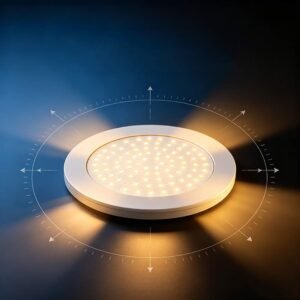
A visible row of individual LED dots can look cheap and distracting.
A well-designed diffuser can transform those points of light into a smooth, continuous illumination.
What About Colorful Kitchen Lighting in 2026?
White lighting is not going anywhere.
But color is becoming more intentional.
Green, blue, deep red, tinted glass, and other colors are appearing as accent elements in contemporary kitchen design.
This does not necessarily mean your entire kitchen should glow blue.
That might be a little much.
Instead, color can be used selectively:
- Under an island
- Along a toe-kick
- Behind shelving
- Inside glass cabinets
- Around architectural features
RGB or RGBW LED systems make this easier because the same lighting system can provide practical white light during the day and decorative color at night.
So, What Is the Biggest Kitchen Lighting Trend in 2026?
If we had to summarize the direction of 2026 kitchen lighting in one sentence, it would be:
Kitchen lighting is becoming more layered, adaptable, discreet, and personal.
The focus is moving away from simply asking:
“How bright should my kitchen be?”
and toward asking:
“How should my kitchen feel and function at different times of the day?”
That is why several trends are developing together.
A modern kitchen may combine a sculptural pendant over the island, recessed ambient lighting, warm decorative wall lights, smart controls, and under cabinet lighting for countertop tasks.
None of these elements has to do everything.
Each one has a job.
What Should You Consider When Choosing Kitchen Lighting in 2026?
If you’re planning a kitchen renovation or developing kitchen lighting products, don’t choose based solely on appearance.
Consider the entire lighting system.
Color Temperature
For general kitchen use, 3000K-4000K remains a practical range. Warm white creates a relaxed atmosphere, while neutral white is particularly suitable for food preparation.
CRI
A higher CRI helps colors appear more naturally, which is particularly useful when preparing and evaluating food.
Dimming
Dimming allows the same light to serve different purposes throughout the day.
Smart Controls
Motion sensors, app control, voice control, and programmable lighting can make a kitchen much more convenient.
Diffusion
For LED strips and under cabinet lights, proper diffusion helps eliminate harsh LED hotspots and creates a more professional appearance.
Layering
Don’t ask one fixture to do everything. Combine ambient, task, and accent lighting according to how the kitchen is actually used.
What Does This Mean for Under Cabinet Lighting Manufacturers?
The 2026 trends also reveal something important for lighting brands and product developers.
The market is moving beyond the basic “LED light underneath a cabinet” concept.
Customers increasingly expect more functionality from the same product.
A modern under cabinet lighting product may combine:
- Rechargeable battery
- Magnetic mounting
- Motion sensing
- Touch control
- Dimming
- Tunable white
- Remote control
- Smart home integration
At the same time, the fixture needs to remain slim enough to disappear underneath the cabinet.
That combination of function + compact design + easy installation is likely to remain an important product-development direction.
For B2B lighting brands, distributors, and retailers, this creates opportunities to develop differentiated under cabinet lighting rather than competing purely on price.
Final Thoughts
The kitchen lighting trend in 2026 is not about one particular lamp shape or one fashionable color.
It is about creating a lighting environment that can adapt to real life.
Bright light when you’re chopping vegetables.
Warm light when you’re having dinner.
Motion-activated light when you’re grabbing a glass of water at midnight.
Accent lighting when you’re entertaining guests.
And subtle illumination that makes the kitchen feel beautiful even when nobody is cooking.
Among all these trends, under cabinet lighting remains one of the most practical because it combines task lighting, energy-efficient LED technology, and modern design in a relatively small package.
The best kitchen lighting in 2026 isn’t necessarily the brightest or most expensive.
It is the lighting that works quietly in the background — until you turn it off and suddenly wonder how you ever lived without it.