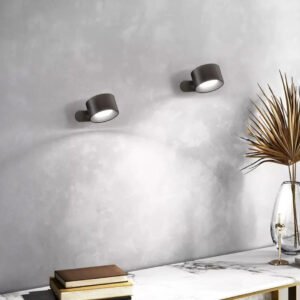

Motion sensor under cabinet lighting is a convenient way to illuminate kitchen countertops, cabinets, pantries, and other dark spaces without searching for a switch. These lights automatically turn on when movement is detected and switch off after a period of inactivity, helping provide hands-free illumination when you need it.
Rechargeable models have become particularly attractive because they combine motion detection with wireless installation, adjustable brightness, and magnetic mounting. However, not every product offers the same sensor performance, battery life, or lighting quality.
To help you choose, we selected five motion sensor under cabinet lighting products listed on Amazon: MCGOR, EZVALO, GOODEA, and Gritin models. We compared their advertised features, control options, charging methods, and suitability for different applications.
Our recommendations are based on published Amazon product information, not independent hands-on testing. Product specifications, prices, availability, and customer ratings may change, so check the latest listing before purchasing.
1. Identify the Main Purpose of the Table Lamp
Before comparing designs, determine what you expect your lamp to do. Different activities require different lighting characteristics.
If you mainly want to create a relaxing atmosphere, choose a lamp that produces soft, warm, diffused light. A fabric shade or frosted diffuser can help reduce harsh brightness and create a comfortable evening environment.
For reading beside a sofa or armchair, select a lamp that provides enough focused illumination without shining directly into your eyes. An adjustable lamp head or directional light source can be particularly useful.
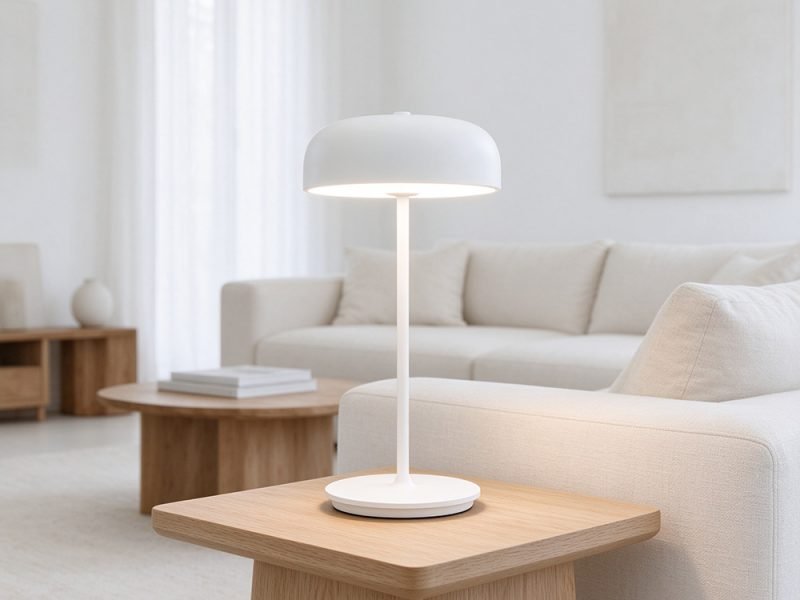
If the lamp is primarily decorative, consider a sculptural design that highlights its shape and materials while providing gentle accent lighting.
Some modern LED table lamps combine these functions through adjustable brightness, multiple color temperatures, or directional lighting. This flexibility allows one fixture to support several activities throughout the day.
2. Choose the Right Brightness for Your Living Room
Brightness is one of the most important factors when selecting an LED table lamp. A lamp that is too dim may not provide sufficient illumination, while an excessively bright light can create glare and make a relaxing space feel uncomfortable.
Instead of judging brightness by wattage alone, check the light output in lumens. Lumens indicate how much visible light a lamp produces, whereas watts measure its electrical power consumption.
For general guidance, an LED table lamp producing approximately 400–800 lumens may suit many living room applications. Lower output can work well for decorative accent lighting, while higher output may be useful for reading or other focused activities. The ideal level depends on the lamp’s shade, placement, room size, and existing lighting.
A table lamp should also work together with the room’s ceiling lights, floor lamps, and wall lights. Rather than relying on one powerful fixture, combining several light sources creates a more balanced and flexible environment.
3. Select a Comfortable Color Temperature
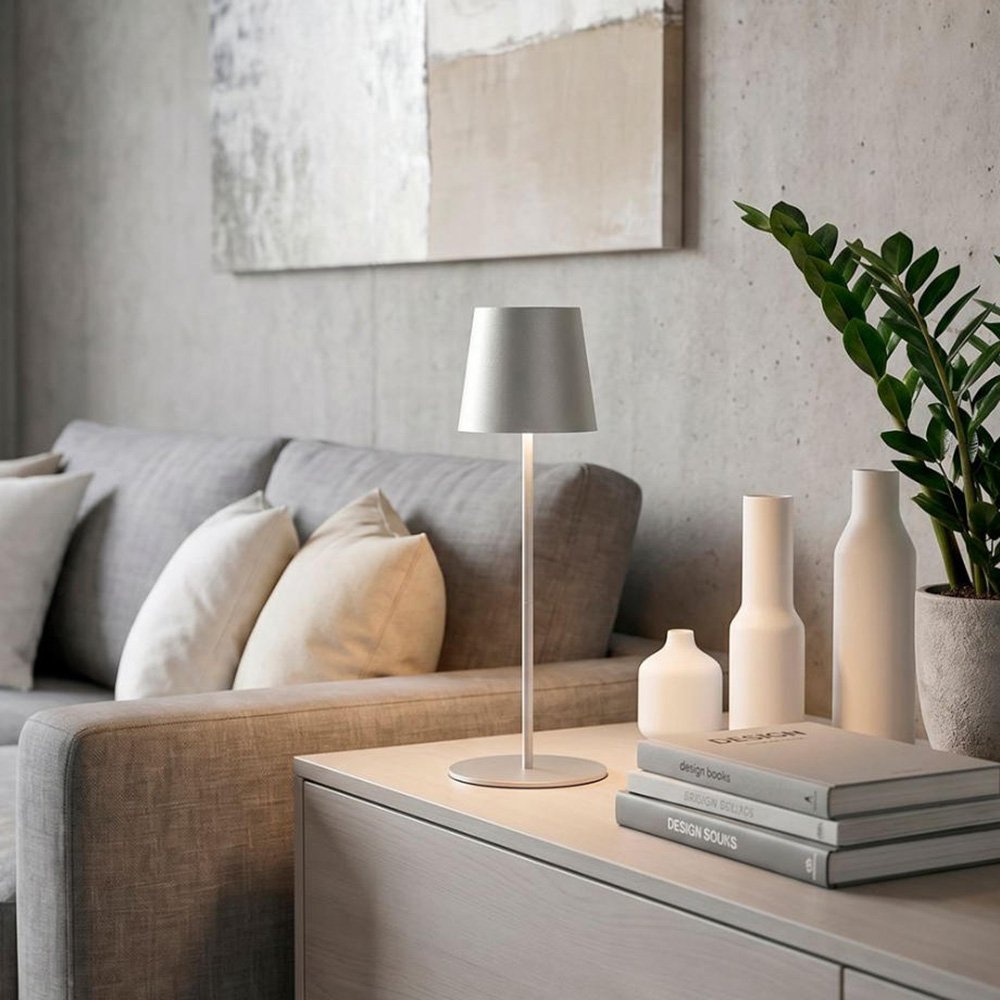
Color temperature determines whether light appears warm, neutral, or cool. It is measured in Kelvin (K), and it can significantly influence the atmosphere of a living room.
For most residential living spaces, warm white light between 2700K and 3000K is a practical starting point. It creates a welcoming appearance and complements common interior materials such as wood, fabric, and warm-colored furniture.
Neutral white light around 3500K may suit contemporary interiors or spaces used for multiple activities. Cooler white light can be useful for specific tasks, but it may feel less relaxing when used as the main evening lighting in a living room.
Color temperature | Appearance | Suitable application |
2700K | Warm and cozy | Relaxing and evening ambiance |
3000K | Soft warm white | Everyday living room lighting |
3500K | Balanced and neutral | Modern interiors and mixed activities |
4000K | Neutral to cool white | Focused tasks or specific design preferences |
If you use several lamps in the same area, consider choosing similar color temperatures. This helps maintain a consistent lighting atmosphere throughout the room.
4. Match the Lamp Size to Your Furniture
Even a high-quality lamp can look out of place if its proportions are wrong. Before purchasing an LED table lamp for living room use, measure the table or cabinet where you plan to position it.
A large lamp may overwhelm a small side table, while a very small lamp can disappear visually beside a large sofa. Consider the combined height of the lamp base and shade, as well as the width of the table and surrounding furniture.
Placement height also affects comfort. When sitting on the sofa or in an armchair, check whether the light source is visible directly at eye level. A suitable shade or diffuser should help reduce glare while allowing light to reach the intended area.
Leave enough space for other items, such as books, drinks, remote controls, or decorative accessories. The lamp should complement the furniture rather than make the tabletop difficult to use.
5. Choose a Design That Complements Your Interior
A table lamp is both a lighting fixture and a decorative element. Its shape, material, color, and finish should work with the room’s overall design.
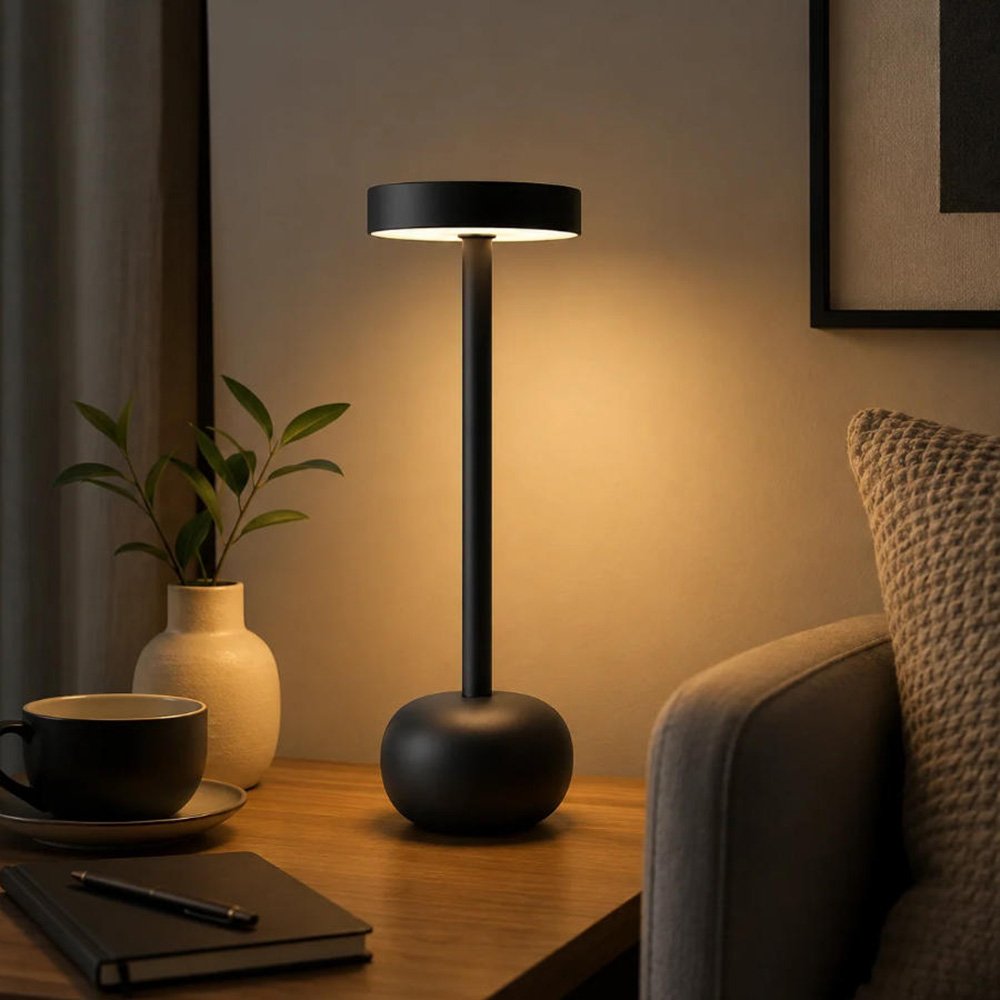
For minimalist interiors, slim metal bodies, simple geometric shapes, and neutral finishes can create a clean appearance. Traditional living rooms may benefit from ceramic bases, fabric shades, or classic silhouettes.
Contemporary interiors often suit lamps with sculptural forms, smooth finishes, or integrated LED light sources. For smaller homes, compact lamps with simple profiles can provide practical illumination without occupying too much visual space.
It is not necessary for the lamp to match every piece of furniture exactly. Instead, choose one or two visual elements that connect it to the room, such as a similar metal finish, complementary color, or repeated material.
A carefully selected lamp can become a subtle focal point while maintaining the harmony of the overall interior.
6. Prioritize Dimmable LED Technology
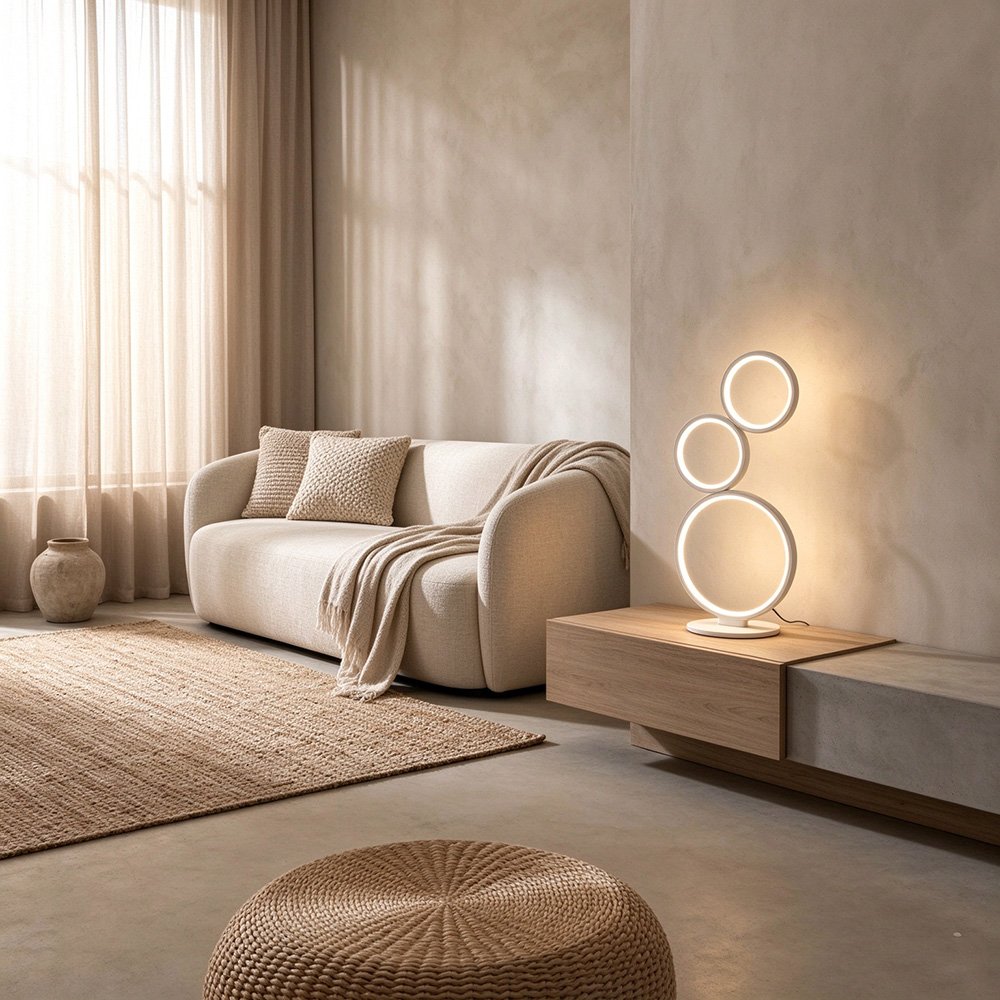
Dimmability is particularly useful in a living room because lighting requirements change throughout the day.
During reading or other focused activities, you may prefer a brighter setting. When watching television or entertaining guests, reducing the brightness can create a softer atmosphere.
A dimmable LED table lamp allows you to adjust the light output according to the occasion. Some models use touch controls, while others feature rotary switches, buttons, remote controls, or app-based adjustment.
However, not every LED lamp supports dimming. If a lamp uses a replaceable LED bulb, confirm that the bulb and dimmer are compatible. For integrated LED models, check whether brightness adjustment is included in the product specifications.
Smooth dimming, convenient controls, and stable light output can make a noticeable difference to the daily user experience.
7. Consider Smart Controls and Additional Features
Modern LED table lamps may offer more than simple on-and-off operation. Depending on the model, additional functions can improve convenience and give users greater control over their lighting.
Useful features include:
- Touch control:Allows users to switch the lamp on or off and, on supported models, adjust brightness with a simple touch.
- Remote control:Makes it easier to operate the lamp without reaching for its switch.
- Adjustable color temperature:Allows users to switch between warm and cooler white light.
- App control:Enables compatible lamps to be adjusted through a smartphone.
- Scheduling and automation:Available on some smart models for setting lighting routines.
- Rechargeable operation:Offers cordless flexibility when the product is designed for battery-powered use.
Not every living room needs every feature. A simple dimmable lamp may be sufficient for many households, while users who already have a smart home system may prefer app control or automation.
Before purchasing a smart LED table lamp, verify its compatibility with the intended control system, wireless network, or smart home platform. Do not assume that all smart lamps support the same functions.
8. Check Energy Efficiency, Light Quality, and Durability
LED technology is widely used because it can provide useful light output with relatively low electricity consumption compared with traditional incandescent lighting. Nevertheless, product quality varies, so it is worth checking more than the advertised wattage.
Look for clear information about lumen output, color temperature, and the color rendering index (CRI). A CRI of 80 or above is a reasonable starting point for general living room lighting, while higher CRI values may be desirable when accurate colors are important.
Also consider whether the lamp uses replaceable bulbs or an integrated LED module. Replaceable bulbs can simplify maintenance, while integrated LED designs may allow more compact shapes and specialized light distribution. With integrated models, check the manufacturer’s information about rated lifespan, warranty, and repair or replacement options.
A stable base, reliable switch, well-finished housing, and effective heat management are also important indicators to investigate. If possible, review product specifications and warranty terms before making a decision.
9. Consider Energy Supply and Placement
The power supply and installation requirements should match the intended location.
A conventional plug-in lamp is generally straightforward to use when a suitable outlet is nearby. Before buying, check the cord length and the position of the switch to ensure the lamp can be operated conveniently.
Rechargeable table lamps offer greater placement flexibility because they do not need to remain connected to an outlet while operating. They can be useful for small side tables, flexible seating arrangements, or homes where visible cables are undesirable. However, battery capacity, charging time, and runtime should be considered.
For either type, place the lamp on a stable surface and keep its cord, charging cable, or power adapter arranged safely. Avoid positions where the lamp could be knocked over easily or where cables create a tripping hazard.
Final Thoughts: How to Choose the Best LED Table Lamp for Living Room Use
The best LED table lamp is not necessarily the most expensive or the most feature-rich model. It is the one that provides suitable brightness, comfortable color temperature, appropriate proportions, and a design that complements your living space.
Start by identifying the lamp’s main purpose, then compare lumen output, color temperature, dimming options, size, and control functions. Finally, check the product’s light quality, power requirements, durability, and warranty.
By following these rules, you can choose an LED table lamp for living room use that combines practical illumination with attractive design. Whether you prefer a minimalist integrated LED fixture, a classic shaded lamp, or a smart model with adjustable lighting, the right choice can make your living room more comfortable and versatile every day.
References
- ENERGY STAR: Basic information on LED luminaire brightness, color temperature, and product labels. ENERGY STAR Lighting Guide.