
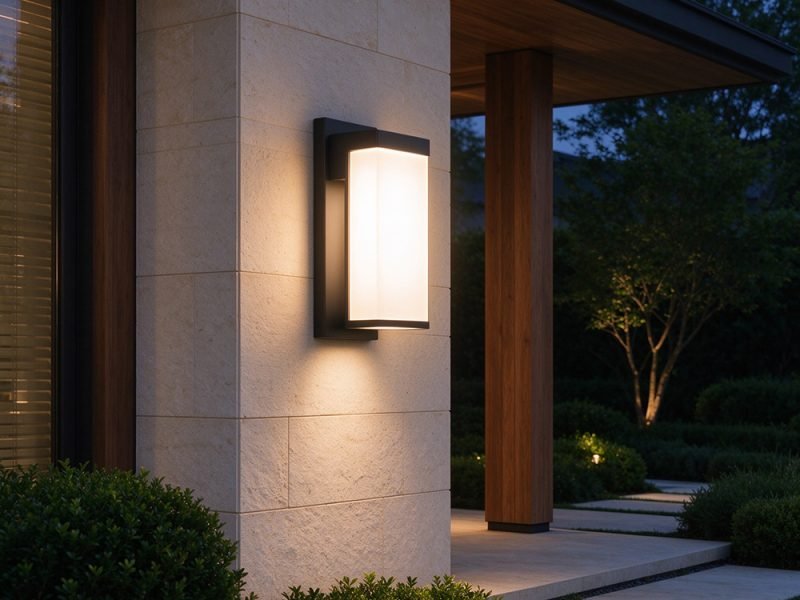
Outdoor lighting plays an important role in both the appearance and safety of a home. Whether installed beside the front door, along a garden wall, on a patio, or around a garage, exterior wall lights help illuminate outdoor spaces while enhancing the architectural style of a property.
Among the different outdoor lighting options, an LED exterior wall light is a popular choice because of its energy efficiency, long service life, and design flexibility. Modern LED wall lights are available in many styles, from simple up-and-down wall sconces to motion sensor lights, waterproof fixtures, and smart outdoor lighting products.
However, choosing the right outdoor wall light involves more than selecting an attractive design. You also need to consider brightness, IP rating, color temperature, materials, installation position, and power supply.
This guide explains the most important factors to help you choose suitable LED exterior wall lights for your home.
Why Choose LED Exterior Wall Lights?
LED technology has become a preferred solution for residential outdoor lighting. Compared with traditional incandescent or halogen fixtures, LED wall lights offer several practical advantages.
Energy efficiency
LED lights convert a greater proportion of electrical energy into light, reducing energy consumption for the same general lighting purpose. This is particularly beneficial for outdoor fixtures that operate for several hours every evening.
Long service life
Quality LED lighting products can provide many hours of operation before their light output significantly decreases. This reduces the frequency of replacing bulbs or maintaining outdoor fixtures, especially when lights are installed in difficult-to-reach locations.
Design flexibility
LED technology allows manufacturers to develop compact lighting fixtures in different shapes and sizes. Homeowners can choose from slim rectangular sconces, cylindrical wall lights, recessed designs, decorative lantern-style fixtures, and modern up-and-down lights.
Instant illumination
Unlike some traditional lighting technologies, LEDs reach their operating brightness almost immediately. This is useful for outdoor security lighting and motion-activated applications.
Flexible lighting effects
LED exterior wall lights can provide warm ambient illumination, focused downward lighting, indirect wall washing, or decorative up-and-down beams. Some models also support dimming, color adjustment, or smart control.
Choose the Right Type of LED Exterior Wall Light
Different outdoor areas require different lighting effects. Before purchasing a fixture, think about where it will be installed and what you want the light to achieve.
1. Up and Down LED Wall Lights
Up-and-down wall lights are among the most popular choices for modern exterior designs. They project light both upward and downward, creating symmetrical beams on the wall.
This lighting effect can emphasize architectural details and make a plain exterior wall more visually attractive.
They are particularly suitable for entrance walls, balconies, exterior corridors, and garden walls.
Best for: Decorative architectural lighting and modern residential exteriors.
2. Downward-Facing LED Wall Lights
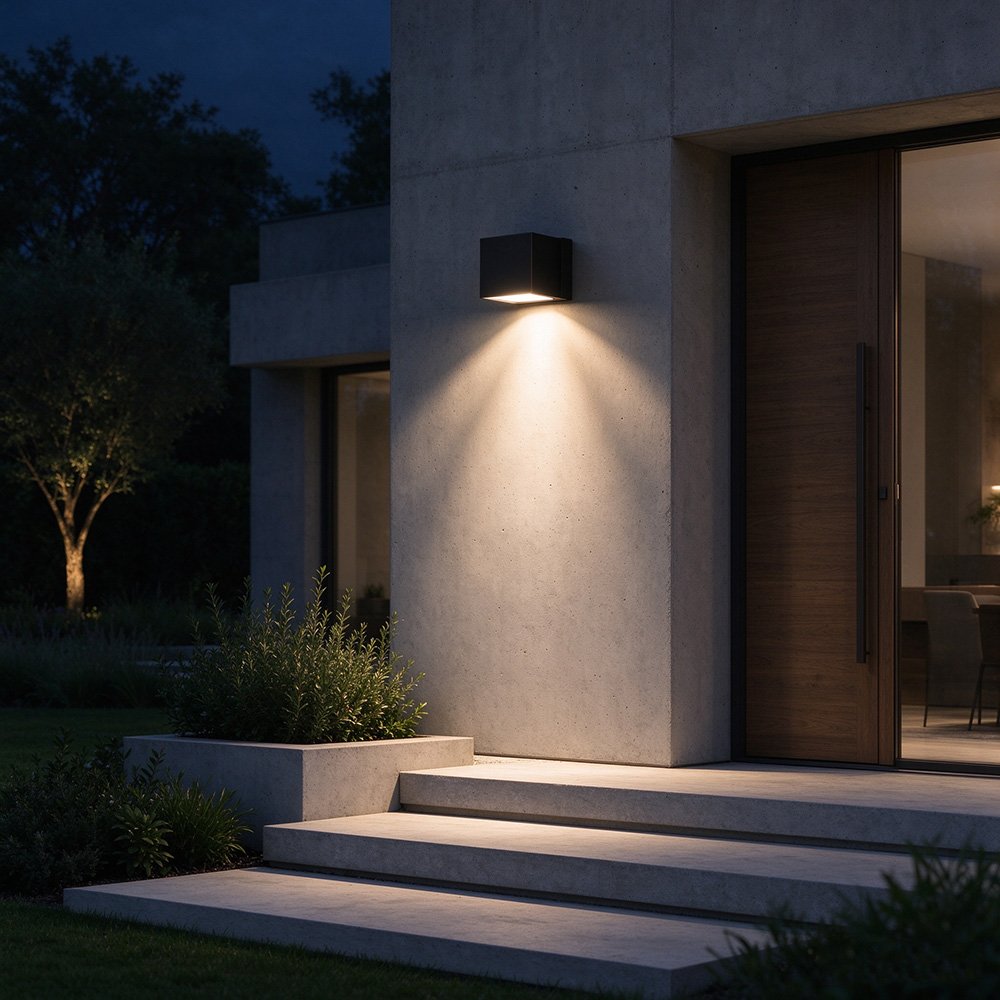
Downward-facing wall lights direct illumination toward the ground instead of spreading it in multiple directions.
They are useful around entrance doors, pathways, steps, and outdoor seating areas because they provide practical illumination while reducing unnecessary upward light.
Some designs feature shields or recessed light sources to help control glare.
Best for: Front entrances, walkways, patios, and outdoor stairs.
3. Motion Sensor LED Exterior Wall Lights
Motion sensor wall lights automatically turn on when movement is detected within their sensing range.
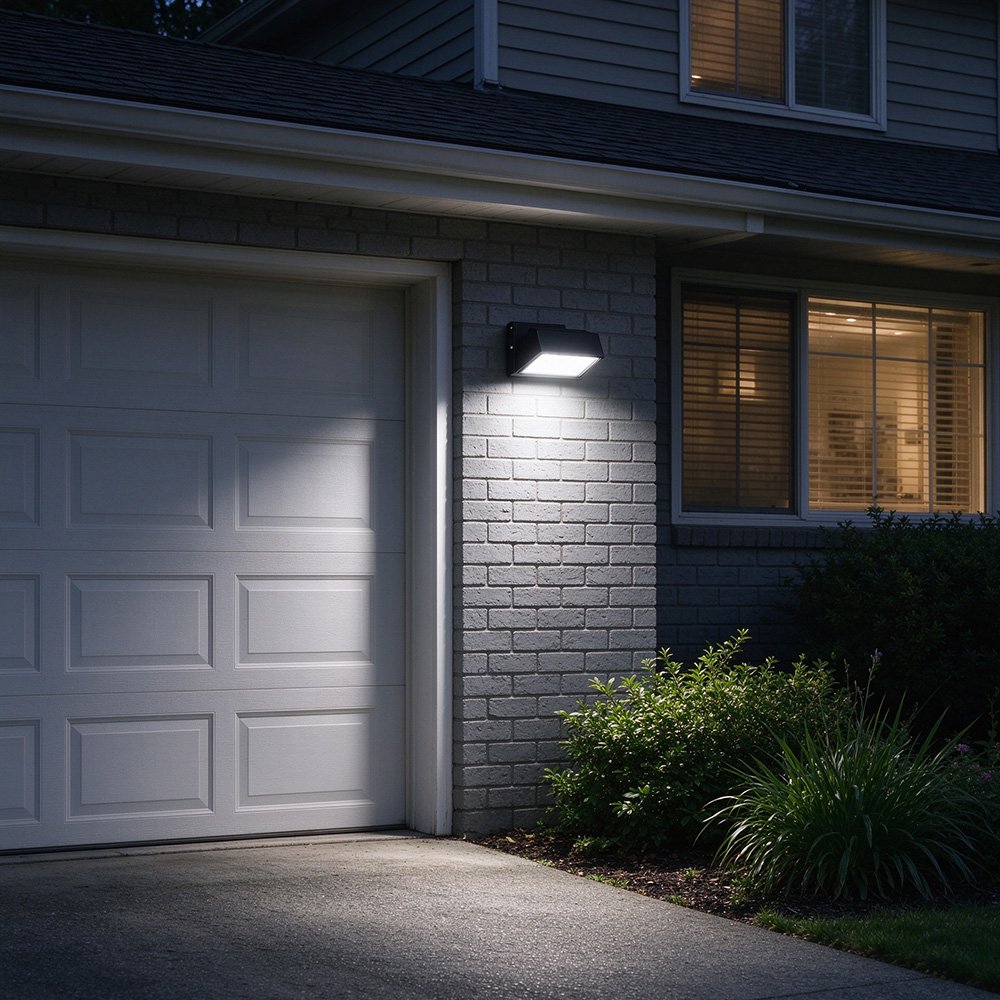
They are convenient for entrances, garages, side passages, and other areas where lighting is not required continuously. By operating only when needed, they may also help reduce unnecessary energy consumption.
Common sensor options include PIR motion sensors, which detect changes in infrared radiation caused by moving people or animals.
When choosing a motion sensor light, check its detection angle, detection distance, adjustable timer, and daylight sensor settings.
Best for: Security lighting, entrances, garages, and side passages.
4. Decorative LED Wall Sconces
Decorative wall sconces combine functional lighting with exterior decoration. They are available in traditional lantern designs, minimalist geometric shapes, and contemporary fixtures with integrated LED modules.
Some provide diffused light through glass or acrylic covers, creating a softer atmosphere around the entrance or patio.
Best for: Front porches, balconies, garden walls, and decorative outdoor spaces.
5. Solar-Powered LED Exterior Wall Lights
Solar wall lights use built-in solar panels to charge a rechargeable battery during daylight hours. They can operate without a direct connection to the household electrical supply.
This makes them convenient for garden walls, fences, and areas where wiring is difficult.
However, their performance depends on sunlight exposure, battery capacity, panel efficiency, and operating conditions. Shaded locations or extended periods of cloudy weather may reduce runtime.
Best for: Garden walls, fences, remote outdoor areas, and locations without convenient wiring.
Check the IP Rating for Outdoor Protection
One of the most important factors when selecting an LED exterior wall light is its IP rating.
Outdoor fixtures are exposed to rain, dust, humidity, and sometimes water jets from cleaning activities. The IP rating indicates the level of protection provided by an electrical enclosure against solid objects and water.
The first digit represents protection against solid particles, while the second digit indicates protection against water.
Here are several commonly encountered IP ratings:
IP rating | Protection level | Typical application |
IP44 | Protection against solid objects larger than 1 mm and splashing water | Covered porches and sheltered entrances |
IP54 | Limited dust protection and protection against water splashes | Sheltered outdoor walls |
IP65 | Dust-tight and protected against water jets | Exposed exterior walls |
IP66 | Dust-tight and protected against powerful water jets | More demanding outdoor locations |
IP67 | Dust-tight and protected against temporary immersion under specified test conditions | Specialized outdoor applications |
For many general outdoor wall lighting applications, IP65 is a practical choice, especially when the fixture is exposed to rain.
However, IP ratings should not be considered in isolation. Installation orientation, cable entry points, sealing quality, drainage, and the manufacturer’s installation instructions also affect real-world weather resistance.
A fixture with a high IP rating is not automatically suitable for every outdoor environment.
Select the Appropriate Brightness
Brightness determines how effectively an outdoor wall light illuminates its surroundings.
When comparing products, pay attention to lumens rather than wattage alone. Lumens indicate the amount of visible light produced, while wattage describes electrical power consumption.
The required brightness depends on the size of the area and the purpose of the lighting.
Outdoor application | General brightness consideration |
Decorative wall lighting | Low to moderate brightness |
Front door lighting | Moderate brightness for visibility |
Outdoor pathways | Moderate, evenly distributed illumination |
Garage entrance | Higher brightness when wider coverage is needed |
Large exterior walls | Multiple fixtures or higher total light output |
For decorative lighting, excessive brightness can make the exterior look harsh. A softer light may be more attractive.
For functional areas such as entrances and garages, sufficient illumination is important for identifying steps, locating keys, and moving around safely.
It is also worth considering beam angle and light distribution. A narrow beam creates a focused lighting effect, while a wider beam illuminates a larger area.
Choose the Right Color Temperature
Color temperature affects the atmosphere and appearance of outdoor spaces. It is measured in Kelvin (K), and different ranges produce different visual effects.
Color temperature | Appearance | Recommended use |
2700K–3000K | Warm white | Porches, patios, garden walls |
3500K–4000K | Neutral white | Entrances, garages, modern exteriors |
5000K–6500K | Cool white | Functional or security-oriented lighting |
For most residential exterior applications, warm white light between 2700K and 3000K is a popular option. It creates a welcoming atmosphere and works well with wood, brick, stone, and other natural materials.
Neutral white around 4000K provides a cleaner appearance and can be suitable for contemporary architecture.
Cool white lighting may be useful in certain functional areas, but it can look harsh when used excessively around a home.
For a consistent appearance, try to use the same or similar color temperatures for fixtures installed along the same exterior wall.
Consider the Material and Construction
Outdoor wall lights need to withstand changing weather conditions. The materials used in the housing, diffuser, and mounting components can influence durability and appearance.
Aluminum
Aluminum is widely used in modern LED outdoor fixtures because it is relatively lightweight and provides good heat dissipation. Powder-coated aluminum housings can offer additional surface protection.
Stainless steel
Stainless steel provides a clean metallic appearance and can be suitable for contemporary outdoor designs. However, its corrosion resistance depends on the grade and environmental conditions. Coastal areas may require materials with greater resistance to salt exposure.
Die-cast aluminum
Die-cast aluminum is commonly used for outdoor lighting housings because it supports a variety of shapes and provides structural strength. Surface treatments and sealing quality remain important.
Tempered glass and polycarbonate
These materials are often used for light covers and diffusers. Tempered glass offers a solid, durable surface, while polycarbonate is lightweight and impact-resistant. UV resistance should also be considered when the diffuser is exposed to sunlight.
For homes in coastal or high-humidity areas, pay particular attention to corrosion resistance, protective coatings, fasteners, and sealing details.
Look for Smart and Motion Sensor Functions
Modern outdoor lighting is increasingly incorporating intelligent control features.
Depending on your requirements, you may consider the following options:
PIR motion sensing
The light activates when movement is detected. It is useful for entrances, garages, and pathways where automatic operation is preferred.
Daylight sensing
A built-in photocell can prevent the light from turning on during daylight hours. This helps avoid unnecessary operation when natural light is sufficient.
Adjustable dimming
Some outdoor wall lights support adjustable brightness, allowing users to choose a softer decorative effect or stronger illumination.
Remote and app control
Smart outdoor lighting products may support app-based operation, scheduling, and remote control. Depending on the model, they may also integrate with compatible smart home platforms.
Before purchasing a smart fixture, check its communication protocol, Wi-Fi requirements, operating temperature range, and compatibility with your existing smart home system.
Pay Attention to Installation Position and Lighting Direction
Even a high-quality outdoor wall light may produce poor results if installed in the wrong position.
For front entrances, install the fixture at a height that provides comfortable illumination without shining directly into people’s eyes.
For pathways and outdoor stairs, consider the direction of the beam carefully. The goal is to illuminate walking surfaces and reduce dark areas.
For decorative up-and-down lights, leave enough space around each fixture so the light beams can spread naturally across the wall.
When installing multiple fixtures, maintain consistent spacing and mounting height to create a balanced appearance.
It is also important to consider the location of electrical connections. Outdoor wiring should be installed using suitable weatherproof components and in accordance with local electrical codes. Mains-powered fixtures should be installed by a qualified electrician when required.
Common Mistakes to Avoid
Before making your final decision, avoid these common mistakes:
- Choosing a fixture based only on appearance:A beautiful design may not provide sufficient weather protection or useful illumination.
- Ignoring the IP rating:Indoor-rated products should not be used outdoors unless the manufacturer specifically approves the application.
- Selecting excessive brightness:Too much light can create glare and disturb neighbors or nearby wildlife.
- Overlooking corrosion resistance:Standard finishes may deteriorate more quickly in coastal or harsh environments.
- Ignoring light pollution:Choose fixtures that direct light where it is needed instead of unnecessarily illuminating the sky or neighboring properties.
- Forgetting maintenance access: Make sure the fixture can be safely inspected, cleaned, or serviced after installation.
Final Thoughts: Find the Right LED Exterior Wall Light
Choosing the right LED exterior wall light requires balancing appearance, lighting performance, durability, and installation requirements.
For decorative exterior lighting, up-and-down wall sconces and warm white LEDs can create an attractive architectural effect. For entrances and pathways, downward-facing fixtures provide more practical illumination. Motion sensor and solar-powered models offer additional convenience for areas where automatic operation or flexible installation is important.
Before purchasing, check the IP rating, lumen output, color temperature, housing material, control functions, and installation requirements.
A well-selected outdoor wall light does more than illuminate the exterior of your home. It improves visibility, enhances architectural details, and helps create a welcoming outdoor environment after sunset.