

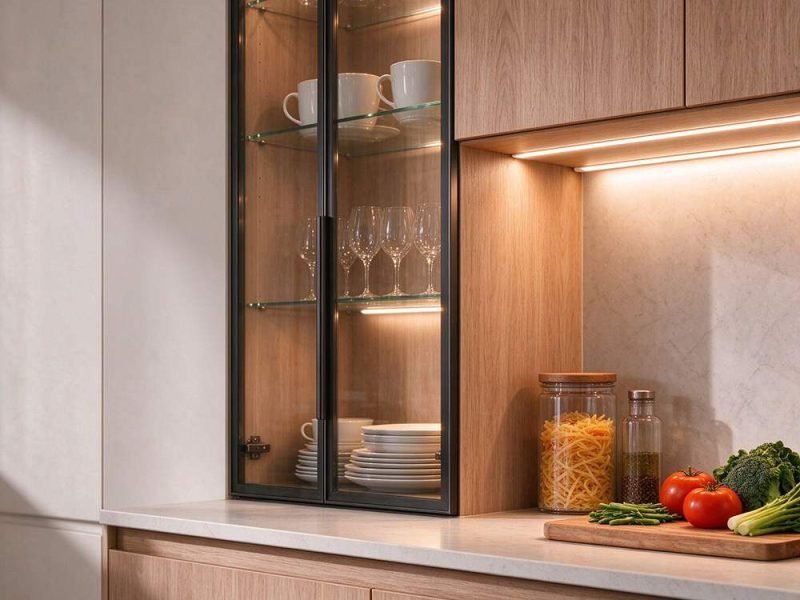
Kitchen lighting is about more than illuminating countertops. The right lighting inside and around kitchen cupboards can make everyday tasks easier, improve visibility, and give the entire kitchen a more polished appearance. Whether you want to illuminate dark cabinets, brighten a countertop, or highlight glass-front cupboards, choosing the right kitchen cupboard LED lights can make a noticeable difference.
However, not every LED lighting solution is suitable for every cupboard. Strip lights, puck lights, rechargeable sensor lights, and integrated linear fixtures each offer different advantages. Brightness, color temperature, power supply, installation method, and control options all affect the final result.
In this guide, we explain how to choose the best LED lights for kitchen cupboards, compare popular lighting types, and highlight the key features to consider before purchasing.
1. Decide Where You Need Kitchen Cupboard LED Lights
Before choosing a product, identify exactly where the lights will be installed. Different locations have different lighting requirements, so understanding the application first will help you avoid buying an unsuitable fixture.
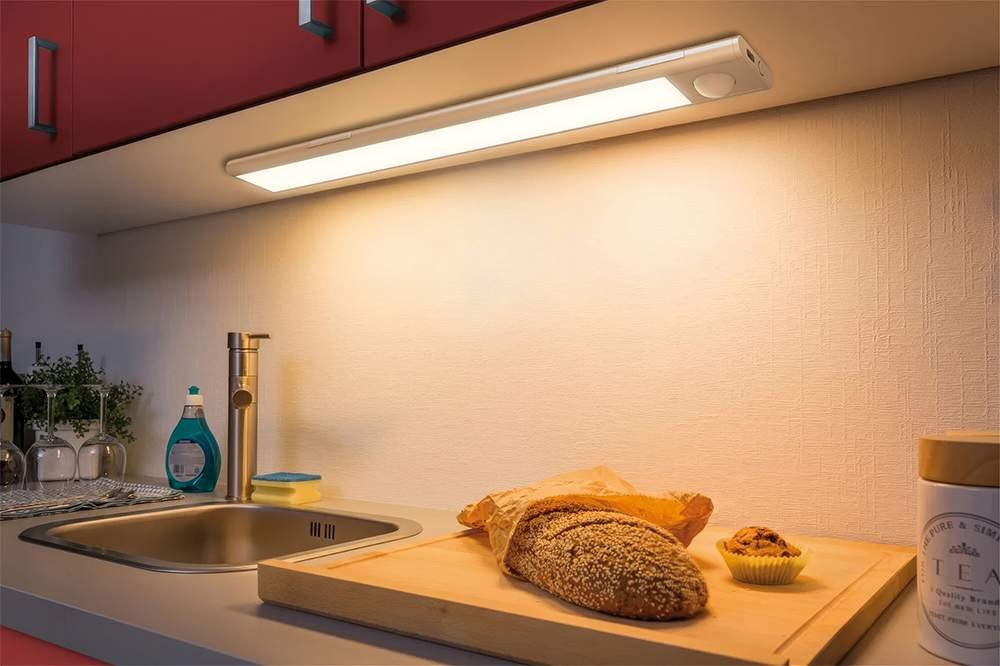
Under-Cabinet Lighting
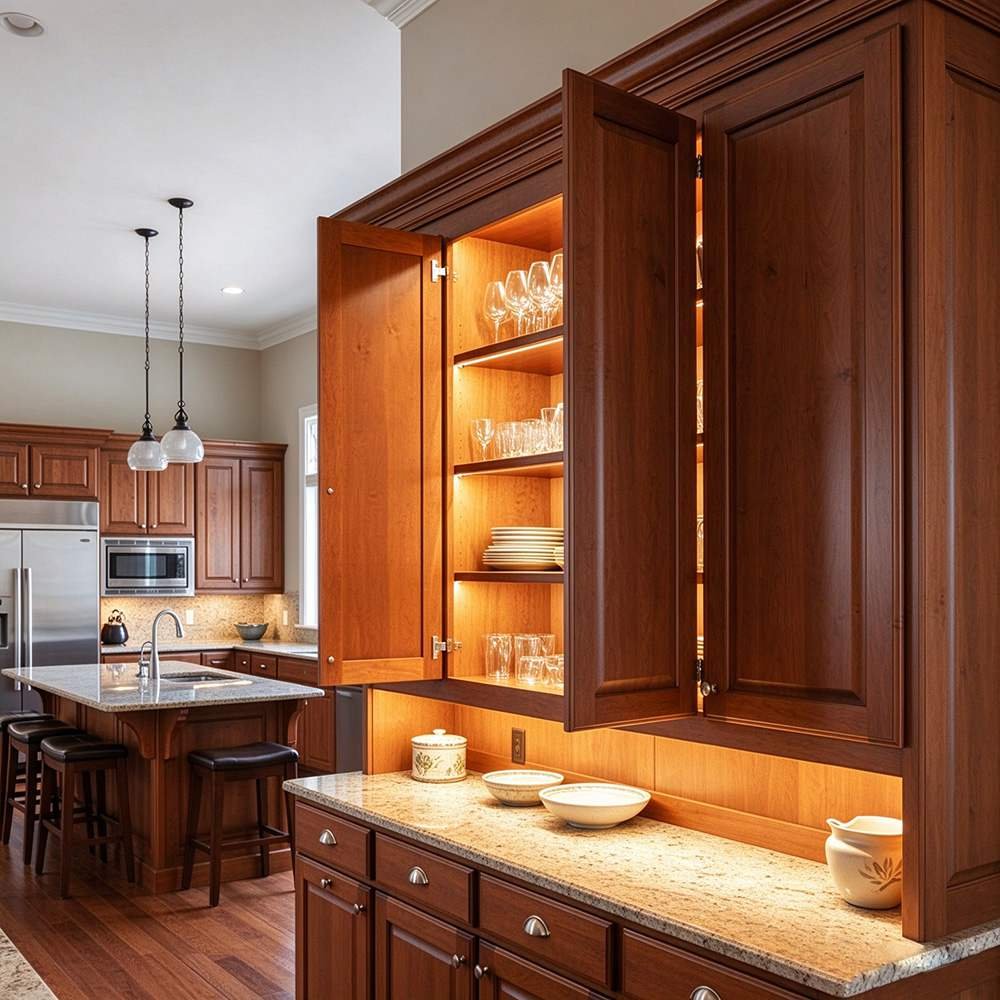
Under-cabinet lights are installed beneath wall-mounted kitchen cupboards to illuminate the countertop below. They are particularly useful for food preparation, washing dishes, and other tasks that require clear visibility.
LED strip lights and linear bar lights are popular choices because they can distribute light across a relatively long area. For a continuous, professional-looking effect, choose a fixture with a diffuser that helps reduce visible LED dots and harsh reflections.
Inside-Cupboard Lighting
Interior cupboard lighting helps you see cookware, dishes, ingredients, and other stored items. It is especially useful for deep cabinets where objects near the back can be difficult to locate.
Motion-sensor lights are convenient for this application because they can switch on automatically when the cupboard door opens or movement is detected, depending on the sensor design.
For cabinets without an accessible electrical connection, rechargeable LED lights can provide a simpler installation option.
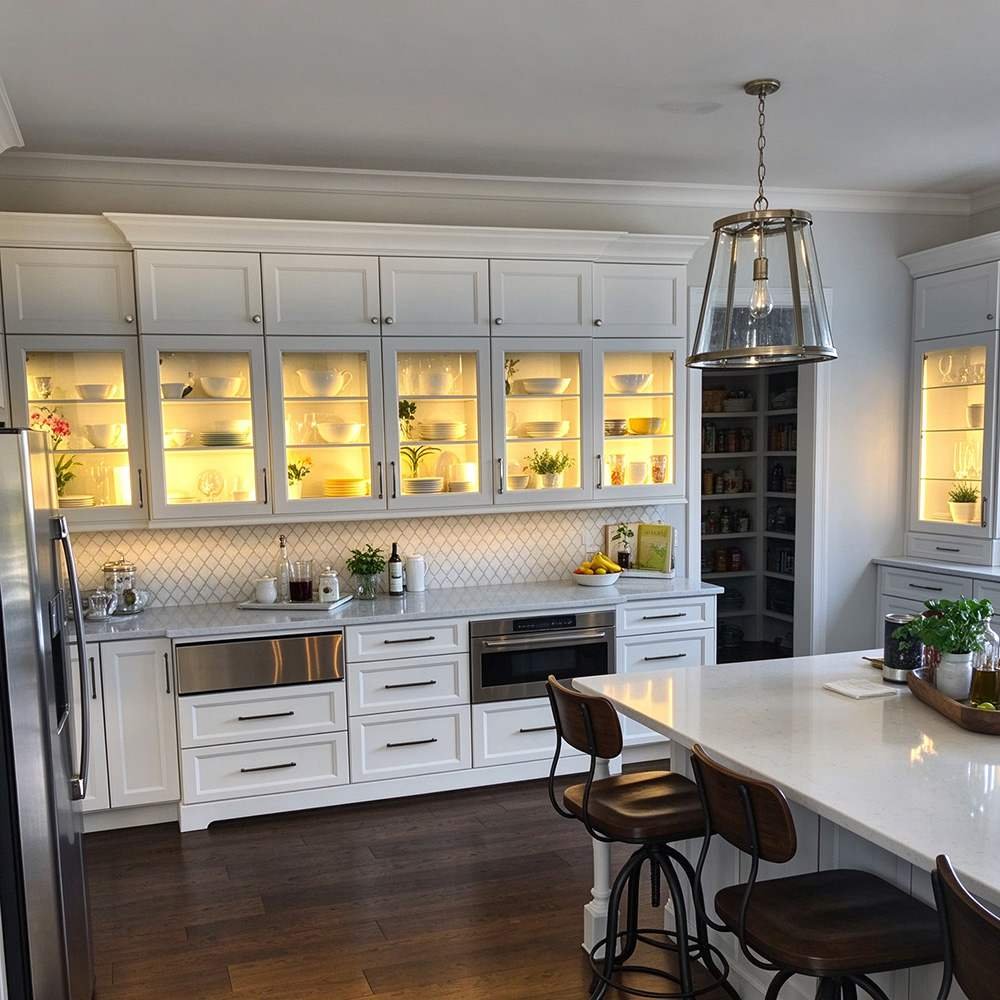
Glass-Front Cupboard Lighting
Glass-front cupboards are often used to display glassware, decorative dishes, or collections. Lighting can emphasize the contents and create a more sophisticated appearance.
Small puck lights, slim LED strips, and compact linear fixtures can all work well. Select a light that produces an even glow without creating distracting reflections on the glass.
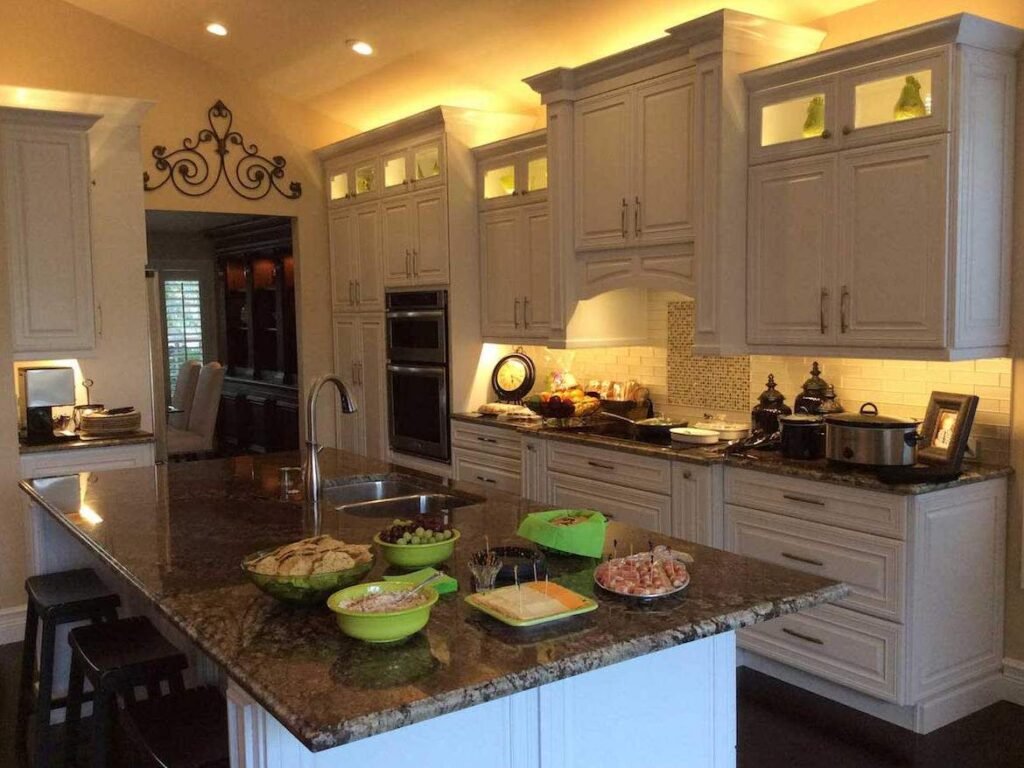
Above-Cabinet Accent Lighting
LED strips installed on top of kitchen cupboards can create indirect lighting that reflects off the ceiling. This approach adds visual depth and can make the kitchen feel more inviting.
Because the light source is usually hidden, flexible LED strips are often suitable. Before installation, check that the strip is designed for the intended environment and that its power supply and wiring can be positioned safely.
2. Choose the Right Type of LED Light
Once you know where the lighting will go, compare the available product types.
LED light type | Best application | Main advantage | Potential limitation |
LED strip lights | Under cupboards, above cupboards, long shelves | Continuous and flexible illumination | May require careful wiring and installation |
LED linear bar lights | Countertops and cabinet interiors | Convenient, structured installation | Length options may be limited |
LED puck lights | Display cabinets and individual compartments | Compact and directional | Multiple units may create uneven lighting |
Rechargeable LED lights | Cupboards without convenient wiring | Easy installation and flexible placement | Require periodic charging |
Motion-sensor LED lights | Interior cupboards and selected work areas | Automatic operation | Sensor placement and detection range matter |
Integrated cabinet lighting systems | New kitchens and renovation projects | Coordinated appearance and control | May involve more planning and installation work |
For most countertops, LED strip lights or linear bar lights are practical choices because they can provide broad, consistent illumination. For cupboards that are opened occasionally, rechargeable motion-sensor lights may be more convenient.
3. Select the Appropriate Brightness
Brightness is one of the most important factors when choosing kitchen cupboard LED lights. A decorative display cabinet generally needs less illumination than a countertop used for food preparation.
LED brightness is measured in lumens. Wattage indicates power consumption, not the amount of light produced, so comparing lumens is more useful when evaluating different products.
For under-cabinet task lighting, approximately 300–500 lumens per linear meter can serve as an initial reference for many residential kitchens. Higher output may be appropriate for dark countertops or demanding tasks, while lower output may be sufficient for decorative or ambient lighting.
These figures are starting points rather than strict requirements. The ideal brightness depends on countertop color, mounting height, surrounding light, fixture optics, and the user’s visual needs.
For cupboard interiors, compact lights with lower output may be sufficient, especially when the goal is simply to locate stored items.
It is also worth checking whether the light is dimmable. Adjustable brightness allows you to use stronger illumination while cooking and softer light when the kitchen is being used in the evening.
4. Choose the Best Color Temperature
Color temperature affects both the appearance of the kitchen and how comfortable the lighting feels. It is measured in kelvins (K).
- 2700K–3000K: Warm white.Creates a cozy atmosphere and works well with warm wood cabinets, beige finishes, and traditional interiors.
- 3500K–4000K: Neutral white.Offers a balanced appearance that suits many contemporary kitchens and everyday countertop tasks.
- 5000K–6500K: Cool white to daylight.Produces a cooler, brighter visual impression, although it may feel too stark for some residential kitchens.
For general kitchen cupboard lighting, 3000K or 4000K is often a practical starting point. Warm white can make a kitchen feel more relaxed, while neutral white can provide a cleaner appearance for food preparation.
Try to coordinate the color temperature of under-cabinet lights with the main kitchen lighting. Large differences between nearby light sources may make cabinet finishes and countertops appear inconsistent.
If your needs change throughout the day, consider tunable-white LED lights that allow you to adjust the color temperature.
5. Decide Between Wired and Rechargeable LED Lights
Your power supply options influence installation difficulty, maintenance, and long-term convenience.
Hardwired or Plug-In LED Lights
Wired lighting is a strong choice for kitchens where the lights will be used every day for extended periods. Once installed, the fixtures can operate without routine battery charging.
Hardwired systems are particularly suitable for new kitchens and renovations, when electrical connections can be planned in advance. Plug-in models can be easier to install if a suitable outlet is available.
Before purchasing, check the operating voltage, driver requirements, wiring arrangement, and installation instructions. Hardwired electrical work should be completed by a qualified professional where required.
Rechargeable LED Lights
Rechargeable kitchen cupboard LED lights are useful when you want to avoid running new cables or when the cabinet location makes electrical installation difficult.
Many products use magnetic mounting plates, allowing the light to be removed for charging or repositioned when needed. Some models include motion sensors to reduce unnecessary operating time.
However, battery capacity and charging frequency matter. A light that is used frequently at high brightness may require charging much more often than one operating briefly in sensor mode.
When comparing rechargeable models, check battery capacity, charging connector, estimated runtime, charging time, and whether the light can operate while connected to power.
6. Consider Motion Sensors and Smart Controls
Control options can make kitchen cupboard lighting more convenient and help prevent lights from being left on unnecessarily.
Motion-Sensor Lighting
Motion sensors can automatically activate lighting when movement is detected. They are particularly useful inside cupboards, pantries, and other storage areas where hands-free operation is helpful.
However, not every motion sensor works in the same way. Some detect movement in front of the fixture, while door-triggered systems activate when a cupboard door opens. Choose the mechanism that suits the installation location.
For example, a sensor designed to detect movement across an open countertop may not be the best option for a closed cabinet interior.
Touch and Hand-Wave Controls
Touch-controlled lights can be convenient when you want direct control over brightness or power. Hand-wave sensors allow contact-free operation, which can be useful when your hands are wet or occupied.
The effectiveness of these features depends on sensor placement and the product’s design, so check the manufacturer’s specifications before purchasing.
Smart LED Controls
Some kitchen cupboard lights support smartphone apps, remote controls, timers, or integration with compatible smart home systems.
These features can be useful if you want to coordinate cabinet lighting with other kitchen lights. However, a more complex smart system is not always necessary. For a single cupboard, a straightforward motion-sensor light may provide everything you need.
7. Check Installation, Size, and Light Distribution
Even a high-quality LED light may produce a poor result if it is incorrectly sized or positioned.
Measure the cupboard or countertop before choosing a fixture. For under-cabinet lighting, consider whether one continuous strip, several linear bars, or multiple puck lights will provide the most even illumination.
A strip that is too short may leave dark areas, while widely spaced puck lights can create bright spots and shadows. Diffusers can help soften the output and improve visual consistency.
Also consider how the fixture will be mounted. Common options include adhesive backing, magnetic plates, clips, screws, and recessed installation. Adhesive mounting is convenient, but the surface must be clean and suitable for the adhesive.
If the light will be installed near a sink, cooktop, or another area exposed to moisture, grease, or heat, check its environmental rating and the manufacturer’s installation requirements. Do not assume that every LED strip or rechargeable cabinet light is suitable for every kitchen location.
8. Look for Quality, Efficiency, and Long-Term Value
Price is important, but the cheapest product may not be the most economical over time.
Look for clear specifications covering brightness, color temperature, power consumption, dimming compatibility, and expected service life. A product with consistent light output and a suitable warranty may offer better long-term value than an inexpensive fixture with limited documentation.
For integrated LED products, check whether the light source or driver can be serviced or replaced. For rechargeable models, consider battery replacement options and the availability of charging accessories.
If color appearance matters, look for a high color rendering index (CRI). A CRI of 80 or above is a reasonable starting point for general residential lighting, while CRI 90 or above can be preferable when accurate color appearance is particularly important.
For larger kitchen projects, planning the layout and power supply before purchasing can also reduce installation costs and avoid mismatched components.
Conclusion
Choosing the best kitchen cupboard LED lights starts with understanding where the lighting will be used. Under-cabinet task lighting, interior cupboard illumination, display lighting, and indirect accent lighting each have different requirements.
For most kitchens, LED strip lights and linear bars are excellent options for continuous countertop illumination, while puck lights and rechargeable sensor lights can work well inside cupboards and display cabinets. Brightness, color temperature, power supply, control options, installation, and light quality should all be considered before making a decision.
By matching the product to your kitchen layout and daily routine, you can create lighting that is practical, energy-efficient, and visually appealing. The best solution is not necessarily the one with the most features, but the one that provides the right light in the right place with minimal inconvenience.