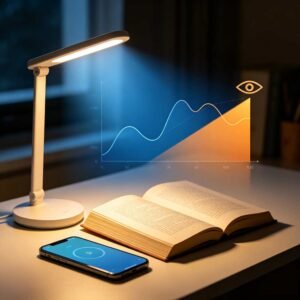

LED lighting has become one of the most widely used lighting technologies in homes, commercial buildings, industrial facilities, vehicles, displays, and decorative applications. But when people search for “what are the three types of LED lights,” the answer can be confusing because LED products can be classified in several different ways.
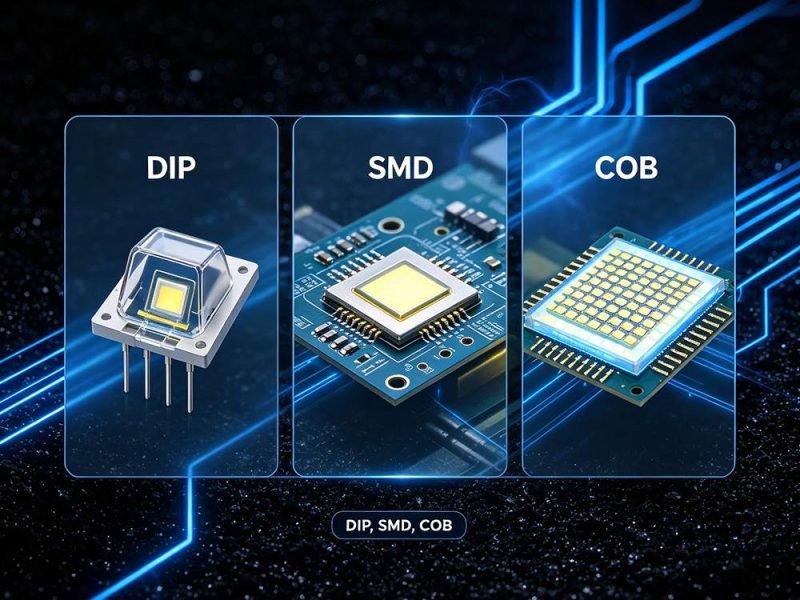
Some articles classify LED lighting according to its function, such as ambient, task, and accent lighting. Others classify LED products according to their construction, such as LED chips, LED lamps, and integrated LED luminaires. When talking specifically about the types of LED technology used to produce light, three common categories are DIP, SMD, and COB LEDs.
These three LED technologies have different structures, optical characteristics, and typical applications. Understanding the differences can help you choose the right LED light for a particular project.
What Is an LED Light?
Before comparing the three types, it is useful to understand what an LED actually is.
LED stands for Light Emitting Diode. Unlike an incandescent lamp, which produces light by heating a filament, an LED is a semiconductor device that produces light when electrical current passes through it.
The LED itself is only the light-emitting component. A complete LED light may also include a circuit board, driver, heat sink, optical lens or diffuser, housing, and control system.
The way the LED chip is packaged has a significant effect on how the final lighting product performs. This is why different LED packages are used for different applications.
The three commonly discussed types are DIP, SMD, and COB.
The Three Common Types of LED Lights
1. DIP LEDs
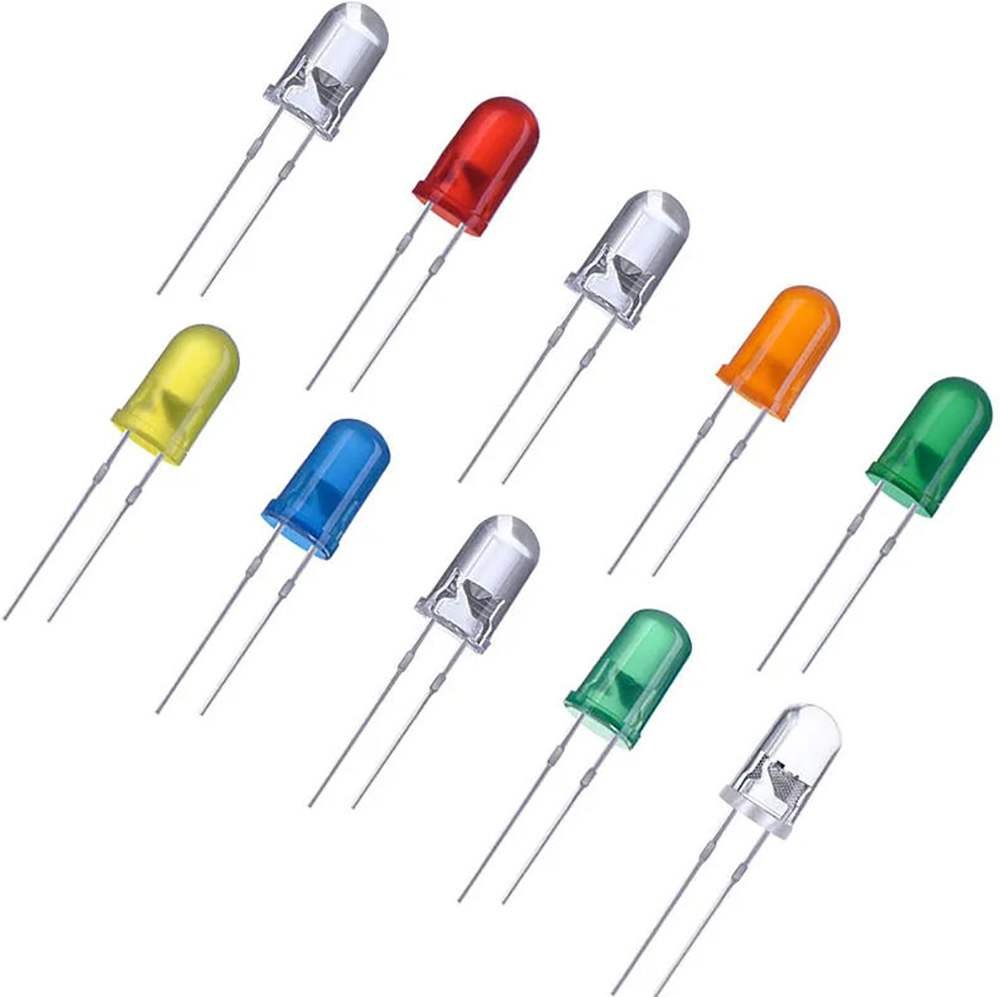
DIP stands for Dual In-line Package. It is one of the older and more recognizable LED package designs.
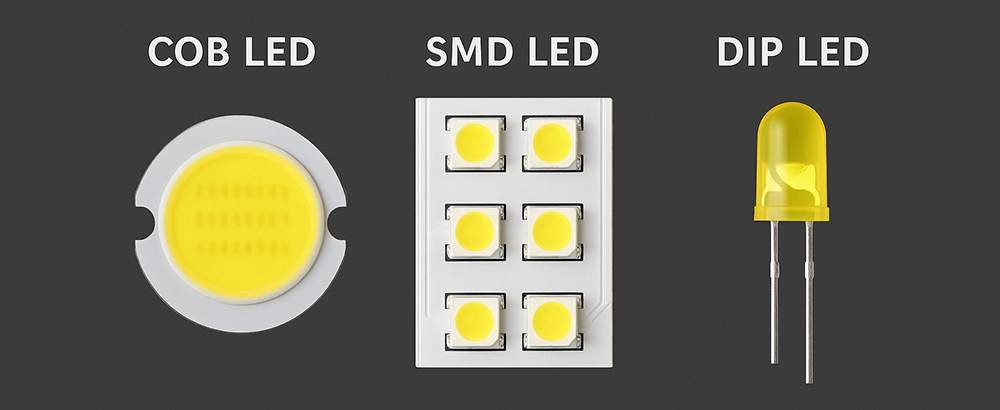
A traditional DIP LED usually consists of a small semiconductor chip enclosed inside a plastic or epoxy body, with two or more leads extending from the bottom. These leads are inserted through holes in a circuit board and soldered into place.
Because of their relatively simple construction, DIP LEDs have historically been widely used for indicator lights, electronic displays, signs, and basic decorative applications. Modern LED lighting has increasingly moved toward more compact technologies such as SMD and COB, but DIP LEDs are still used where their characteristics are appropriate.
Advantages of DIP LEDs
One advantage of DIP technology is its straightforward construction. The individual LED is physically easy to identify and can be suitable for applications where high optical performance is not the primary requirement.
DIP LEDs can also provide good durability in certain display and indicator applications.
Limitations of DIP LEDs
The main limitation is that DIP packages are relatively large compared with many modern surface-mounted LED packages. They are generally not the preferred choice when a lighting manufacturer needs a compact, high-density light source.
Their optical and thermal performance also makes them less suitable for many modern high-output general lighting applications.
Common applications
DIP LEDs are commonly associated with:
- Indicator lights
- Electronic displays
- Digital signs
- Decorative lighting
- Certain outdoor signs
- Older LED display technologies
For general residential or commercial illumination, however, SMD and COB technologies are generally more relevant.
2. SMD LEDs
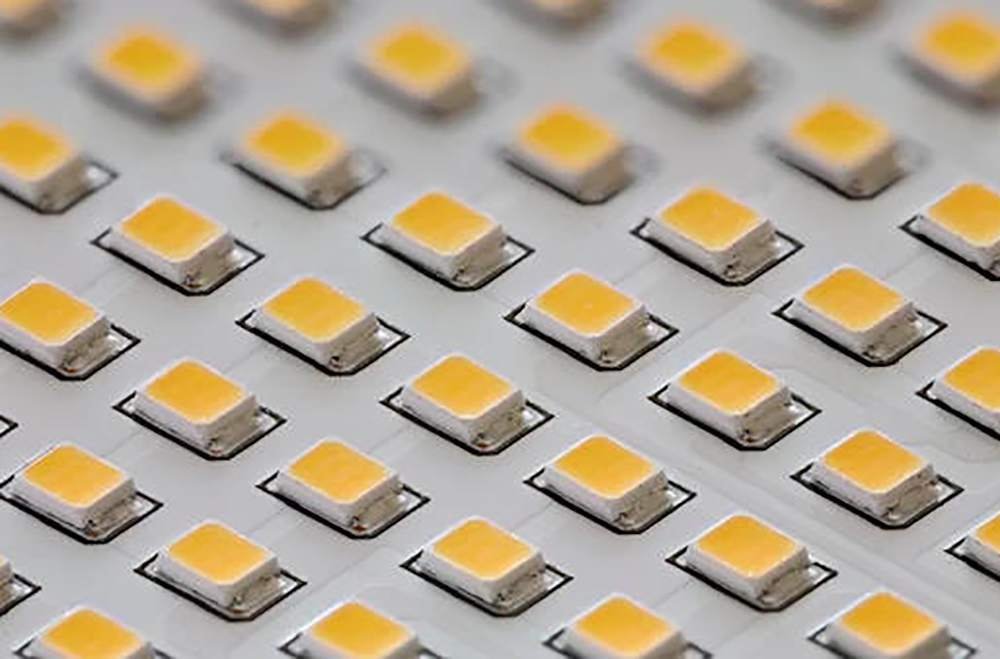
SMD means Surface-Mounted Device. SMD LEDs are among the most widely used LED technologies in modern lighting.
Unlike DIP LEDs, which have leads inserted through holes in a PCB, SMD LEDs are mounted directly onto the surface of a circuit board. This allows manufacturers to create smaller, flatter, and more densely packed LED modules.
Common SMD package sizes include 2835, 3030, 3528, 5050, and 5730. The numbers generally describe the approximate package dimensions in millimeters, although the exact electrical and optical characteristics depend on the particular LED design.
SMD LEDs are widely used in LED strips, bulbs, panels, downlights, street lights, floodlights, linear lighting, and many other products.
Why are SMD LEDs so popular?
One major advantage is their flexibility.
Because SMD LEDs can be manufactured in different package sizes and configurations, lighting manufacturers can select an appropriate LED according to required brightness, efficiency, dimensions, color temperature, and thermal requirements.
Multiple SMD LEDs can also be distributed across a PCB. Instead of producing light from one concentrated point, the LEDs can be arranged over a larger area to create more uniform illumination.
This makes SMD technology particularly useful for LED strip lights and linear lighting, where manufacturers often want light to be distributed continuously along a long PCB.
Advantages of SMD LEDs
SMD LEDs offer several important benefits:
Compact size: Their low-profile construction allows them to fit into relatively thin lighting products.
Flexible layout: Multiple LEDs can be arranged across a circuit board to achieve different brightness and optical effects.
Wide range of applications: SMD technology is used in everything from residential bulbs to commercial and industrial lighting.
Good balance of efficiency and output: Depending on the specific LED package, SMD products can provide high efficiency while maintaining a compact form factor.
Common applications
SMD LEDs can be found in:
- LED strip lights
- LED bulbs
- LED panel lights
- LED downlights
- Linear LED lights
- Street lights
- Floodlights
- High-bay lights
- Under cabinet lighting
- Architectural lighting
For many modern LED lighting products, SMD is one of the most versatile choices.
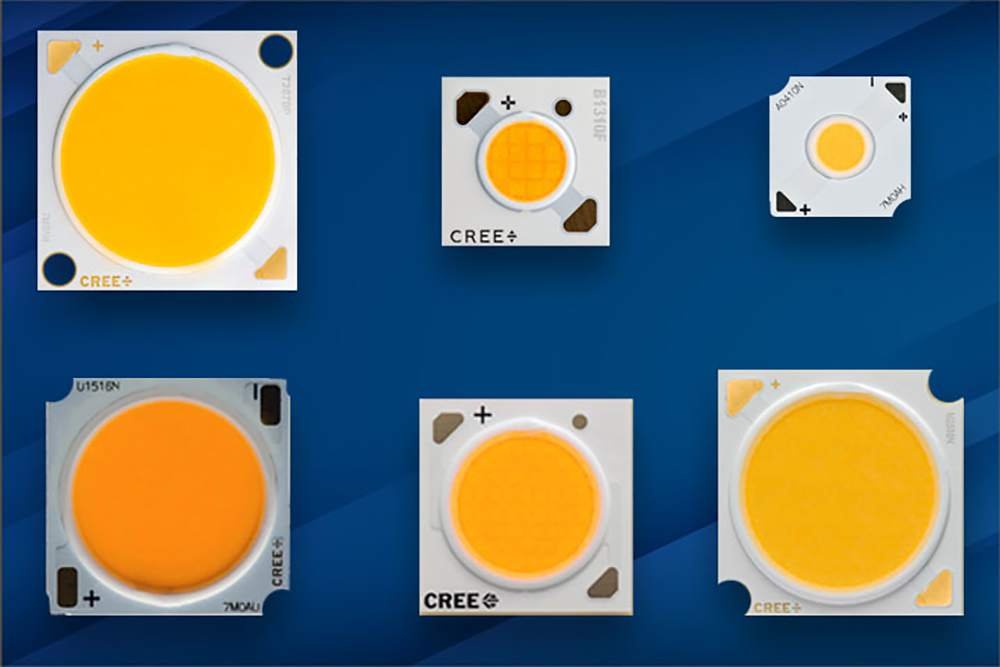
3. COB LEDs
COB stands for Chip on Board.
Instead of placing individual packaged LED components separately across a PCB, COB technology mounts multiple LED chips closely together on a substrate to create a compact LED light source.
From the front, a COB LED can appear like a single continuous luminous surface rather than a collection of individual LED points.
This construction makes COB particularly useful when designers want high-intensity and relatively uniform light from a compact source. COB technology is commonly used in downlights, spotlights, track lights, floodlights, and other directional lighting products.
Advantages of COB LEDs
One of the most noticeable characteristics of COB is its concentrated light output.
Because the LED chips are positioned closely together, the light source can appear more continuous. This can be useful in applications where the lighting designer wants a strong beam without clearly visible individual LED points.
COB LEDs are therefore frequently used in:
- Spotlights
- Track lights
- Downlights
- Floodlights
- High-output task lighting
- Commercial lighting
- Industrial lighting
COB vs. SMD
The difference between COB and SMD is not simply that one is “better” than the other.
SMD technology is often useful when a manufacturer needs distributed light sources and flexibility in PCB layout. COB is particularly useful when a compact, concentrated light source is preferred.
The optical design of the complete fixture also matters. Reflectors, lenses, diffusers, LED density, current, driver design, and thermal management can all influence the final performance.
DIP vs. SMD vs. COB LED
The following table provides a quick comparison of the three technologies:
Feature | DIP LED | SMD LED | COB LED |
Package structure | Through-hole package | Surface-mounted package | Multiple chips mounted closely on a substrate |
Typical size | Relatively large | Compact | Compact light-emitting module |
Light distribution | Often point-like | Flexible and distributed | Concentrated and relatively uniform |
Typical output | Low to moderate | Low to high depending on package | Moderate to high |
Heat management | Relatively simple at low power | Depends on PCB and fixture | Requires careful thermal design |
Common applications | Displays, indicators, signs | Strips, bulbs, panels, general lighting | Spotlights, downlights, floodlights |
Main advantage | Simple and durable for certain applications | Versatile and widely adaptable | Strong, compact light source |
There is no universal “best” LED technology. The appropriate choice depends on the product design and intended application.
Are DIP, SMD, and COB the Only Types of LED Lights?
No.
This is an important distinction when answering the question “what are the three types of LED lights?”
LEDs can be classified according to different criteria.
For example, some sources classify LEDs according to their package structure, resulting in categories such as DIP, SMD, and COB. Other technical references include high-power LEDs, CSP LEDs, through-hole LEDs, RGB LEDs, and other specialized designs.
LED lighting can also be classified according to lighting function.
For example, ambient lighting provides general illumination throughout a space, task lighting provides focused illumination for activities such as cooking or reading, and accent lighting is used to highlight architectural elements, artwork, or decorative objects.
There is another useful classification based on the final lighting product:
LED Chip
The LED chip is the semiconductor light source itself. It is the fundamental component inside many LED products.
LED Lamp
An LED lamp or bulb integrates an LED light source and driver into a replaceable lamp format. Examples include A19, GU10, and MR16-style LED lamps.
LED Luminaire
An LED luminaire is a complete lighting fixture in which the light source, housing, optics, thermal system, and other components are engineered together.
This distinction is particularly important for B2B lighting buyers because buying an LED chip is very different from buying a finished LED luminaire. Luxsky’s explanation also distinguishes these three product levels and points out that integrated luminaires allow the light source and housing to be designed as one system.
How Do You Choose the Right LED Technology?
Instead of asking which LED is universally the best, consider the requirements of the lighting product.
Choose SMD for flexible general lighting
SMD LEDs are a practical option when the product requires a flexible LED layout, relatively even light distribution, compact dimensions, or long linear runs.
This is one reason SMD technology is so common in LED strip lights, under cabinet lighting, linear lighting, panels, and general-purpose LED fixtures.
For example, an LED strip containing densely arranged SMD LEDs can create continuous illumination along a cabinet, shelf, wardrobe, or architectural feature.
Choose COB for concentrated lighting
COB is often appropriate when the product needs a powerful and concentrated light source.
Spotlights, track lights, downlights, and certain commercial fixtures can benefit from this type of construction.
COB can also help designers create a more visually continuous light source when combined with suitable optical components.
Consider DIP for indicators and displays
DIP LEDs remain useful for applications where simple, visible individual LED elements are required.
They are more commonly associated with indicators, signs, displays, and certain decorative applications than with modern high-performance general illumination.
LED Light Performance Depends on More Than the LED Type
Choosing DIP, SMD, or COB is only one part of designing a good LED light.
The performance of the final product also depends on the LED driver, thermal management, PCB design, optics, diffuser, housing, operating current, and overall fixture design.
For example, two LED lights may both use SMD LEDs but deliver very different results because one uses a better-quality driver, more effective heat dissipation, higher-quality optics, or a more appropriate LED configuration.
Thermal management is especially important. LED performance and lifetime can be affected by excessive heat, so the LED package cannot be considered independently from the rest of the fixture.
This is also why professional LED lighting manufacturers do not simply select an LED chip based on its advertised wattage or brightness. The chip, driver, PCB, optics, housing, and thermal structure need to work together.
What Type of LED Light Is Best for Your Application?
The answer depends on what you are trying to achieve.
For general home lighting, SMD-based LED products are widely used because they offer flexibility across bulbs, panels, linear lights, cabinet lights, and other fixtures.
For spotlights and directional lighting, COB can be a suitable technology when a concentrated light source is required.
For displays, indicators, and certain signage applications, DIP remains useful.
For decorative and smart lighting, SMD LEDs are frequently combined with RGB or RGBW configurations to provide color-changing effects and dynamic lighting control.
For linear and architectural applications, the LED package is only part of the solution. LED density, diffuser selection, aluminum profile design, thermal management, and optical performance can have a major impact on the final appearance.
Final Thoughts
So, what are the three types of LED lights?
If we are classifying LED technology by common package structure, the three types are DIP, SMD, and COB.
DIP LEDs are an older, simple LED package commonly associated with indicators, displays, and signs. SMD LEDs are compact, versatile, and widely used in modern residential, commercial, and architectural lighting. COB LEDs combine multiple LED chips into a compact light source and are particularly useful for concentrated, high-output applications such as spotlights and downlights.
However, it is important to remember that “three types of LED lights” does not have one universal definition. LED lighting can also be classified by function, such as ambient, task, and accent lighting, or by product level, such as LED chips, LED lamps, and integrated LED luminaires.
For this reason, when selecting or developing an LED light, it is better to look beyond the LED type itself. Consider the application, brightness, color temperature, beam angle, CRI, energy efficiency, thermal management, driver quality, installation method, and required control functions.
The right LED technology is ultimately the one that fits the complete lighting system—not simply the one with the most impressive specification on paper.