
Lighting technology has changed dramatically over the past few decades. For generations, incandescent bulbs were the standard choice for homes, offices, stores, and industrial spaces. Fluorescent and halogen lighting later offered improvements in efficiency, brightness, or specific applications.
Today, LED lights have become one of the most widely used lighting technologies.
But are LED lights actually better than traditional lights?
For most applications, LED lighting offers significant advantages in energy efficiency, lifespan, maintenance, design flexibility, and controllability. However, that does not mean every LED product is automatically better than every traditional light. Product quality, application, installation, color quality, and initial cost all need to be considered.
So rather than simply asking whether LED lights are better, it is more useful to compare them in the areas that matter most.
What Are Traditional Lights?
Before comparing the technologies, it is important to understand what “traditional lighting” actually means.
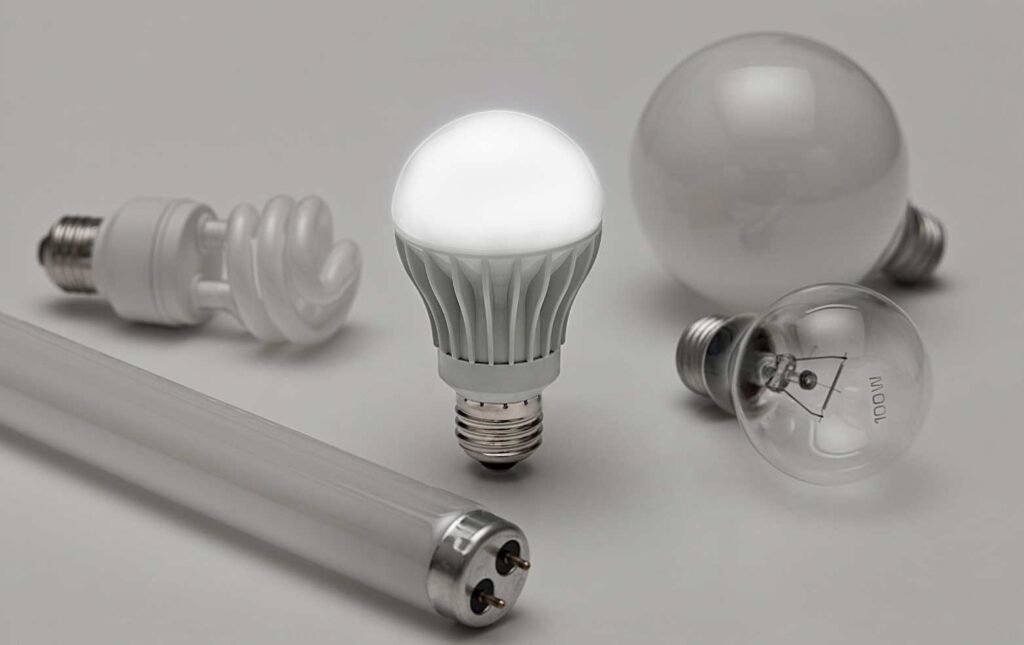
Traditional lighting can refer to several older technologies, including incandescent, halogen, and fluorescent lighting.
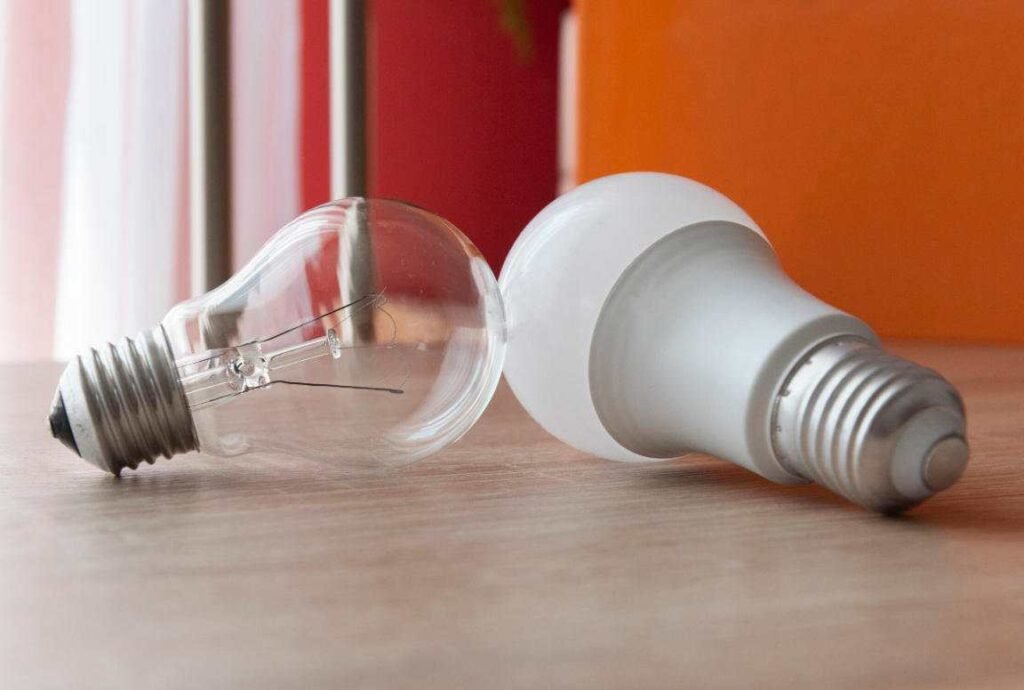
Incandescent bulbs generate light by passing electrical current through a filament until it becomes extremely hot and produces visible light. This technology creates the familiar warm glow that many people associate with conventional lighting.
Halogen lamps work on a similar basic principle but use halogen gas to improve filament performance. They can produce bright, relatively white light and have historically been used in spotlights, task lighting, automotive applications, and other situations requiring concentrated illumination.
Fluorescent lighting works differently. An electrical discharge excites gas inside a tube, producing ultraviolet radiation that interacts with a phosphor coating to generate visible light.
LED lighting uses an entirely different approach.
An LED, or Light Emitting Diode, is a semiconductor device that produces light when electrical current passes through it. Because there is no heated filament and the light source can be extremely compact, LED technology allows manufacturers to design lighting products in ways that are difficult to achieve with traditional lamps.
LED Lights vs. Traditional Lights at a Glance
Here is a quick comparison:
Feature | LED Lights | Incandescent | Halogen | Fluorescent |
Energy efficiency | Very high | Low | Low to moderate | Moderate to high |
Typical lifespan | Long | Short | Short to moderate | Moderate |
Heat generation | Relatively low | Very high | Very high | Moderate |
Directional lighting | Excellent | Limited | Good | Moderate |
Dimming | Widely available | Excellent | Excellent | Depends on system |
Color options | Very flexible | Limited | Limited | Flexible |
Smart controls | Excellent | Limited | Limited | Available |
Design flexibility | Very high | Low | Moderate | Moderate |
Maintenance | Low | High | High | Moderate |
Initial cost | Usually higher | Usually lower | Moderate | Moderate |
The exact performance depends on the individual product, but the general differences are clear.
1. Energy Efficiency Is One of the Biggest LED Advantages
Perhaps the most important advantage of LED lights is how efficiently they convert electricity into useful illumination.
An incandescent bulb produces light by heating a filament. A large proportion of the electricity is therefore released as heat rather than visible light. The sources you provided commonly estimate that around 90% of incandescent energy can ultimately become heat.
LEDs work differently.
A properly designed LED light can provide a similar amount of illumination while using significantly less electrical power. For example, an incandescent lamp producing around 800 lumens may require roughly 60 watts, while an LED alternative can produce comparable output using a much smaller amount of power.
This is why lumens rather than watts are more useful when comparing the brightness of modern LED lighting.
The NY Engineers comparison, for example, shows that an 800-lumen incandescent lamp may require around 60W while an LED alternative can achieve similar output in the roughly 8–12W range.
For a single household bulb, the difference may appear small.
But consider a hotel, warehouse, office, retail store, or apartment building containing hundreds or thousands of lights. Reducing the power required by each fixture can produce substantial savings over the lifetime of the installation.
2. LED Lights Generally Last Much Longer
Another major difference is lifespan.
Traditional incandescent bulbs typically have relatively short operating lives. The filament gradually becomes weaker until it eventually breaks.
LEDs do not have a filament that simply snaps after a certain number of hours. Instead, the LED source generally experiences gradual lumen depreciation.
The exact rated lifetime varies by product, but the sources you provided commonly place LED bulb lifetimes around 25,000–50,000 hours, while incandescent bulbs are often around 1,000–2,000 hours.
This creates a significant maintenance advantage.
Imagine a lighting installation that operates for 25,000 hours.
A traditional incandescent lamp might need to be replaced many times during that period, while a properly designed LED product may continue operating throughout most or all of that period.
This matters particularly in locations where replacing a lamp is inconvenient or expensive.
Think about:
- High ceilings
- Warehouses
- Commercial buildings
- Outdoor lighting
- Industrial facilities
- Hotels
- Retail stores
- Large residential developments
In these situations, reducing the number of replacements can be almost as important as reducing electricity consumption.
3. LED Lights Can Reduce Long-Term Lighting Costs
One common argument against LED lights is that they cost more to purchase.
That can be true.
A basic incandescent bulb may be extremely inexpensive, while a quality LED product can have a higher initial price.
But purchase price is only one part of the total cost of lighting.
A more useful calculation is:
Total Cost of Ownership = Purchase Cost + Energy Cost + Maintenance + Replacement Cost
LED lights can perform particularly well under this calculation because they combine lower electricity consumption with longer operating life.
For example, the NY Engineers comparison estimates that a 7W LED used over 25,000 hours can have dramatically lower combined energy and replacement costs than a 60W incandescent bulb.
The exact savings will vary according to electricity prices, operating hours, product cost, and maintenance requirements.
However, the principle remains the same:
The cheapest light to buy is not necessarily the cheapest light to own.
4. LEDs Produce Less Heat
Heat is another important difference.
Incandescent lighting relies on heat to create visible light, so the lamp itself can become extremely hot.
LED lights still produce heat, but their electrical-to-light conversion is much more efficient.
This can make LED lighting more comfortable and safer in certain applications, especially where the fixture is close to people or installed in a compact space.
For example, LED technology is well suited to:
- Under cabinet lighting
- Wardrobe lighting
- Display cases
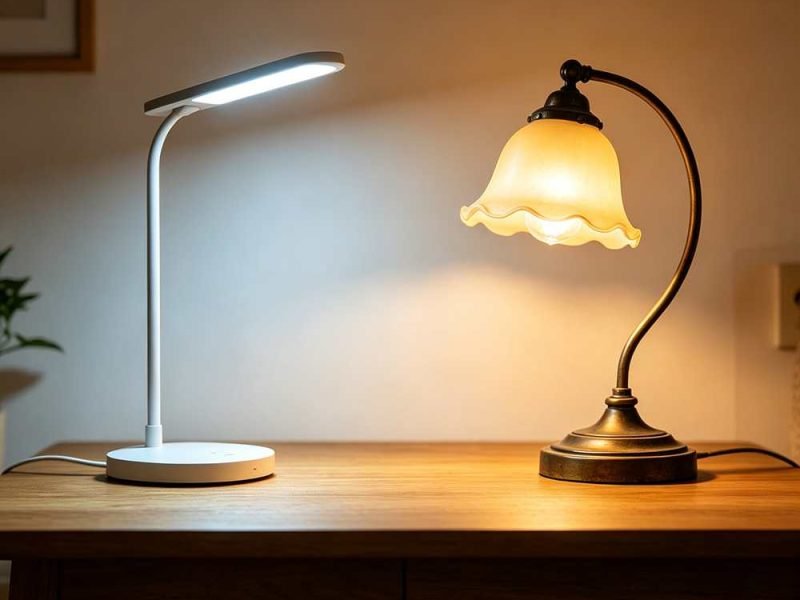
- Desk lamps
- Architectural linear lighting
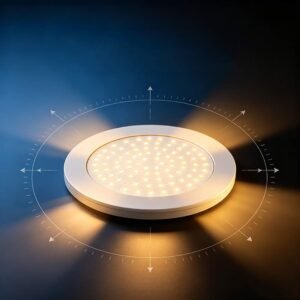
- Recessed fixtures
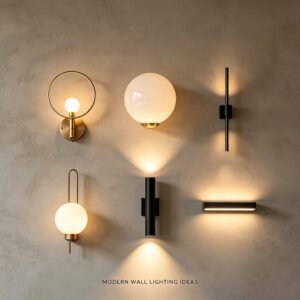
- Decorative wall lights
However, it is important not to misunderstand this advantage.
LEDs are not heat-free.
LED chips and drivers still generate heat, and good thermal management is essential for long-term reliability.
This is why aluminum housings, heat sinks, ventilation, and appropriate driver design remain important parts of quality LED lighting.
5. LED Lights Offer Much Greater Design Flexibility
This is where LED technology really begins to separate itself from older lighting technologies.
An LED chip is extremely small.
Manufacturers can therefore place LEDs into products with very different shapes and dimensions.
Instead of simply producing a bulb, manufacturers can integrate LED technology into:
- Linear profiles
- LED strip lights
- Wall lights
- Table lamps
- Floor lamps
- Cabinet lights
- Under cabinet lights
- Recessed fixtures
- Track lights
- Architectural luminaires
- Outdoor fixtures
Micro Star notes that the small size of LEDs allows them to be used individually, arranged in groups, or installed in continuous sequences for different applications.
This flexibility has created entire categories of lighting products that were difficult to achieve using traditional sources.
For example, an extremely thin LED aluminum profile can provide continuous linear illumination while hiding the LED source behind a diffuser.
That would be much more difficult with a conventional bulb.
6. LEDs Provide More Control Over Color and Brightness
Traditional incandescent lighting is strongly associated with warm white light.
That warm appearance remains popular, particularly in bedrooms, restaurants, living rooms, and hospitality environments.
But LED technology gives designers far more choices.
Modern LED lights can be produced in color temperatures such as:
- 2200K
- 2700K
- 3000K
- 3500K
- 4000K
- 5000K
- 6500K
This allows one technology to serve both warm residential environments and cool task-oriented spaces.
LED lights can also support:
- Dimming
- Tunable white
- RGB
- RGBW
- Remote control
- Motion sensors
- Touch control
- Smart-home integration
NY Engineers highlights dimming, daylight harvesting, sensors, and smart controls as important advantages of modern LED lighting systems.
This flexibility is particularly valuable for modern residential lighting.
A single smart LED lighting system can potentially change brightness and color temperature throughout the day instead of relying on a fixed light source.
7. What About LED Light Quality?
It would be a mistake to assume that every LED light automatically produces better light quality.
The quality of an LED product depends heavily on its design and components.
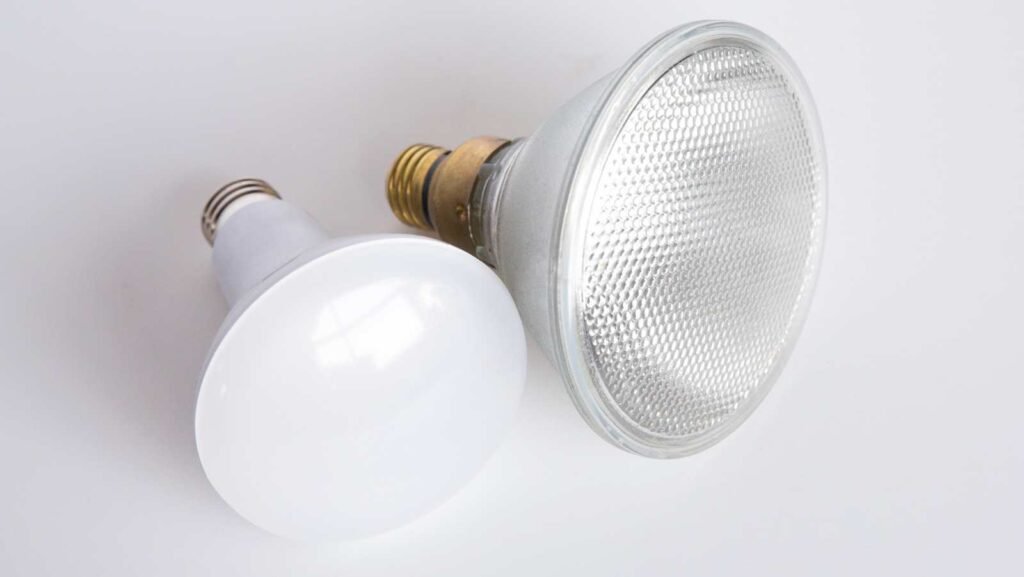
Important specifications include CRI, color temperature, lumen output, beam angle, diffusion, and flicker performance.
High-quality LEDs can achieve excellent color rendering. However, low-cost LED products may use lower-quality LED chips, drivers, or optical components.
NY Engineers specifically points out that consumers should pay attention to CRI when accurate color reproduction is important.
For applications such as:
- Retail displays
- Art galleries
- Photography
- Kitchens
- Hospitality
- Jewelry stores
- Product showcases
CRI can be just as important as brightness.
So the statement “LED is better” should never mean “any LED product is better.”
Product quality still matters.
8. Are Traditional Lights Still Better in Some Situations?
Despite the advantages of LED lights, traditional lighting technologies still have some characteristics that certain users prefer.
The warm appearance of incandescent lighting remains popular because of its familiar visual quality.
Incandescent lamps are also naturally dimmable and have a very simple electrical structure.
For a decorative application where a lamp is rarely used and the appearance of a traditional filament is the main priority, the energy-saving advantage of LED may not be the only factor being considered.
Some designers may also deliberately use traditional lamps for aesthetic reasons.
There is therefore no need to pretend that traditional lighting has no value.
The important point is that different lighting technologies are suited to different priorities.
9. Are LED Lights Better for the Environment?
LED lighting can provide significant environmental advantages because lower electricity consumption means less energy is required to produce the same amount of illumination.
Longer lifetimes can also reduce the number of replacement lamps manufactured, transported, and disposed of.
Another difference is material composition.
Fluorescent lighting contains mercury, which requires appropriate handling and disposal. LEDs do not use mercury as their light-generating mechanism.
However, LED products still contain electronic components, plastics, metals, and other materials. That means they should still be disposed of responsibly and recycled where suitable facilities are available.
So the environmental advantage of LEDs is primarily associated with their energy efficiency, long operating life, and reduced replacement frequency, rather than the idea that LED products have zero environmental impact.
10. What About Installation and Compatibility?
Replacing an incandescent bulb with an LED bulb can be very simple if the socket, voltage, and product specifications are compatible.
But LED lighting systems can also introduce compatibility considerations.
For example, an older dimmer may not work correctly with a particular LED driver. The result can be flickering, buzzing, or unstable dimming.
Some integrated LED fixtures also require specific drivers or power supplies.
SWP’s comparison notes that compatibility remains an important consideration, particularly when older dimmers or fixtures are combined with modern LED products.
This means that switching to LED should not always be treated as simply changing the light source.
For larger projects, the entire system should be considered—including the fixture, driver, controls, wiring, and installation environment.

LED Lights vs. Traditional Lights: Which Should You Choose?
For most modern lighting projects, LED technology offers a compelling combination of energy efficiency, long lifespan, low maintenance, design flexibility, and controllability.
But the right choice still depends on the application.
If your priority is minimizing electricity consumption and maintenance, LED lights have a clear advantage.
If you are designing a smart home, LEDs provide capabilities that traditional lighting generally cannot match.
If you need thin, compact, directional, color-changing, sensor-controlled, or customized lighting, LED technology offers much greater design freedom.
If the project is mainly decorative and the appearance of a traditional filament is the central requirement, an incandescent-style LED product can actually provide a useful compromise: the appearance of traditional lighting with the efficiency and lifespan advantages of LED technology.
Final Thoughts
So, are LED lights better than traditional lights?
In many practical situations, yes—but the answer depends on what you mean by “better.”
LED lights generally use less electricity, last much longer, generate less waste heat, require less maintenance, and offer substantially more flexibility in terms of shape, color temperature, dimming, sensors, and smart controls. These advantages are especially valuable for homes, offices, commercial buildings, retail spaces, hospitality projects, and industrial applications.
Traditional lighting still has its place, particularly where its familiar warm appearance, simple construction, or specific optical characteristics are desired.
The more important lesson is that LED technology itself is only part of the equation.
A high-quality LED light with a reliable driver, good thermal management, appropriate optics, and suitable controls can deliver much better long-term performance than a poorly designed LED product.
So when comparing LED lights with traditional lighting, don’t look only at the purchase price or wattage.
Consider the entire picture:
How much energy will it use? How long will it last? How much maintenance will it require? What quality of light will it produce? And how well does it fit the application?
Once those factors are considered together, the reason for the rapid transition toward LED lighting becomes much clearer.