
A table lamp used to be a fairly predictable piece of home décor: a base, a shade, a bulb, and a convenient spot on a side table.
Not anymore.
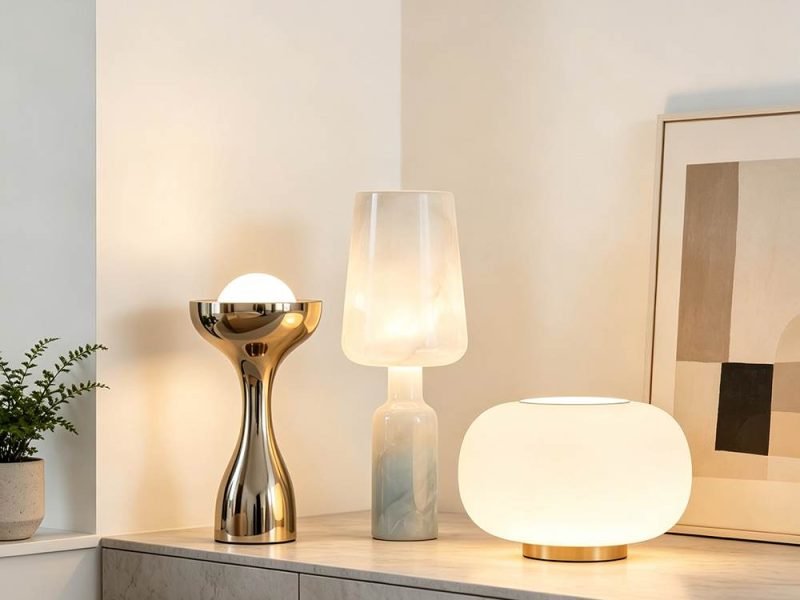
In 2026, the table lamp is becoming much more than a practical source of illumination. Designers are treating it as a decorative object, a sculptural accent, and sometimes even a piece of portable technology. At the same time, consumers are looking for lamps that are easier to use, more flexible, and better suited to modern lifestyles.
So, what type of table lamps are actually in style right now?
The short answer is: sculptural, cordless, minimalist, organic, textured, and smart LED designs are particularly relevant in 2026.
But there is no single “correct” style. The best choice depends on whether you are furnishing a bedroom, living room, home office, hotel, restaurant, or another space.
Let’s take a closer look at the table lamp styles that are shaping the market.
1. Sculptural Table Lamps
If you want the clearest answer to “What type of table lamp is in style?”, start with sculptural table lamps.
These designs don’t try to hide the fact that they are lighting fixtures. Instead, they make the lamp itself part of the interior decoration.
Think oversized curves, unusual geometric forms, abstract bases, asymmetrical structures, arches, loops, and artistic silhouettes.
The idea is simple: the lamp should look interesting even when it isn’t switched on.
This makes sculptural table lamps particularly suitable for living rooms, entryways, consoles, bedrooms, boutique hotels, and designer commercial spaces.
A sculptural lamp can also replace the need for another decorative object. Instead of placing a vase, sculpture, and lamp on a console, for example, one distinctive lamp can provide both visual interest and illumination.
For manufacturers and lighting brands, this trend creates opportunities to differentiate products through shape rather than competing purely on technical specifications.
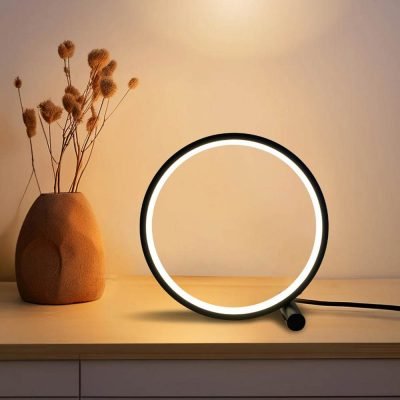
2. Minimalist LED Table Lamps
While sculptural designs are becoming more expressive, minimalist lighting remains highly popular.
The difference is that today’s minimalist LED table lamp tends to be more refined than the simple lamps of the past.
Slim arms, thin light bars, compact bases, integrated LED modules, and clean geometric forms are common characteristics.
The goal isn’t necessarily to make the lamp invisible. Instead, the design removes unnecessary elements while keeping the overall silhouette visually elegant.
This style works particularly well in:
- Home offices
- Modern bedrooms
- Study areas
- Contemporary living rooms
- Commercial workspaces
A minimalist LED table lamp is also attractive from a functional perspective because LED technology allows manufacturers to create very thin lighting structures that would be difficult to achieve with traditional bulbs.
3. Cordless and Rechargeable Table Lamps
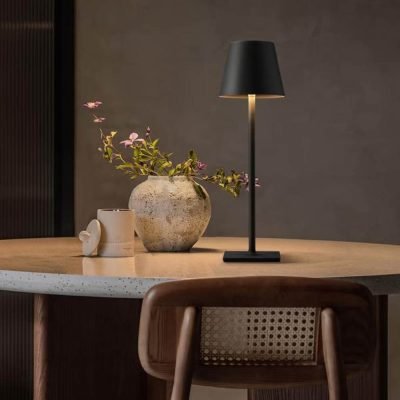
One of the most practical trends is also one of the easiest to understand: people don’t always want another cable on their table.
Cordless table lamps use rechargeable batteries instead of requiring a permanent connection to a wall outlet.
This gives users considerably more freedom.
A lamp can be moved from a bedside table to a dining table, from a desk to a balcony, or even taken outside for an evening gathering.
This style has become especially relevant to restaurants and hospitality businesses. A small rechargeable lamp can provide table illumination without requiring electrical wiring at every table.
For consumers, cordless lamps are particularly useful when:
- There is no convenient power outlet.
- The lamp needs to be moved frequently.
- A clean, cable-free appearance is preferred.
- The lamp is used on a dining table or outdoor space.
- Temporary lighting is required.
Modern rechargeable LED technology makes this design much more practical than it was in the past.
4. Mushroom Table Lamps
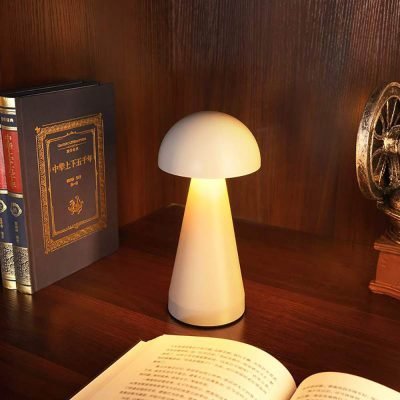
The mushroom lamp is another style that continues to attract attention.
As the name suggests, the silhouette usually resembles a mushroom: a rounded or dome-shaped shade sits over a relatively compact base.
The appeal is largely visual.
The curved shape creates a soft, friendly appearance, while the shade can help distribute light more gently throughout the surrounding area.
Mushroom-style lamps work particularly well with contemporary, Scandinavian, retro, and minimalist interiors.
They can also be produced in a wide range of materials and finishes, from metal and glass to ceramic and plastic.
For an LED table lamp, the mushroom form provides another interesting opportunity because the light source can be integrated into the shade rather than relying on a traditional exposed bulb.
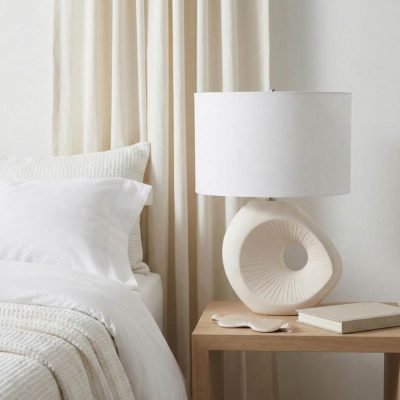
5. Organic-Shaped Table Lamps
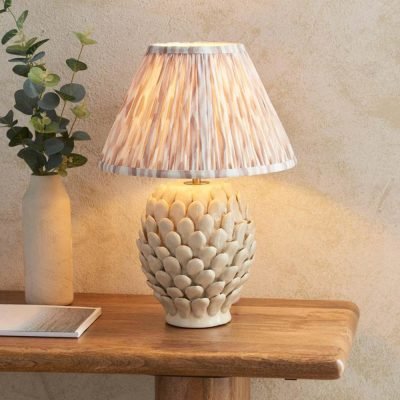
Interior design is becoming less rigid, and table lamp design is following the same direction.
Instead of perfectly straight lines and sharp corners, many contemporary lamps use organic shapes inspired by stones, plants, clouds, waves, or natural forms.
These lamps often have rounded bases, curved profiles, irregular surfaces, or soft silhouettes.
Why are organic forms attractive?
Because they add warmth.
A room filled with straight cabinets, rectangular furniture, and hard architectural lines can sometimes feel a little too formal. A curved table lamp introduces contrast without requiring a major redesign.
Organic table lamps are particularly suitable for bedrooms and living rooms where the goal is usually to create a comfortable rather than highly technical atmosphere.
6. Ceramic Table Lamps
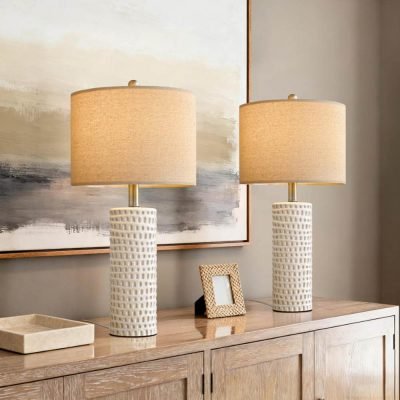
Ceramic isn’t a new material for lighting, but it remains extremely relevant.
What has changed is how ceramic is being used.
Rather than simply creating traditional decorative bases, contemporary designers are experimenting with oversized shapes, hand-finished surfaces, irregular forms, ribbed textures, and earthy colors.
Ceramic works particularly well for table lamps because the material itself becomes part of the visual experience.
A ceramic base can make a relatively simple lamp feel handcrafted and premium.
For brands targeting higher-end residential interiors, boutique hotels, and lifestyle retailers, ceramic table lamps offer an interesting way to differentiate products without relying heavily on electronics.
7. Glass Table Lamps
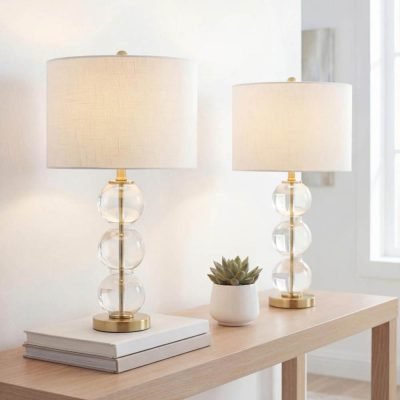
Glass table lamps are also continuing to evolve.
Clear glass can create a light and elegant appearance, while frosted or opal glass can produce a softer glow.
Colored glass provides another option for brands looking for a more decorative product.
One reason glass remains popular is its versatility. A glass table lamp can work with minimalist interiors, vintage-inspired spaces, luxury interiors, and contemporary homes depending on the shape and color.
When paired with integrated LEDs, glass can also become part of the lighting effect itself.
Instead of simply covering a bulb, the glass can diffuse and shape the light, creating a softer visual appearance.
8. Textured Table Lamps
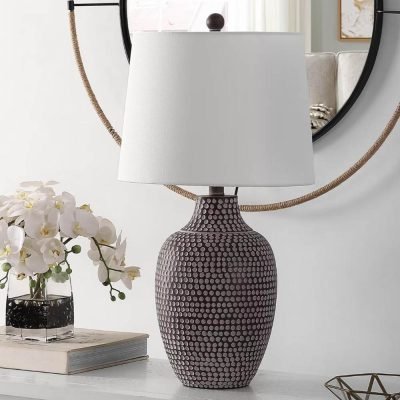
Smooth surfaces are no longer the only way to create a premium-looking lamp.
Texture is becoming increasingly important.
Ribbed ceramic, fluted glass, woven shades, pleated fabric, carved wood, textured metal, and other tactile finishes can make a lamp visually interesting even when the overall design is simple.
This is particularly useful for minimalist interiors.
Rather than adding more decorations to a room, a textured table lamp can provide subtle visual complexity on its own.
From a product-development perspective, texture can also create multiple variations from the same basic lamp architecture. A manufacturer may be able to offer different surface finishes, materials, or shades without completely redesigning the electrical structure.
9. Smart LED Table Lamps
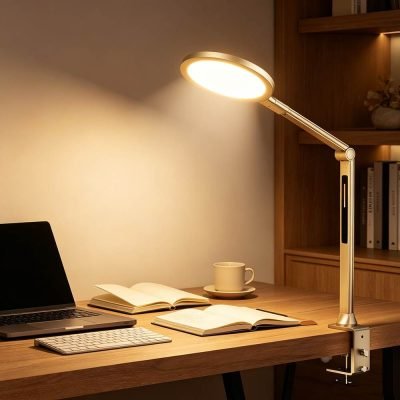
Technology is increasingly finding its way into decorative lighting.
However, the most successful smart table lamps aren’t necessarily the ones with the longest list of features.
They are the ones that make everyday lighting easier.
For example, a modern LED table lamp may offer touch controls, adjustable brightness, color-temperature adjustment, remote control, timers, or multiple lighting modes.
Some products can also integrate with smart-home ecosystems.
This flexibility is particularly useful for a lamp that performs multiple functions throughout the day.
You might want a brighter, cooler light when working in the morning and a warmer, softer light in the evening.
One lamp can potentially handle both situations.
That makes adjustable LED technology particularly valuable for modern homes and home offices.
10. Adjustable Desk-Style Table Lamps
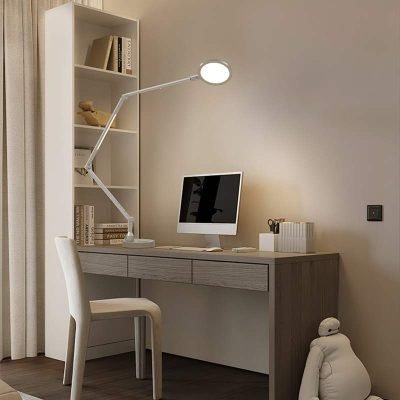
Not every stylish lamp needs to be decorative.
Functional desk lamps are still very much in style—especially designs that combine good ergonomics with a clean appearance.
Modern adjustable table lamps may feature:
- Flexible or rotating arms
- Adjustable lamp heads
- Foldable structures
- Dimming
- Color-temperature adjustment
- USB charging
- Wireless charging
- Motion or touch controls
The important change is that functional desk lamps are becoming more visually refined.
A traditional task lamp might have looked purely industrial. A modern LED version can provide the same functionality while fitting naturally into a contemporary home office.
For people who work from home, this category is particularly important because the desk is now often part of the living space.
11. Table Lamps With Oversized Shades
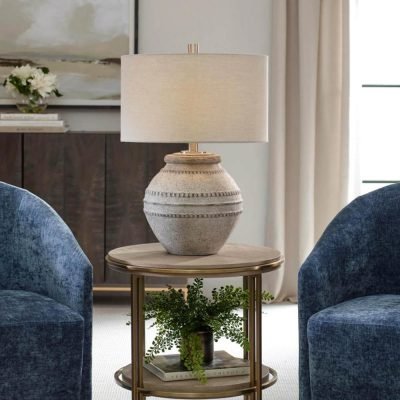
Another style worth watching is the oversized table lamp.
Instead of using a small lamp that disappears among other furniture, designers are increasingly using larger shades and bases to create a visual focal point.
The oversized approach works particularly well on:
- Large console tables
- Sideboards
- Living room side tables
- Entryway furniture
- Hospitality furniture
The key is proportion.
An oversized lamp can look dramatic and sophisticated when matched with the right furniture. On a tiny bedside table, however, it may simply look like the lamp has eaten the furniture.
So this is a style where choosing the right size matters just as much as choosing the right design.
12. Warm and Atmospheric LED Table Lamps
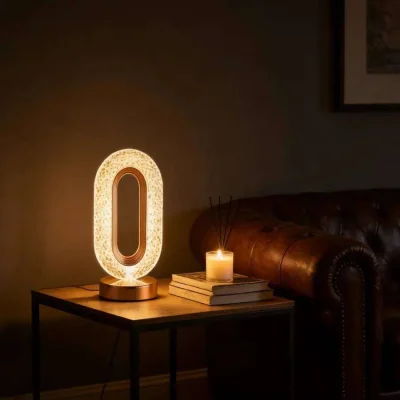
There is also a broader movement away from treating lighting purely as a brightness problem.
People increasingly want lighting that creates atmosphere.
That’s why warm, dimmable LED table lamps are particularly suitable for bedrooms, restaurants, lounges, and living rooms.
Rather than producing maximum illumination, these lamps are designed to create a comfortable pool of light.
A color temperature around 2700K–3000K is commonly suitable for warm residential and hospitality environments, although the ideal setting depends on the space and intended use.
For manufacturers, adjustable color temperature can provide an even more versatile product because users can choose between functional and ambient lighting from the same lamp.
Which Table Lamp Style Is Best for Different Spaces?
The “best” style ultimately depends on where the lamp will be used.
Space | Suitable Table Lamp Styles | Main Priority |
Bedroom | Cordless, mushroom, ceramic, warm LED | Comfort |
Living room | Sculptural, oversized, ceramic, glass | Decoration + ambience |
Home office | Adjustable LED, minimalist, smart | Functionality |
Dining table | Cordless, compact, warm LED | Portability + atmosphere |
Hotel | Sculptural, cordless, premium materials | Design + durability |
Restaurant | Rechargeable, dimmable, compact | Flexible ambience |
Study area | Adjustable LED, slim desk lamp | Visual comfort |
Entryway | Sculptural, oversized, decorative | First impression |
The important thing is not to choose a fashionable style simply because it is fashionable.
A beautiful lamp that produces uncomfortable light isn’t a particularly successful lighting product.
The strongest designs combine appearance, light quality, usability, and appropriate proportions.
What Makes a Modern LED Table Lamp Stand Out?
Looking at the current direction of the market, several characteristics repeatedly appear in successful products.
First, the lamp needs a recognizable visual identity. A generic product can be difficult to differentiate in an increasingly crowded market.
Second, the lighting itself needs to be comfortable. Good diffusion, appropriate brightness, low glare, and suitable color temperature matter just as much as the external appearance.
Third, flexibility is becoming increasingly valuable. Dimming, adjustable color temperature, rechargeable batteries, movable arms, and touch controls can make one product suitable for several scenarios.
Finally, consumers are increasingly interested in products that fit naturally into their lifestyle.
That’s why the LED table lamp is such an interesting category. LED technology allows manufacturers to combine decorative design with features that traditional table lamps cannot easily provide.
Final Thoughts
So, what type of table lamps are in style in 2026?
There isn’t one winner.
Sculptural lamps are becoming decorative focal points. Organic and ceramic designs bring warmth. Mushroom and glass lamps add distinctive visual character. Cordless rechargeable lamps provide freedom from cables, while minimalist and adjustable LED designs are particularly useful for modern workspaces.
And perhaps the biggest trend of all is that the boundaries between lighting, furniture, technology, and decoration are becoming increasingly blurred.
A table lamp no longer has to be simply something you turn on when the room gets dark.
It can be a design statement, a portable light source, a work tool, a smart-home device—or all four at once.
For consumers, that means more choices.
For lighting brands and manufacturers, it means something even more interesting: more opportunities to create differentiated table lamp products for the next generation of the market.