
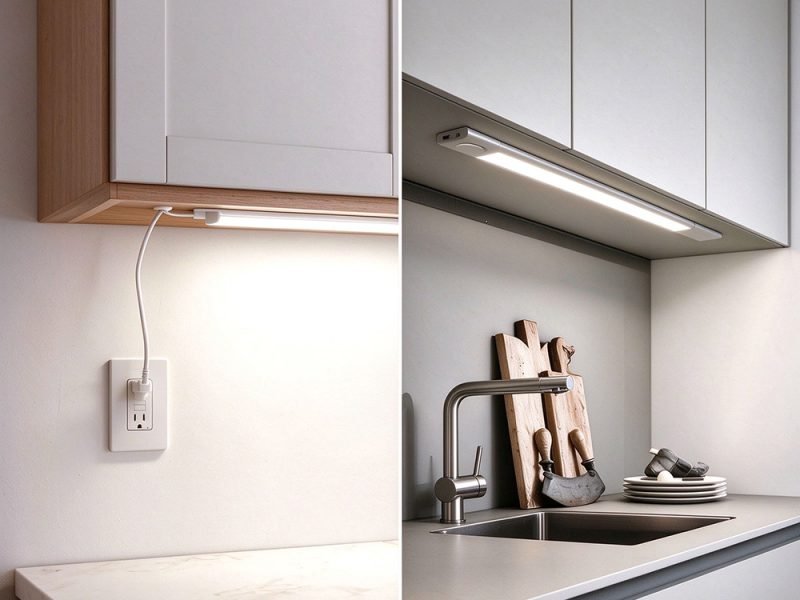
LED under cabinet lighting is a practical way to brighten kitchen countertops, improve visibility, and create a more attractive kitchen environment. Whether you are preparing food, reading recipes, or simply looking for a modern lighting upgrade, installing lights beneath kitchen cabinets can make a noticeable difference.
However, before choosing a product, there is one important decision to make: should you choose wireless LED under cabinet lighting or a hardwired LED under cabinet light?
Both options offer useful advantages, but they differ in installation, power supply, maintenance, operating costs, and long-term convenience. Wireless lights are generally easier to install and are suitable for existing kitchens, while hardwired systems provide a more permanent solution without routine battery charging.
In this guide, we compare both options to help you decide which type of under cabinet lighting is better for your kitchen.
What Is Wireless LED Under Cabinet Lighting?
Wireless LED under cabinet lighting refers to fixtures that operate without a permanent electrical connection to household wiring. Most models use rechargeable batteries or replaceable batteries to power the LEDs.
Common wireless options include:
- Rechargeable LED light bars
- Battery-operated puck lights
- Motion sensor cabinet lights
- Magnetic LED light strips
- Wireless remote-controlled cabinet lights
Many rechargeable models use USB or USB-C charging and can be removed from their mounting brackets when the battery needs to be recharged. Some products also offer touch controls, dimming, timers, or automatic motion detection.
The main advantage of wireless LED under cabinet lighting is installation flexibility. Since it does not require connecting the fixture to the home’s electrical wiring, it can usually be installed with adhesive pads, magnetic brackets, or screws.
This makes wireless lighting particularly suitable for renters, existing kitchens, and DIY lighting upgrades.
What Is a Hardwired LED Under Cabinet Light?
A hardwired LED under cabinet light is connected to a permanent electrical power supply rather than relying on a rechargeable or replaceable battery.
Depending on the product design, the lighting system may connect directly to household wiring or use a dedicated low-voltage LED driver connected to the mains supply.
Common hardwired options include:
- Linear LED light bars
- Recessed LED strip lighting
- Surface-mounted cabinet fixtures
- LED strips installed inside aluminum channels
- Integrated LED cabinet lighting systems
Hardwired systems are often selected for kitchen renovations, new cabinet installations, and projects requiring continuous lighting across multiple cabinet sections.
Unlike battery-powered products, these fixtures do not need routine charging. Once properly installed, they can provide consistent lighting whenever the power supply is available.
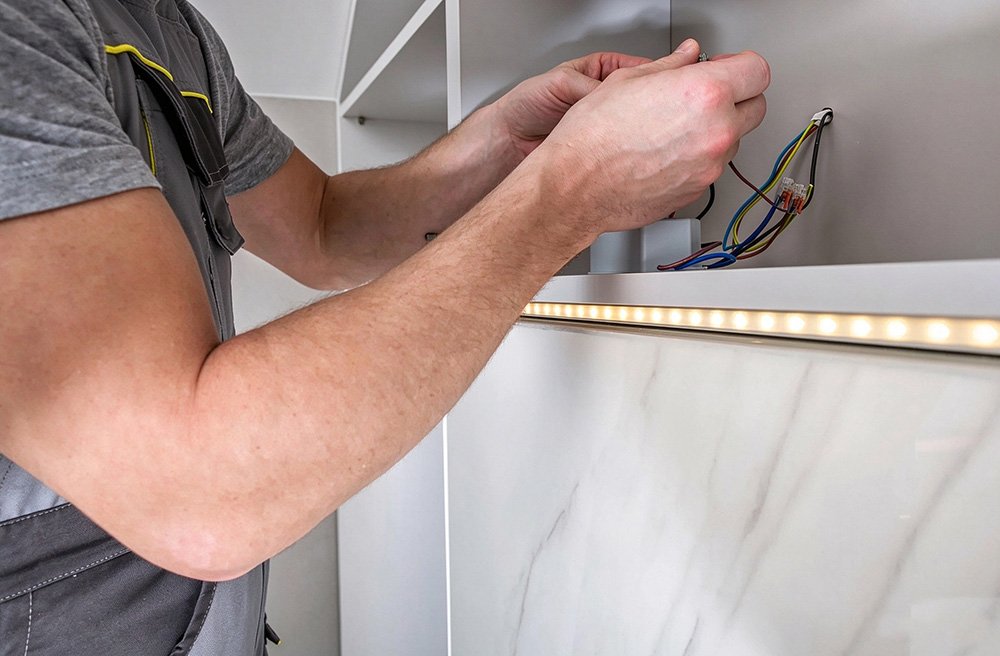
However, installation may require cable routing, electrical connections, and access to a suitable power source. Mains-voltage wiring should be handled by a qualified electrician in accordance with local electrical codes.
Wireless vs. Hardwired LED Under Cabinet Lighting: Key Differences
Before choosing between the two options, it is useful to compare their main characteristics.
Comparison | Wireless LED Lighting | Hardwired LED Lighting |
Power source | Rechargeable or replaceable batteries | Household power through a suitable driver or supply |
Installation | Usually simple DIY installation | May require wiring and professional installation |
Charging | Required for rechargeable models | Not required |
Operating time | Limited by battery capacity | Continuous while power is available |
Brightness | Depends on battery and product design | Generally easier to support higher, consistent output |
Maintenance | Battery charging or replacement | Driver and electrical component maintenance |
Initial cost | Often lower for small installations | May be higher due to wiring and installation |
Best applications | Existing kitchens and small upgrades | Renovations and permanent lighting systems |
Neither option is automatically better for every kitchen. The right choice depends on the size of the installation, lighting requirements, budget, and whether permanent wiring is practical.
Advantages and Disadvantages of Wireless LED Under Cabinet Lighting
Advantages
1. Easy installation
Wireless cabinet lights are usually much easier to install than hardwired fixtures. Many products include adhesive mounting plates, magnetic brackets, or simple screw fittings. No permanent electrical wiring is required.
This is especially useful when upgrading an existing kitchen without removing cabinets or modifying walls.
2. Flexible placement
Because wireless fixtures are not restricted by nearby power outlets, they can be installed in different locations. You can add lighting beneath kitchen cabinets, inside cupboards, or in other storage areas.
Some magnetic light bars can also be removed and repositioned when needed.
3. Suitable for renters
Wireless lighting is a convenient option for rented homes because it usually requires little or no permanent modification to the property. It can also be removed when moving.
4. Flexible control options
Many wireless products include motion sensors, touch switches, remote controls, and dimming functions. These features make them convenient for everyday kitchen use.
Disadvantages
1. Regular charging or battery replacement
The biggest limitation is the power supply. Rechargeable models need to be charged periodically, while battery-operated models require replacement batteries.
For a kitchen with many fixtures, maintaining multiple battery-powered lights can become inconvenient.
2. Limited operating time
Battery runtime depends on battery capacity, brightness, activation frequency, and control settings. A light used at maximum brightness for several hours every day will generally require more frequent charging.
3. Potential brightness limitations
Some compact wireless fixtures are designed for accent lighting rather than illuminating an entire countertop. If you need strong, continuous task lighting, check the actual lumen output and coverage before purchasing.
Advantages and Disadvantages of Hardwired LED Under Cabinet Lighting
Advantages
1. Continuous power supply
A hardwired system does not require routine battery charging. This makes it particularly convenient for kitchens where under cabinet lights are used frequently or for extended periods.
2. Consistent illumination
hardwired LED systems can support different brightness levels and longer continuous operating periods, depending on the driver and fixture specifications.
They are suitable for illuminating long countertops and multiple cabinet sections.
3. Clean, integrated appearance
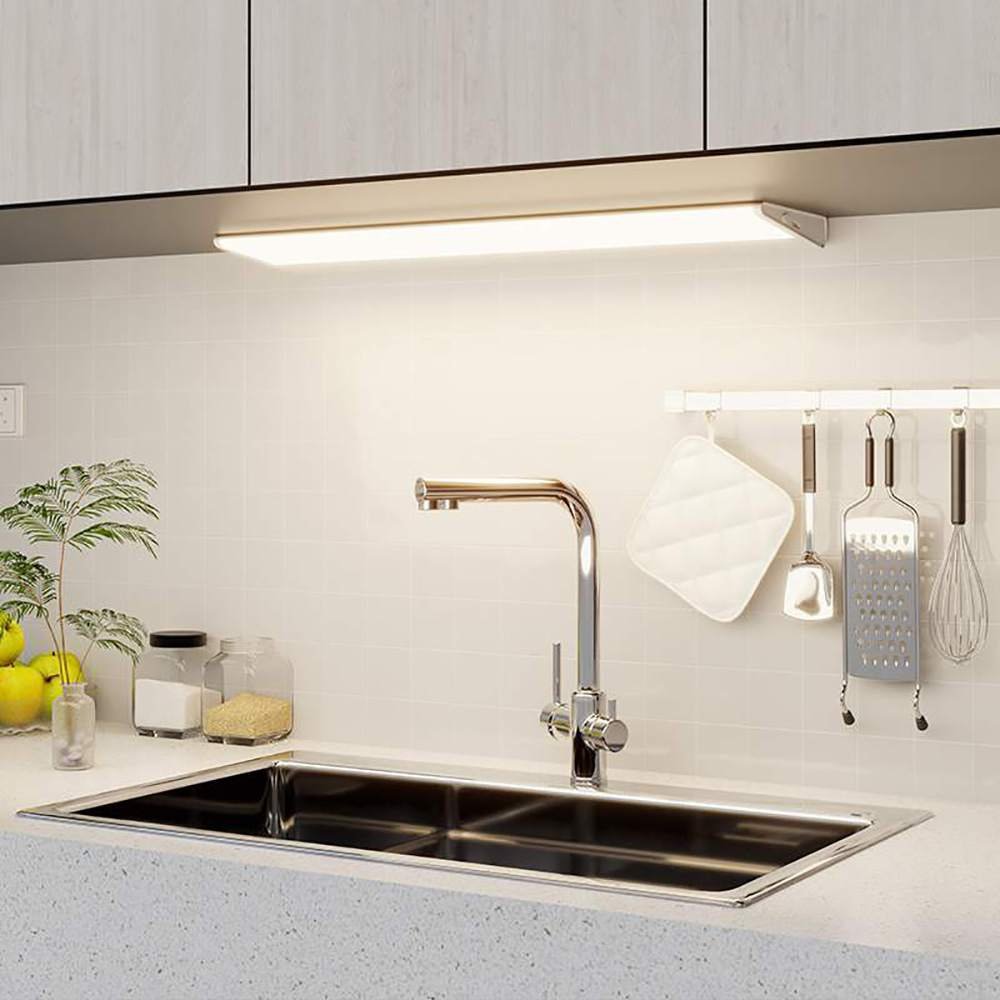
hardwired lighting can be incorporated into cabinet designs. LED strips can be concealed inside aluminum channels, while linear fixtures can be installed beneath cabinets with carefully routed cables.
The result can be a neat, professional-looking lighting arrangement with fewer visible charging ports or removable fixtures.
4. Better suited to permanent installations
For new kitchens and major renovations, hardwired lighting can be planned alongside cabinet dimensions, electrical outlets, and other appliances. This makes it easier to create a coordinated lighting system.
Disadvantages
1. More complicated installation
Installing a hardwired LED under cabinet light may require electrical work, cable routing, drilling, and driver placement.
If the kitchen is already finished, adding wiring can involve additional labor and modifications.
2. Higher initial installation cost
Although the fixture itself may not always be expensive, the total cost can increase when drivers, wiring, installation materials, and professional labor are included.
3. Less flexible after installation
Once the wiring and fixtures are installed, changing their positions may require additional work. This makes planning important before installation begins.
Which Is Better for Different Kitchen Applications?
The best choice becomes clearer when you consider how the kitchen is used.
For existing kitchens: Wireless LED under cabinet lighting is often the more convenient option. It can be installed without opening walls or modifying electrical connections.
For kitchen renovations: hardwired lighting is generally worth considering because wiring can be planned during the renovation. It allows fixtures to be positioned neatly and connected to a permanent power source.
For small kitchens or occasional use: Rechargeable light bars or battery-operated puck lights may provide sufficient illumination without the complexity of a permanent installation.
For large countertops: hardwired LED strips or linear fixtures are usually more practical because they can provide continuous illumination without frequent charging.
For automatic lighting: Both options can support motion sensors or other automatic controls. The choice depends on the product’s sensor design and power requirements rather than simply whether it is wireless or hardwired.
What Should You Consider Before Buying?
Regardless of which power system you choose, several product specifications deserve attention.
- Brightness:Compare lumen output rather than relying on wattage alone. Consider whether the fixture provides enough light for food preparation and other countertop tasks.
- Color temperature:Around 3000K–4000K is a versatile range for many residential kitchens. Warm white creates a relaxed atmosphere, while neutral white provides a cleaner appearance.
- Color rendering:A CRI of 90 or higher can be useful when accurate food and material colors matter.
- Light distribution:Linear fixtures generally provide more continuous illumination than widely spaced puck lights. A diffuser can also help reduce visible LED points and glare.
- Installation method:Check whether the product uses adhesive mounting, magnetic brackets, screws, recessed channels, or permanent wiring.
- Safety and durability:Look for appropriate certifications and follow the manufacturer’s instructions regarding heat dissipation, moisture exposure, and electrical connections.
For hardwired systems, make sure the LED driver matches the fixture’s voltage, current, and power requirements. For wireless products, check battery capacity, charging time, and the manufacturer’s stated runtime.
Final Verdict: Wireless or Hardwired LED Under Cabinet Lighting?
So, which is better?
Wireless LED under cabinet lighting is the better choice for simple installation, flexible placement, and upgrading existing kitchens without permanent wiring. It is especially suitable for renters, small spaces, and users who do not want to undertake electrical work.
Hardwired LED under cabinet lighting is generally better for permanent installations, larger countertops, and kitchens that require continuous, reliable illumination. It avoids routine battery charging and can be integrated more neatly into new cabinetry.
Ultimately, the right choice depends on your kitchen layout, usage habits, and installation budget. If convenience and flexibility are your priorities, choose wireless lighting. If you want a long-term lighting system with a clean, integrated appearance, a hardwired solution may be the better investment.