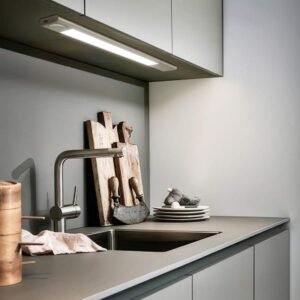

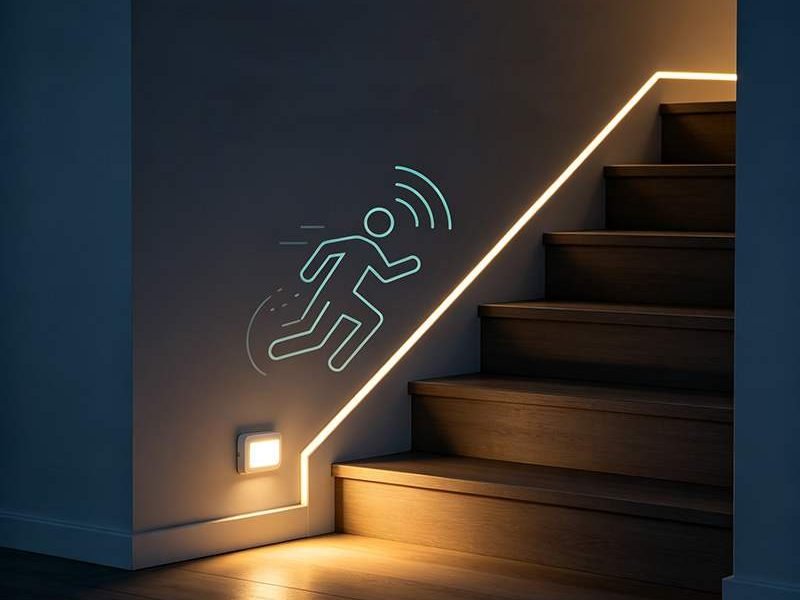
With the development of smart home technology and energy-efficient lighting solutions, motion sensor LED light products have become increasingly popular in residential, commercial, and industrial applications.
Unlike traditional lighting systems that require manual operation through switches, motion sensor LED lights can automatically detect human movement and turn the light on or off based on activity. This not only improves convenience but also helps reduce unnecessary energy consumption.
Today, motion sensor LED lights are widely used in many scenarios, including:
- Kitchen cabinet lighting
- Closets and wardrobes
- Hallways and staircases
- Bathrooms
- Garages
- Office buildings
- Outdoor security lighting
For homeowners, motion sensor lighting provides a more convenient and modern lighting experience. For businesses and lighting brands, it represents a growing product category with strong market potential.
But what exactly is a motion sensor LED light? How does it detect movement? What types of sensors are available? And how should you choose the right product?
This article will provide a complete guide to understanding motion sensor LED lights.
What Is a Motion Sensor LED Light?
A motion sensor LED light is an LED lighting product equipped with a built-in sensor that can detect movement and automatically control the lighting operation.
The basic working principle is simple:
When the sensor detects movement → the LED light turns on.
When no movement is detected for a certain period → the LED light automatically turns off.
Compared with traditional LED lights, motion sensor LED lights combine:
- LED energy-saving technology
- Automatic detection systems
- Intelligent control functions
This makes them a practical lighting solution for places where users need temporary illumination but do not want to manually operate a switch.
Why Are Motion Sensor LED Lights Becoming More Popular?
The increasing popularity of motion sensor LED lights is driven by several important advantages.
1. Energy Saving and Lower Electricity Costs
One of the biggest benefits of motion sensor lighting is energy efficiency.
Traditional lights often remain switched on because people forget to turn them off. This is especially common in:
- Storage rooms
- Closets
- Bathrooms
- Corridors
Motion sensor LED lights solve this problem by operating only when needed.
For example, a closet light equipped with a motion sensor will only turn on when someone opens the door or enters the area. After the user leaves, it automatically turns off.
This reduces wasted energy and extends battery life for rechargeable lighting products.
2. More Convenient User Experience
A major advantage of motion sensor LED lights is hands-free operation.
Users do not need to:
- Search for switches in the dark
- Touch the lamp with dirty hands
- Interrupt activities to turn lighting on
This is especially useful in areas such as:
Kitchen Cabinet Lighting
For kitchen applications, users often have wet or occupied hands while cooking.
A motion sensor LED light installed under cabinets can automatically provide illumination when someone approaches the working area.
This makes motion sensor under cabinet lighting a popular choice for modern kitchens.
3. Improved Safety
Motion sensor LED lights can improve safety by providing instant illumination in dark areas.
Common applications include:
- Stair lighting
- Hallway lighting
- Entrance areas
- Elderly-friendly home designs
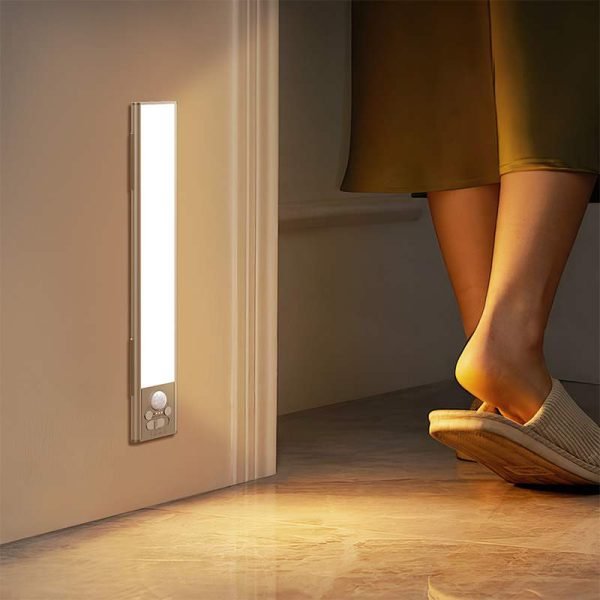
For example, when someone walks into a hallway at night, the light automatically turns on, reducing the risk of accidents.
How Does a Motion Sensor LED Light Work?
The working process of a motion sensor LED light usually involves three main components:
1. Sensor detection
2. Signal processing
3. LED lighting control
Let’s look at each step.
Step 1: Sensor Detects Movement
The sensor is the most important part of a motion sensor LED light.
Different products use different sensing technologies.
The most common types include:
- Passive Infrared Sensor (PIR)
- Microwave Sensor
- Infrared Proximity Sensor
- Door/Drawer Sensors
Each technology has different advantages.
PIR Motion Sensor LED Light
How PIR Sensors Work
PIR stands for Passive Infrared.
A PIR sensor detects changes in infrared radiation caused by moving objects, especially human bodies.
Because humans naturally emit heat, when a person enters the detection area, the sensor recognizes the temperature change and activates the light.
Advantages of PIR Sensors
PIR sensors are widely used because they offer:
- Low power consumption
- Reliable human detection
- Affordable cost
- Simple structure
They are commonly found in:
- Closet lights
- Cabinet lights
- Stair lights
- Battery-operated LED lights
Limitations of PIR Sensors
However, PIR sensors have some limitations.
They may not detect:
- Very slow movement
- Stationary people
- Objects without heat changes
For example, someone sitting still in a room may eventually stop triggering the sensor.
Microwave Motion Sensor LED Light
How Microwave Sensors Work
Microwave sensors use electromagnetic waves to detect movement.
They send signals and analyze changes caused by moving objects.
Compared with PIR sensors, microwave sensors can detect movement through some materials and provide wider detection coverage.
Advantages of Microwave Sensors
Microwave sensors provide:
- Higher sensitivity
- Wider detection range
- Better detection of small movements
They are often used in:
- Commercial lighting
- Office buildings
- Outdoor security lights
Limitations of Microwave Sensors
Because they are more sensitive, microwave sensors may sometimes detect unwanted movement.
For example:
- Moving objects nearby
- Traffic outside windows
may trigger the light unnecessarily.
Infrared Proximity Sensor
Infrared proximity sensors are commonly used in cabinet lighting applications.
Unlike PIR sensors that detect body heat, proximity sensors detect nearby objects through infrared reflection.
They are often used for:
- Kitchen cabinet lights
- Wardrobe lighting
- Drawer lighting
For example:
When a cabinet door opens, the sensor detects the change and turns on the LED light.
Step 2: Control System Processes the Signal
After detecting movement, the sensor sends a signal to the control circuit.
The controller determines:
- Whether the light should turn on
- How long it should stay on
- Brightness level
- Operating mode
Many modern motion sensor LED lights include adjustable settings such as:
- Detection sensitivity
- Lighting duration
- Day/night mode
Step 3: LED Module Provides Illumination
After receiving the command, the LED module turns on.
LED technology is ideal for motion sensor applications because LEDs offer:
- Instant brightness
- Low energy consumption
- Long lifespan
- Compact size
This combination makes LED lights and sensors a perfect match.
Common Applications of Motion Sensor LED Lights
1. Motion Sensor Under Cabinet Lighting
Under cabinet lighting is one of the most popular applications.
Traditional cabinet lights often require manual switches, which can be inconvenient.
Motion sensor LED lights provide:
- Automatic illumination
- Hands-free operation
- Energy saving
They are commonly installed in:
- Kitchens
- Closets
- Shelves
- Display cabinets
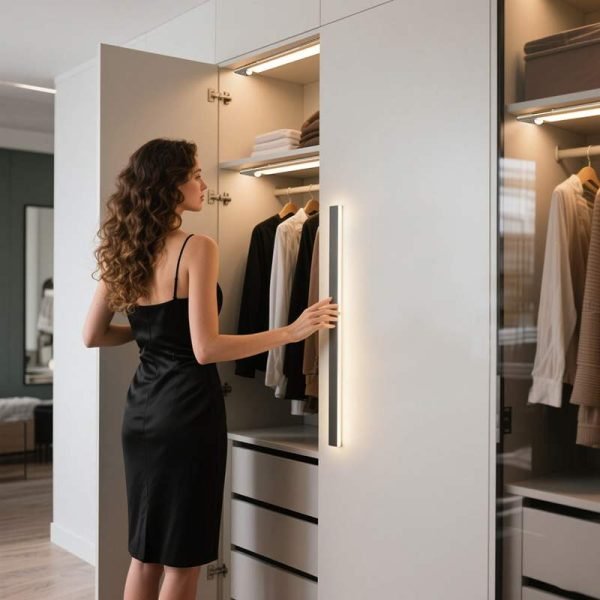
2. Closet and Wardrobe Lighting
Closets are usually dark spaces where installing wired lighting can be difficult.
A battery-powered motion sensor LED light provides an easy solution.
When the door opens or someone enters:
- The sensor detects movement
- The light turns on automatically
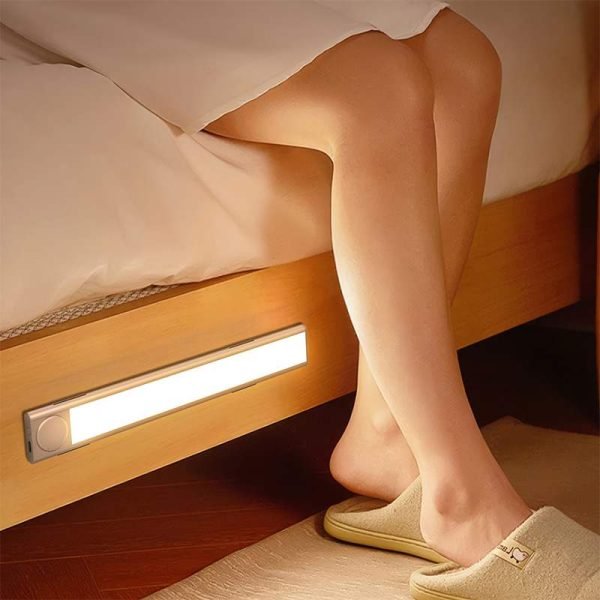
3. Stair and Hallway Lighting
Motion sensor LED lights improve nighttime safety.
They can automatically illuminate:
- Stair steps
- Corridors
- Entryways
This reduces the need to search for switches in darkness.
4. Commercial Applications
Businesses also benefit from motion sensor LED lighting.
Applications include:
- Warehouses
- Offices
- Hotels
- Retail displays
Automatic lighting control helps reduce operational costs.
Common Applications of Motion Sensor LED Lights
Feature | Motion Sensor LED Light | Traditional LED Light |
Operation | Automatic | Manual switch |
Energy Saving | Higher | Lower |
Convenience | Hands-free | Requires operation |
Installation | Often wireless | Usually wired |
Application | Smart lighting | General lighting |
How to Choose the Right Motion Sensor LED Light?
When selecting a motion sensor LED light, consider the following factors.
1. Sensor Type
Choose based on application:
- Cabinet lighting → Infrared proximity sensor
- Closet lighting → PIR sensor
- Commercial spaces → Microwave sensor
2. Power Source
Common options include:
Rechargeable Battery
- Wireless installation
- Easy maintenance
- Suitable for DIY projects
Hardwired Power
- Continuous operation
- Suitable for permanent installation
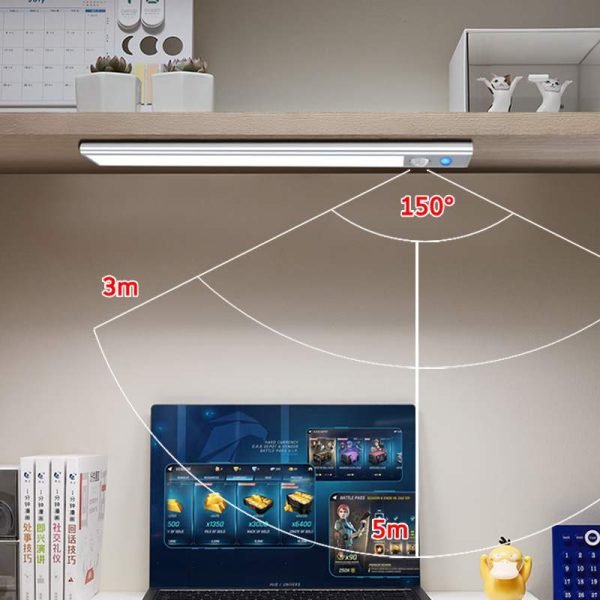
3. Detection Range
Different spaces require different detection distances.
A small cabinet may only need short-range detection, while hallways require wider coverage.
4. Lighting Features
Modern motion sensor LED lights may include:
- Adjustable brightness
- Color temperature selection
- Touch control
- Remote control
- USB charging
Future Trend of Motion Sensor LED Lighting
The future of motion sensor LED lighting is closely connected with smart home development.
Future products are expected to include:
- AI-based detection
- Smart home integration
- Voice control
- Adaptive brightness adjustment
- More efficient battery systems
As consumers continue looking for convenient and energy-saving solutions, motion sensor LED lights will become an increasingly important part of modern lighting design.
Conclusion
A motion sensor LED light is more than a traditional lamp with an added sensor. It is an intelligent lighting solution that combines energy efficiency, convenience, and modern technology.
By automatically detecting movement and controlling illumination, these products provide practical benefits for homes, businesses, and smart lighting systems.
From kitchen cabinets and closets to commercial spaces, motion sensor LED lighting is becoming an essential part of modern lighting design.
As demand for wireless, smart, and energy-saving products continues to grow, motion sensor LED lights will remain one of the most promising categories in the LED lighting market.