
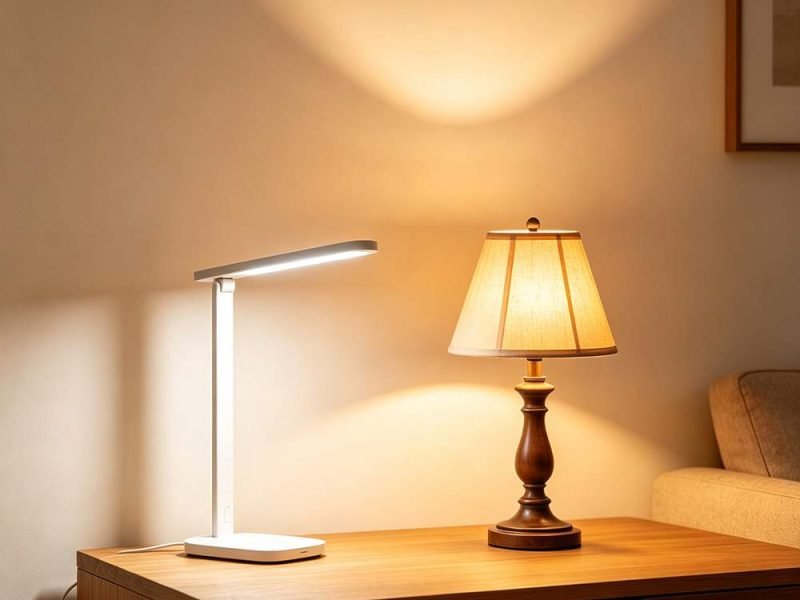
A table lamp seems like a simple product: put it on the desk, switch it on, and get some light. But once you start using one for several hours every day, the differences between an LED table lamp and a traditional table lamp become much more noticeable.
Traditional table lamps still have their charm. A warm incandescent bulb can make a bedroom feel cozy, while a classic lamp with a replaceable bulb can be easy to repair and maintain. But for reading, studying, working, or modern home use, LED technology offers several practical advantages that traditional lighting simply cannot match.
So, are LED table lamps better than traditional table lamps?
For most everyday applications, yes—but the answer depends on what you value most. LED lamps generally win in energy efficiency, lifespan, heat management, adjustability, and smart features, while traditional lamps can still have advantages in light character, replaceable bulbs, and classic aesthetics.
Let’s compare them properly.
LED Table Lamp vs. Traditional Table Lamp: What Are We Comparing?
Before declaring a winner, it helps to clarify what “traditional table lamp” means.
In this article, traditional lamps mainly refer to table lamps using conventional incandescent or halogen bulbs. These lamps produce light by heating a filament or similar light-producing element. Fluorescent and CFL lamps are another category, but they are less representative of the classic table lamp people usually have in mind.
An LED table lamp, on the other hand, uses light-emitting diodes as its primary light source. Many modern models use integrated LEDs rather than a replaceable bulb and may include dimming, color-temperature adjustment, touch controls, USB charging, wireless charging, motion sensing, or rechargeable batteries.
That difference in technology affects almost everything from electricity consumption to how the lamp feels after sitting beside it for three hours.
1. Energy Efficiency: LED Has a Clear Advantage
If you use a table lamp every evening, energy consumption matters.
Traditional incandescent bulbs are relatively inefficient because much of the electrical energy they consume becomes heat rather than visible light. LEDs are considerably more efficient at converting electrical power into usable light.
For example, a traditional incandescent desk lamp might use around 40–60 watts, while an LED lamp can produce a comparable amount of useful illumination using considerably less power.
One source comparing LED and traditional table lamps notes that LEDs can reduce energy consumption substantially compared with incandescent lighting, with the exact savings depending on the products being compared.
This is particularly important in commercial environments.
Imagine an office with 100 desk lamps. The difference between a 60W traditional lamp and a modern low-power LED lamp isn’t just a technical specification—it becomes a recurring operating cost.
For a homeowner, the difference may be modest on a monthly electricity bill. For a hotel, office, school, or other commercial space using hundreds of lamps, the calculation becomes much more significant.
Winner: LED table lamp.
2. Lifespan: You Won't Be Changing Bulbs All the Time
This is another area where LED technology has a major advantage.
Traditional incandescent bulbs depend on a thin filament becoming extremely hot. Eventually, that filament fails. Incandescent bulbs therefore have relatively short operating lives, often around 1,000 hours, while halogen lamps generally last somewhat longer.
LEDs work differently. They are solid-state electronic devices rather than heated filaments. Modern LED light sources can therefore operate for tens of thousands of hours when properly designed and adequately cooled.
One comparison puts traditional incandescent and halogen lamps at roughly 1,000–2,000 hours, compared with LED products that can reach tens of thousands of hours.
That doesn’t necessarily mean every LED table lamp will actually operate perfectly for 50,000 hours. The LED chip, driver, thermal design, electronics, and construction quality all matter.
Still, the fundamental advantage remains.
With an integrated LED table lamp, you don’t have to think about buying replacement bulbs every few months or years.
Winner: LED table lamp.
3. Heat: Traditional Bulbs Can Get Surprisingly Hot
Here’s a simple experiment: leave an incandescent table lamp switched on for a while and then carefully place your hand near the shade.
You’ll quickly understand where all that “wasted energy” went.
Traditional incandescent and halogen lamps produce significant heat. This can make the lamp uncomfortable to touch and can increase the temperature immediately around the fixture.
An LED table lamp generally produces much less heat at the light-emitting surface. That makes it more comfortable for long periods of reading or working, although the LED electronics and heat sink can still become warm.
This difference becomes especially noticeable on small desks.
If your lamp sits next to your laptop, phone, notebook, or other electronics, having a relatively cool light source is a practical advantage.
A 2026 comparison of LED and traditional desk lamps similarly highlights the lower heat output of LED lighting as an important benefit for long study sessions.
Winner: LED table lamp.
4. Brightness Isn't Just About Watts
This is where choosing a modern table lamp requires a small change in thinking.
For traditional lamps, people often looked at wattage and said, “I need a 60W bulb.”
But watts measure power consumption, not brightness.
Brightness is better described by lumens.
A modern LED table lamp can produce useful illumination with relatively low power consumption. So when comparing different lamps, look at the lumen output rather than assuming a higher wattage automatically means brighter light.
This also gives LED manufacturers more flexibility when designing compact lamps.
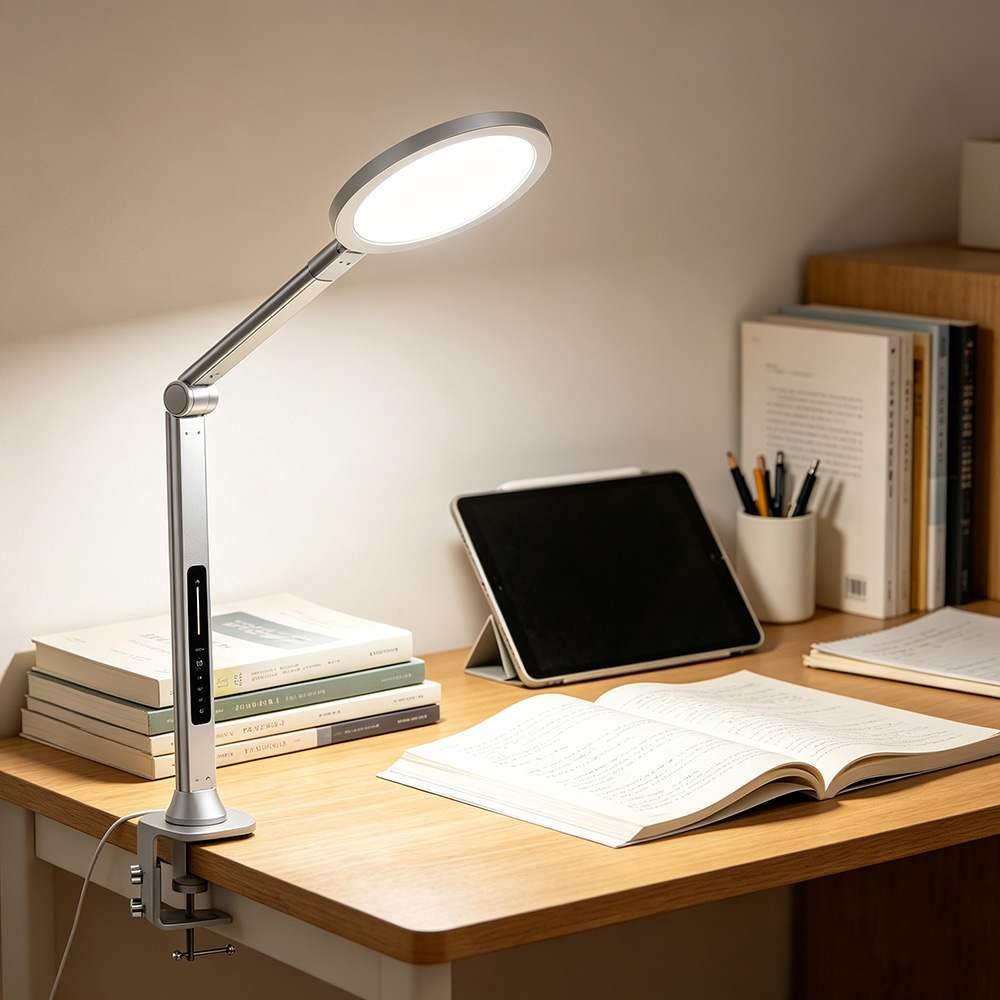
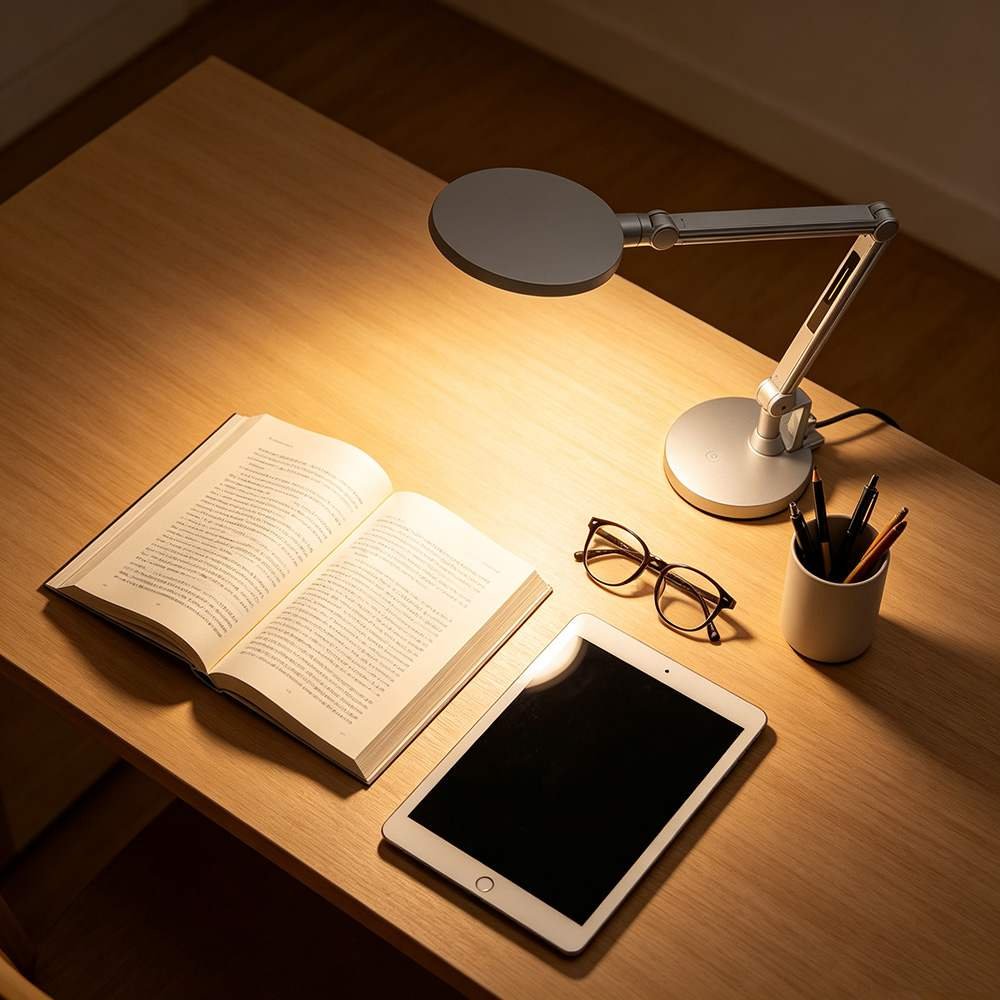
A slim LED desk lamp doesn’t need to accommodate a large, hot bulb. The light source can be integrated into a narrow arm or flat panel, allowing manufacturers to create much slimmer designs.
That is one reason modern LED table lamps can look radically different from traditional lamps.
5. Adjustable Brightness Gives LED Lamps More Flexibility
This is perhaps one of the biggest practical differences you’ll notice in everyday use.
A traditional table lamp often has a simple choice:
On or off.
You can install a different bulb or use a dimmer-compatible system, but adjustment is usually limited compared with modern LED products.
Many LED table lamps offer multiple brightness levels or stepless dimming.
That means you can use relatively bright light when working on detailed tasks and reduce the output when reading casually or relaxing.
This matters because your lighting needs aren’t the same throughout the day.
At 9 a.m., you might want bright, focused illumination for work.
At 10 p.m., you probably don’t want your desk glowing like a miniature operating room.
Winner: LED table lamp.
6. Color Temperature: Another Major LED Advantage
Modern LED table lamps can also provide adjustable color temperature.
Warm light around 2700K–3000K generally feels more relaxed and cozy, while neutral or cool white around 4000K–5000K can provide a more energetic, task-oriented appearance.
Some LED lamps allow users to switch between different color temperatures, while advanced models combine brightness and color-temperature adjustment.
This is particularly useful for people who use the same lamp for different purposes.
For example:
Morning: neutral/cooler light for working.
Afternoon: balanced neutral light for reading.
Evening: warmer light for relaxing.
Traditional incandescent lamps naturally produce warm light, which many people find attractive. In fact, this is one area where traditional lighting still has a strong emotional advantage.
The problem is that you generally can’t tell an incandescent bulb, “Could you please be a little cooler today?”
LED technology can.
7. What About Eye Comfort?
This question needs a little nuance.
You may see claims that LED table lamps are automatically “better for your eyes.” That’s too simplistic.
The LED technology itself does not magically guarantee eye comfort.
What matters is how the lamp is designed.
A poorly designed LED table lamp can have excessive glare, uneven illumination, or visible/invisible flicker. A well-designed one can provide stable, evenly distributed light with appropriate brightness and diffusion.
A recent comparison of desk lighting specifically points out that flicker, glare, and poor light distribution can contribute to visual fatigue, and recommends checking for stable/flicker-free LED operation when choosing a desk lamp for long study sessions.
So instead of asking:
“Are LEDs good for your eyes?”
A better question is:
“Is this particular LED table lamp designed to provide comfortable light?”
Look for good diffusion, low glare, stable output, appropriate brightness, and useful adjustment options.
8. LED Table Lamps Can Do Much More Than Illuminate a Desk
This is where modern LED lamps start to feel less like traditional lamps and more like small electronic devices.
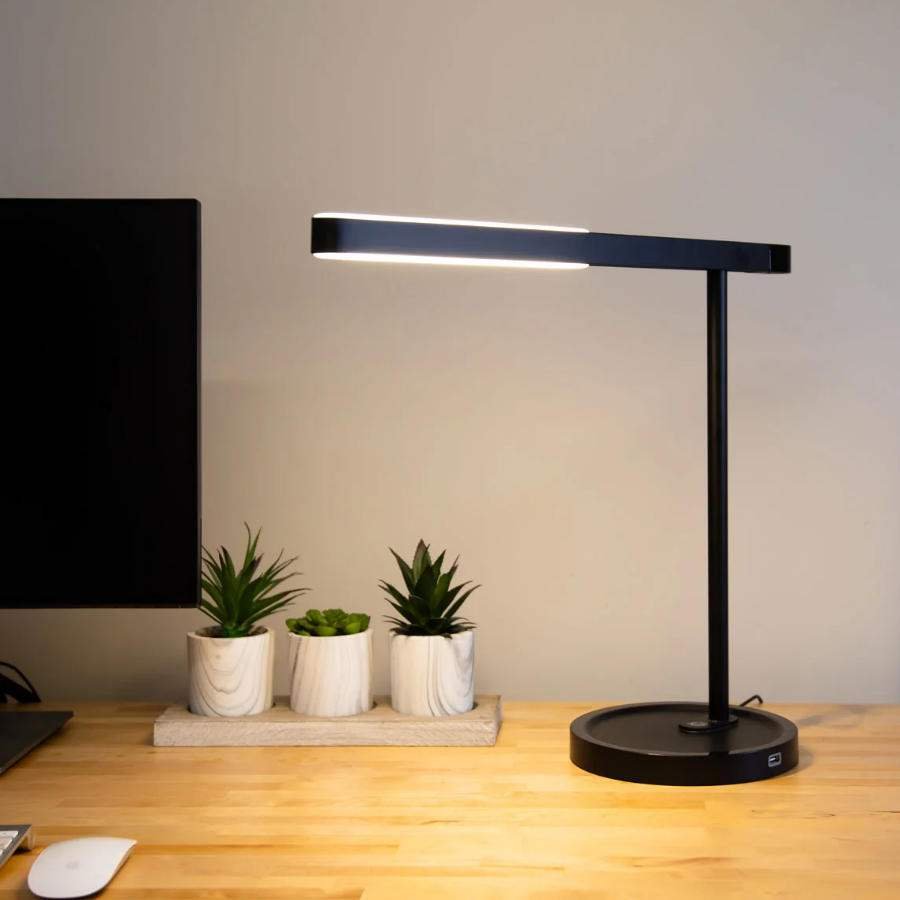
Because LED systems can operate efficiently and integrate easily with electronic controls, manufacturers can add features such as:
- USB charging ports
- Wireless phone charging
- Touch controls
- Motion sensors
- Timers
- Memory functions
- Rechargeable batteries
- Remote controls
- Adjustable arms
- Multiple lighting modes
Some modern desk lamps are essentially combining lighting + charging + workspace accessories in one product.
This can be especially attractive for consumers with small desks.
Instead of having a lamp, a phone charger, and several cables occupying the same area, one multifunctional LED table lamp can potentially handle several of those functions.
Traditional lamps can certainly be paired with accessories, but the lamp itself generally remains just a lamp.
9. Traditional Table Lamps Still Have Some Advantages
So far, LED is winning almost every round.
But that doesn’t mean traditional lamps are obsolete.
There are several reasons people still choose them.
Replaceable bulbs
With a conventional lamp, you can usually replace the bulb rather than replacing the entire lighting fixture.
This is attractive to users who want simple maintenance or who like experimenting with different bulbs.
Classic appearance
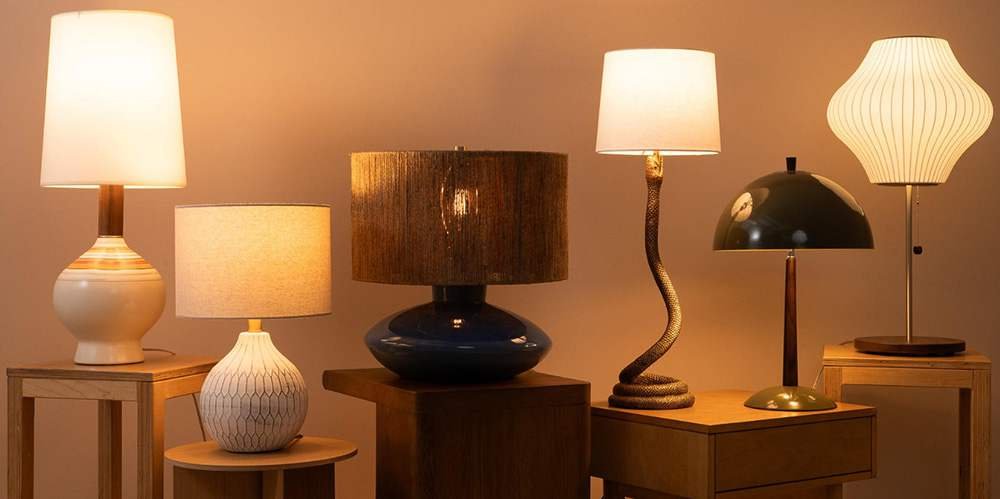
Traditional table lamps often have beautiful shades, ceramic bases, brass structures, wood finishes, and other decorative elements.
For interior designers, the lamp isn’t merely a lighting device. It is part of the furniture.
A classic incandescent bulb can also produce a warm visual character that many people find difficult to reproduce emotionally with modern lighting.
Simplicity
Sometimes you don’t need Bluetooth, a touch panel, a USB port, three color temperatures, or an app.
You just need a lamp.
And there is something wonderfully uncomplicated about plugging in a lamp, turning a switch, and getting warm light.
LED Table Lamp vs. Traditional Table Lamp: Quick Comparison
Feature | LED Table Lamp | Traditional Table Lamp |
Energy efficiency | Excellent | Lower |
Lifespan | Typically much longer | Shorter |
Heat output | Low to moderate | High with incandescent/halogen |
Brightness adjustment | Often available | Usually limited |
Color temperature adjustment | Often available | Usually fixed |
Smart functions | Common | Rare |
Rechargeable options | Available | Uncommon |
Replaceable bulb | Depends on design | Usually yes |
Decorative styles | Very broad | Very broad |
Long-term operating cost | Generally lower | Generally higher |
Maintenance | Low | More frequent bulb replacement |
Classic warm-light character | Available, but varies | Natural strength |
So, Are LED Table Lamps Better?
For most modern home and office applications, yes.
If your priorities are energy efficiency, long lifespan, low heat, adjustable brightness, color-temperature control, and multifunctional features, an LED table lamp is generally the more practical choice.
This is particularly true for people who spend several hours each day reading, studying, working, or using a computer at a desk.
However, “better” doesn’t necessarily mean “more beautiful.”
If your priority is a classic interior, replaceable bulbs, traditional materials, or the distinctive warmth of incandescent lighting, a conventional table lamp may still make more sense.
The smartest choice is therefore not simply LED vs. traditional.
It is:
What do you actually want your table lamp to do?
If you want a lamp that simply looks beautiful on a side table, traditional lighting still has plenty to offer. If you want an efficient, adjustable, compact, multifunctional lighting tool for everyday work and study, the modern LED table lamp is difficult to beat.
And that’s probably why LED has moved from being “the new lighting technology” to becoming the default choice for so many modern desk and table lamp designs.